For years, Thanksgiving was the one holiday when restaurants could plan around a quiet Thursday. That assumption no longer holds. In a nationwide survey of 1,000 U.S. consumers conducted by restaurant marketing platform Popmenu in mid-November 2025, 58% said they planned to order from or dine at a restaurant for Thanksgiving dinner. Most of that demand was off-premises: 53% planned to order takeout or delivery, up from 37% the year before, according to the survey results reported by The National Provisioner. The most common reason given was simple: 63% wanted to enjoy the holiday without cooking.
The day before Thanksgiving tells the same story from the restaurant side. Toast's analysis of its own restaurant data for the Wednesday before Thanksgiving 2024 found transactions up 17% and average check size up 10% compared with an average Wednesday that year, with alcohol sales up 79% and holiday catering sales up 33% (Toast). Foot-traffic analytics firm Placer.ai similarly found that visits to major dining segments climbed through Thanksgiving week 2024 and peaked on that Wednesday (Placer.ai).
For Asian restaurants, the week has its own character. Family-style menus suit large holiday gatherings. Trays of noodles, roast duck, dumplings, and braised dishes travel well and fit naturally into a catering order. Many families mix generations and languages at the same table. The Asian restaurant sector has grown 135% over the past 25 years and is projected to reach $240 billion by the end of 2026, and a large share of that growth is now carried by exactly these kinds of family occasions.
The opportunity is real, but so is the strain. Thanksgiving week compresses a month's worth of operational risk into six days: more orders through more channels, larger tables, prepaid catering, staff who want time off, payment systems under peak load, and a cash-flow calendar disrupted by a federal holiday. Restaurants that treat the week like a busier version of a normal week tend to absorb the extra sales as extra overtime, remakes, refunds, and tired staff.
This white paper is a planning guide for Asian restaurant owners and managers. It looks at where Thanksgiving-week demand actually lands, then works through staffing, catering and pickup, the dining room, systems and payments, and the weeks after the holiday. It ends with a six-week countdown plan that can be started in mid-October. Throughout, the aim is the same: to make the busiest week of the year one of the most profitable, without exhausting the team.
The most important change in Thanksgiving dining is where the meal is eaten. In the Popmenu survey cited above, only about 5% of respondents expected to dine in at a restaurant on Thanksgiving, while more than half expected to order food to eat at home. An earlier National Restaurant Association survey of 1,010 adults, conducted in November 2023, pointed in the same direction for the broader holiday season: 63% planned to eat out in the following weeks and 48% planned to order takeout or delivery, and among those ordering in, 66% planned to get the entire meal from a restaurant (National Restaurant Association).
For planning, this means the kitchen's busiest work during Thanksgiving week may not be visible in the dining room at all. It happens in prep for trays, packing, labeling, and handoff. A restaurant that staffs the floor for a full dining room and leaves catering to "whoever is free" is planning for the wrong week.
The Wednesday before Thanksgiving combines several kinds of demand at once. Travelers stop for a meal on the way out of town. Home cooks pick up dinner because their kitchen is full of holiday prep. Friends who are back in their hometown meet for drinks. Catering orders for Thursday are picked up the same afternoon. Toast's data shows dine-in, takeout, and delivery all rising on that day, with dine-in transactions up 18%, takeout up 14%, and delivery up 9% compared with an average Wednesday.
That combination stresses every part of the restaurant at once: the host stand, the bar, the pickup shelf, the delivery tablets, the kitchen line, and the network connecting them. It is the first day to rehearse.
Thanksgiving Day itself varies more than any other day of the week. Some restaurants close to give staff the day off. Some open with a fixed holiday menu and fixed seatings. Some run only pickup for pre-ordered catering. Each choice is valid, but each requires different staffing, menus, and systems, and the choice needs to be made in October so the rest of the plan can follow.
Friday and Saturday after Thanksgiving bring a different guest: relatives in town, groups tired of leftovers, and friends meeting while everyone is home. Parties are larger and decisions are made later, often the same day. For Asian restaurants with round tables and shared dishes, these nights can resemble a banquet more than a regular weekend, and the waitlist, large-table planning, and split checks matter as much as the reservation book.
Several features of Asian dining make Thanksgiving week both more promising and more demanding. Family-style menus suit large gatherings, so average party size rises and round tables for eight or ten become the most valuable seats in the room. Dishes such as roast duck, braised meats, fried rice, and dumplings work well as catering trays, which makes pre-orders a natural extension of the menu. Hot pot and Korean barbecue restaurants see groups who want an experience rather than a quick meal, which lengthens table times. And many families bring several generations to the same table, often with different preferred languages, which affects everything from the booking confirmation to the menu on the table.
These are advantages when the restaurant plans for them: more covers per table, prepaid catering, and guests who come for a shared occasion. They become problems when the week is run like any other: large parties stuck behind small ones on the waitlist, split checks rebuilt at the end of the meal, and catering trays competing with the dining room for the same kitchen hours.
National data shows the direction; your own data shows the size. Before planning anything else, pull last year's sales by day and hour for Tuesday through Sunday of Thanksgiving week, split by dine-in, takeout, delivery, and catering. Note average party size, the busiest hours, items that sold out, and anything that went wrong. Most POS systems can produce this in minutes. That report becomes the baseline for every decision in the chapters that follow.
Staffing decisions follow operating decisions. Whether Thursday is closed, a set menu, or pickup only; whether catering runs on Wednesday; whether the bar stays open late on Wednesday night: each of these changes how many people are needed and where. Make those calls first, write them down, and then build the schedule around them.
Use last year's hourly ticket counts and the ratios your team already knows, such as how many tickets one line cook can keep up with on a normal Friday, to turn sales into headcount by hour. Add a margin if sales are trending up. A schedule built this way can be explained to staff and adjusted with confidence when the week arrives.
Holiday weeks run better when shifts match the work rather than the usual open, mid, and close. A prep block on Tuesday and Wednesday morning, a pickup block on Wednesday afternoon, a set-menu block on Thursday, and dinner blocks on Friday and Saturday each need different skills. Give each block a named lead who owns its problems, and place the most experienced staff where mistakes are costliest, usually expo on Wednesday night and the host stand on the weekend.
Some overtime during Thanksgiving week is reasonable; a trained server working extra hours can cost less than an untrained replacement. The problem is overtime no one decided on. Federal law requires overtime pay for non-exempt employees after 40 hours in a workweek, some states add daily rules, and several cities and states, including New York City, Chicago, Seattle, and Philadelphia, have fair workweek laws for covered employers that require advance schedule notice and premium pay for late changes. Mark employees close to 40 hours on the draft schedule, post the schedule early, and review labor against sales every day of the week rather than waiting for the payroll report.
The difference between controlled and uncontrolled holiday labor is usually visibility. When the POS shows who is clocked in, by role, and how labor compares with sales during the shift, a manager can send someone home early or call in help while it still matters. Scheduling apps that read POS sales data and flag overtime before it happens make this easier, although restaurants should confirm what any app actually supports before relying on it. A practical guide to building the schedule is available in our article on Thanksgiving-week staff scheduling, and a look at where hours go during a busy service is in this breakdown of labor during a dinner rush.
A five-minute pre-shift meeting before Wednesday dinner and each weekend night pays for itself. Cover the menu items likely to sell out, the pickup windows that are fully booked, large parties expected and where they will sit, who is the lead for each work block, and what to do if the network drops. Staff who know the plan make fewer judgment calls under pressure, and the calls they do make are more consistent.
Every year, more people ask for the holiday off than the schedule can allow. The restaurants that handle this calmly set a request deadline in October and publish how requests will be decided, whether by seniority, by rotation from last year, or by order received. A consistent rule protects the manager from making the same difficult conversation fifteen times.
With most Thanksgiving demand now eaten at home, catering and pre-orders are often the largest single opportunity of the week. They are also prepaid, predictable, and easy to plan if they are set up as their own operation with their own menu, limits, and staff, rather than squeezed between dine-in tickets.
For restaurants that have never offered catering, the first year works best as a small, pickup-only program built from dishes that already travel well in the takeout business. Price by the tray, including packaging and the extra labor for slow items, test every item in its container before selling it, and confirm with the local health department and insurer if delivery or off-site service is planned. Our article on adding holiday catering to a restaurant that has never done it covers these decisions in detail.
The most important setting in a holiday pre-order program is the cap: how many orders or trays the kitchen can actually produce for each pickup day, based on equipment and prep hours rather than hoped-for sales. When the cap is reached, ordering for that day should close automatically. Pair it with a firm cutoff, commonly the Sunday or Monday before Thanksgiving, which gives time to order ingredients and turn order totals into a prep plan. Running the holiday menu as a separate menu in the online ordering system, with its own hours and advance-order dates, keeps it from mixing with the regular takeout menu.
Without pickup windows, most guests choose the same convenient time and the counter is overwhelmed for an hour. Offering windows every 15 or 30 minutes, each with its own cap, spreads the load across the afternoon. A dedicated pickup area, shelves organized by window and name, labels with reheating instructions, and one person whose only job is the handoff turn Wednesday afternoon from a crowd into a line. The full setup is described in our guide to Thanksgiving catering pre-orders.
Delivery marketplaces add volume during Thanksgiving week, but they compete with catering and dine-in for the same kitchen capacity. Decide in advance how the restaurant will respond when the kitchen falls behind: which manager can pause a delivery platform or extend prep times, and at what point. Marketplace pickup orders, which are usually paid inside the platform's app, should be labeled clearly and kept on their own section of the pickup shelf so staff do not try to collect payment twice. Restaurants that take holiday delivery orders through their own online ordering can give those orders their own caps and earlier time windows, so a late driver does not push back the rest of the afternoon.
Prepayment turns pickup into a handoff instead of a transaction. Most holiday pickup orders should be paid at online checkout. Phone orders can be paid through a payment link the guest opens on their phone, which keeps card numbers away from staff. When a card has to be taken over the phone, entering it directly into a virtual terminal during the call, with the security code and billing ZIP code, is far safer than writing it on an order slip. These card-not-present payments generally cost more and carry more dispute risk than in-person payments, so they work best as the exception. The options are compared in our article on catering deposits and virtual terminals.
Holiday meals last longer than ordinary dinners. Families linger, order more, and arrive in larger groups. Restaurants that open on Thanksgiving Day generally do better with fixed seatings, for example early afternoon, mid-afternoon, and evening, sized to last year's actual table times, than with an open booking calendar. Fixed seatings also let the kitchen fire courses in waves instead of facing an unpredictable trickle.
Every policy that matters should be visible before a guest books: the set menu and price, any deposit or card guarantee, the cancellation deadline, the grace period for late arrivals, and any automatic gratuity for large parties. Confirmations and reminders a day or two before the meal give families who changed plans an easy way to cancel while the table can still be filled. Sending those messages in the language the guest prefers matters for many Asian restaurants, where grandparents and grandchildren at the same table may read different languages. Our article on Thanksgiving reservations, deposits, and no-shows walks through each setting.
On the Friday and Saturday after Thanksgiving, many guests decide where to eat the same afternoon. An online waitlist that guests can join from Google, the restaurant's website, an app, or by phone moves the line from the sidewalk to their phones. Rules set before service, such as how long a table is held after the "ready" text and how large parties are handled, keep the host stand consistent through a long night. An hour-by-hour look at that evening is in our article on holiday walk-in crowds.
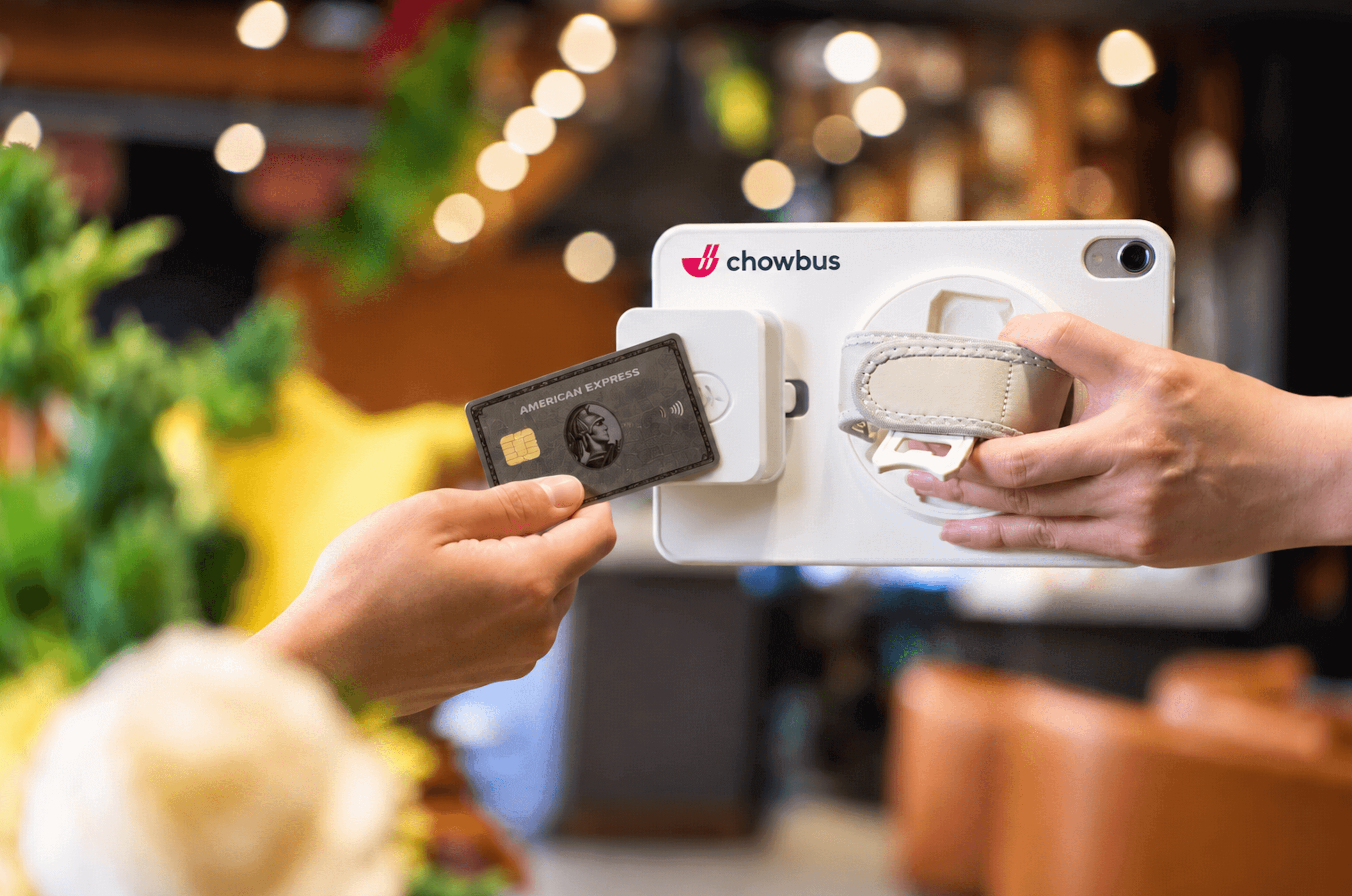
Large family tables often pay as several households. Asking at the start of the meal how the table plans to pay, ringing orders by seat or group, and taking payment at the table with handheld devices prevent the end-of-meal scramble. The POS should be able to split a single shared dish across groups, record cash, cards, and gift cards on the same check, apply a reservation deposit before the split, and add any automatic gratuity evenly to each split. Chowbus POS, for example, supports tableside payment by card and Apple Pay and a Guest Mode for tableside ordering and split-check processing.
Internet outages tend to arrive when networks are busiest. A cloud POS with an offline mode is designed to keep taking orders and payments through short outages, but staff need to know what keeps working and what pauses. Chowbus documents an offline mode that switches on automatically after about 30 seconds without a connection; in it, staff can keep creating orders, print to kitchen printers on the local network, take cash and card payments, print receipts, and collect tips, while gift cards, loyalty points, coupons, device-to-device sync, and tablet, QR, and kiosk ordering pause until the connection returns.
A twenty-minute drill on a quiet afternoon in October, unplugging the internet while leaving the router on, turns that documentation into experience. Add a one-page outage card, a cellular backup connection, battery backup for the modem and router, and a small paper kit for the worst case. The drill is described step by step in our outage-drill guide.
A holiday menu printed on paper becomes outdated the moment a dish sells out or a price changes. A live digital menu behind the same table QR codes can switch to the holiday menu on the right day, show set-menu courses clearly on a phone, display several languages, and hide sold-out dishes immediately when it is connected to the POS. When the whole room orders from their phones at once, holding later courses and firing them by table keeps the kitchen from being buried. Details are in our article on holiday set menus on QR.
When card payments run through the POS instead of a separate terminal, each check is charged without retyping the amount, tips attach to the right check, and refunds are processed against the original transaction. That removes the most common source of closing mismatches. On holiday nights, closing in two passes, checking out each server as their section finishes and leaving only the late servers, cash drawer, and summary for the end, keeps the close short even with twice the usual number of checks.
Card sales do not arrive in the bank the moment a guest taps. Transactions are authorized, tip-adjusted, batched, cleared through the card networks, and deposited, usually one to two business days after the batch closes. Thanksgiving Day is a federal banking holiday followed by a weekend, so card sales from the busiest days of the year may arrive later or combined into one larger deposit the following week. Restaurants with supplier payments, rent, or payroll due at month-end should look at last year's deposit timing and plan accordingly, and should tell their processor in advance about unusually large catering charges that could trigger a review.
Thanksgiving week brings many first-time guests: visiting relatives, coworkers at holiday lunches, families who chose you because their usual place was full. Many of them enjoy the meal and intend to return, and then forget by mid-January, which is when many restaurants reach their slowest weeks. Capturing those guests during the holiday is one of the most valuable things a restaurant can do with the week's extra traffic.
Asking every guest to download an app rarely works. Asking for a phone number at checkout, on a kiosk, a QR ordering page, a tableside payment device, or the online checkout for a pickup order works much better. Loyalty programs that use the phone number as the member ID across channels make that a single step. Chowbus loyalty, for example, lets guests register with a phone number across kiosks, tablets, and QR ordering and can add the membership card to Apple Wallet through a text link. The sign-up reward should apply to the next visit, with an expiration that lines up with January.
Gift cards are one of the most popular holiday gifts. The National Retail Federation reported in December 2025 that 43% of holiday shoppers planned to buy at least one gift card, with about $29 billion expected to be spent on gift cards for the season, and noted that restaurant cards are among the types most shoppers pick up (NRF). Every restaurant gift card sold in November and December is a future visit, often by someone who has never been to the restaurant. Selling them at the register, online, and on the pickup shelf, and tracking gift card sales separately from food sales, turns the holiday into January traffic.
December is crowded with marketing. A short thank-you after the visit, one main message in early January reminding guests of the reward waiting for them, and one reminder before it expires are usually enough. Automatic triggers for new members, such as first-order bonuses and win-back messages, keep this running without manual effort. For a fuller treatment of retention strategy, see The Retention Gap, our earlier white paper on why Asian restaurants lose repeat customers and how to close the gap.
Thanksgiving week rewards restaurants that decide early and rehearse. The plan below assumes a start in mid-October; restaurants starting later can compress the first two stages.
Pull last year's Thanksgiving-week sales by day, hour, and order type. Decide how Thursday will run, whether catering will be offered, and whether the bar will stay open late on Wednesday. Set the time-off request deadline and publish the rule for approving requests. Run the internet outage drill and order any backup connection or battery equipment.
Build and test the catering menu, set order caps, pickup windows, and the cutoff date, and open pre-orders. Configure holiday reservations with seatings, booking-page policies, and reminders. Build the holiday menu as a separate digital menu. Set up the loyalty sign-up reward and schedule the thank-you and January messages. Draft the schedule in work blocks with named leads.
Post the final schedule. Train pickup staff on the handoff, payment rules, and problem handling. Brief servers on split checks, deposits, and automatic gratuity. Confirm Wi-Fi coverage at the curb, test every handheld and table QR code, and print the outage card and closing checklist. Tell your payment processor about any large catering orders and check the expected deposit timing over the holiday.
Review labor against sales at the end of every day. Close in two passes on the busiest nights. Keep the kitchen and host stand in contact during peaks. Mark sold-out items as soon as they run out. Hold to the caps and cutoffs that protect the kitchen.
Reconcile deposits against sales, check that any offline orders synced, and review voids, refunds, and chargebacks. Record what each work block needed more or less of, which dishes sold out, and how many new loyalty members joined. Save those notes with this year's sales report. They are the starting point for Christmas, New Year's Eve, Lunar New Year, and next Thanksgiving.
Chowbus works with more than 9,000 restaurants across all 50 states, with 24/7 bilingual support in English, Chinese, and Spanish. Whatever system you use, the specific numbers in your plan should come from your own restaurant's history.

Q1: How should an Asian restaurant prepare for Thanksgiving week?
Start in mid-October by reviewing last year's sales for the week, deciding how Thursday will run, and setting up catering, reservations, and loyalty programs. Build the staff schedule in work blocks, rehearse an internet outage, and train staff on pickup, split checks, and closing two weeks before the holiday.
Q2: Is Thanksgiving a busy day for restaurants?
Demand has shifted strongly toward off-premises dining. In a Popmenu survey of 1,000 consumers in November 2025, 58% planned to order from or dine at a restaurant for Thanksgiving, with 53% planning takeout or delivery and about 5% planning to dine in.
Q3: What is the busiest day of Thanksgiving week for restaurants?
For many restaurants, the Wednesday before Thanksgiving. Toast's 2024 data showed transactions up 17% and alcohol sales up 79% that day compared with an average Wednesday, and Placer.ai found dining visits peaked on that Wednesday.
Q4: Should restaurants offer Thanksgiving catering?
For restaurants whose food travels well, holiday catering is often the week's biggest opportunity because it is prepaid and predictable. Start small with a pickup-only menu, set caps based on kitchen capacity, and use pickup windows to spread the load.
Q5: How can restaurants reduce Thanksgiving reservation no-shows?
State deposits or card guarantees and cancellation deadlines clearly on the booking page, send confirmations and reminders a day or two ahead, set a grace period for late arrivals, and keep a few tables for walk-ins and the waitlist.
Q6: Why do restaurant bank deposits look low after Thanksgiving?
Card sales are deposited one to two business days after the batch closes, and Thanksgiving Day is a federal banking holiday followed by a weekend. Sales from the busiest days can arrive later or in one combined deposit the following week.
Q7: How do restaurants keep holiday first-time guests coming back?
Capture their phone numbers at checkout through a loyalty program, offer a reward that applies on the next visit with a January expiration, send a short thank-you and one main message in early January, and sell gift cards that bring new guests in after the holidays.