Most restaurant owners shop for customer loyalty program software by comparing feature lists, and most feature lists look alike: points, rewards, texts, a dashboard. The better way to choose is to start with your own restaurant. How often your best guests come back, whether you sell gift cards, how many ordering channels you run, and how long a cashier can spend on one guest at noon will rule out half the options before you ever book a demo.
This guide is built as a set of forks. At each one you answer a question about your guests or your operation, and the answer points you toward a reward model, a type of software, or a contract term to insist on. After the forks comes a vendor scorecard you can use in demos, including the reports that show whether the program pays for itself. If you are still deciding whether to run a program at all, our step-by-step guide on how to create a loyalty program covers the basics. Legal points below are general information as of November 2026, so confirm them with your own counsel.
Pull a rough picture from your POS or your memory: who are the twenty guests you see most, and how often do they come in? The answer usually lands in one of two patterns.
If most of your regulars visit weekly or more and spend about the same each time (a boba shop, a lunch counter, a noodle bar near offices), a visit-based program fits. "Buy nine drinks, get the tenth free" is easy to explain at the register and easy for a guest to track in their head. Spend-based points add math the guest does not need.
If visits are less frequent but checks are large and vary a lot (hot pot, Korean BBQ, banquet-style Chinese dining), points on spend are fairer. A guest who brings a party of eight and spends $400 should not earn the same credit as someone who stops in for a $14 lunch special. With points, you also control the cost of rewards more precisely, because you set both the earn rate and the price of each reward.
Group dining raises a question many owners miss: when one person pays for a table of six, only one phone number earns. Some operators accept that, since the payer is usually the one who chose the restaurant. Others offer a small sign-up perk to the rest of the table so they join too. Decide which you want before you pick software, because not every system handles both.
Tiers (Silver, Gold, VIP and so on) make sense when a small group of guests clearly outspends the rest and you want to treat them differently: priority seating, a birthday dish, early access to a seasonal menu. If your top guests look a lot like your average guests, tiers add complexity without changing behavior.
Tiers also ask more of your staff. Servers need to recognize a VIP, know what that status earns, and handle the awkward moment when a guest drops a level. If you go this route, keep it to two or three tiers with benefits a server can explain in one sentence. Ask each vendor whether tier status shows on the POS screen at checkout, because a perk the staff cannot see is a perk that never gets delivered.
If gift cards are a real part of your holiday sales, or regulars like to preload money onto an account, look for software that handles stored value inside the same member profile. Many Asian restaurants already run prepaid memberships where a guest loads a set amount and gets a bonus or member pricing. Running that on a separate gift card system is how balances go missing and promotions stop combining, which we walked through in gift cards, loyalty and POS on one system instead of three.
Stored value also brings rules that points do not. Under the federal gift card provisions in Regulation E (12 CFR 1005.20), funds on a consumer gift card generally cannot expire sooner than five years after the card was issued or last loaded, and dormancy fees are limited. Cards issued as part of a loyalty, award or promotional program are excluded from most of those requirements but still need certain disclosures, such as the expiration date. Many states add stricter gift card and unclaimed property rules on top. Before you launch a prepaid membership, ask your accountant how to book the balances and confirm your state's rules.
This fork decides between two broad types of software.
Standalone loyalty apps (digital punch cards, QR-only stamp systems, tablet sign-in apps that sit beside the register) are quick to start and often cheap. They work when nearly every order happens at one counter. The cashier, or the guest, has to add each visit by hand, which means missed stamps during a rush and the occasional staff member stamping their own card.
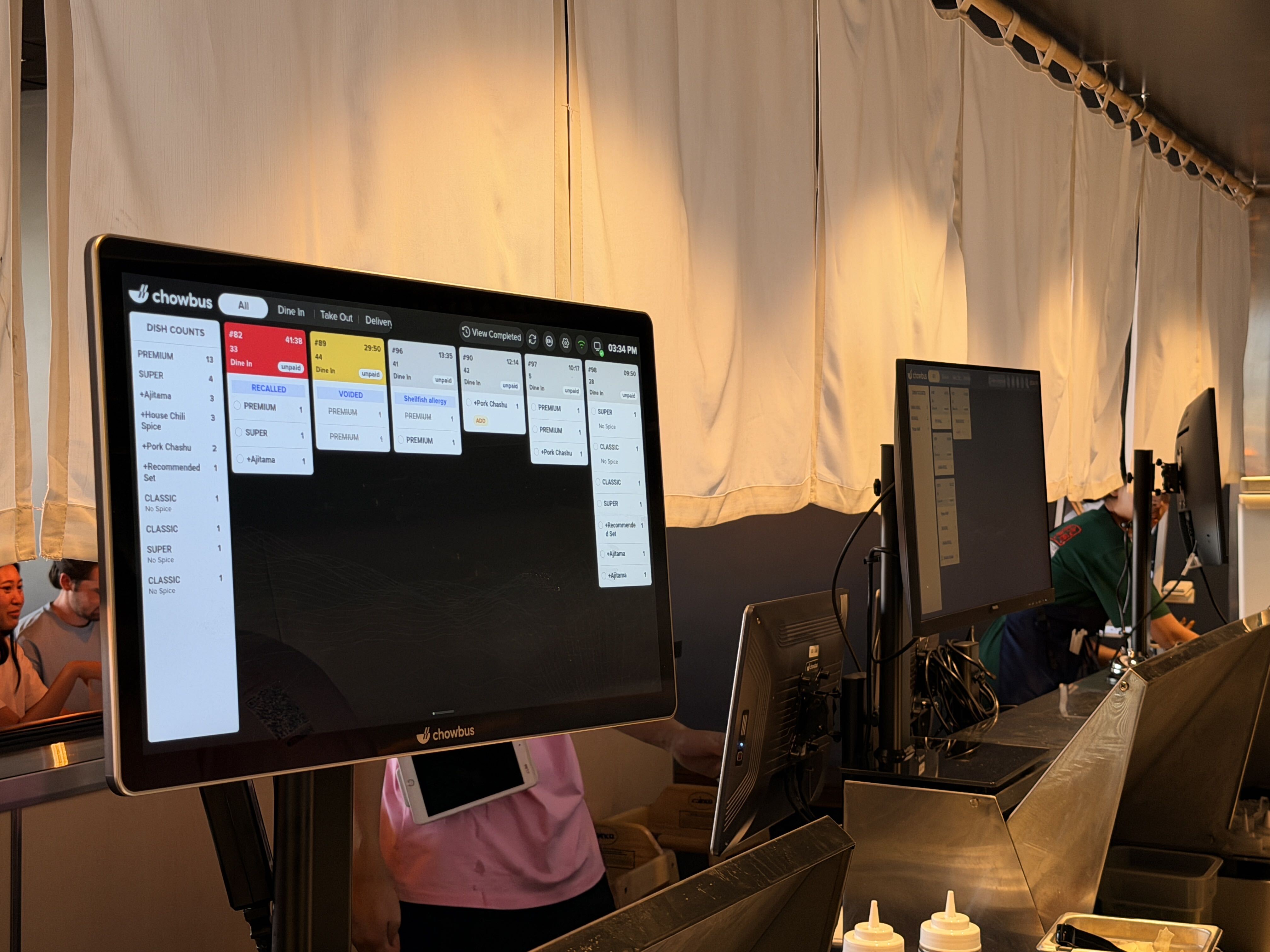
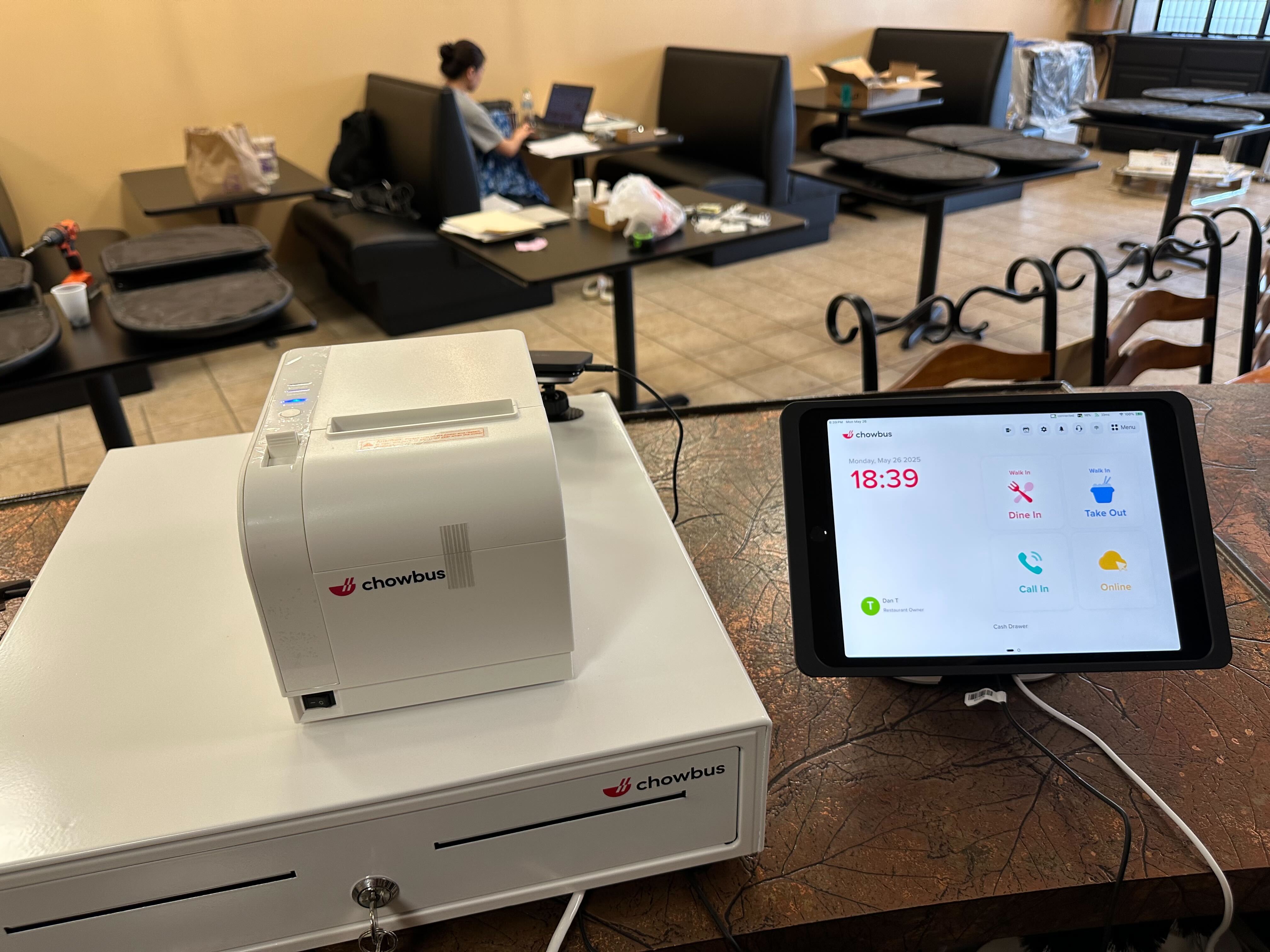
POS-linked loyalty earns and redeems inside the checkout itself. When you also take orders on a kiosk, QR codes at the table, your own website, or a branded app, this is the only setup where a guest earns the same way on every channel without anyone typing. Chowbus, for example, ties its restaurant loyalty program to the POS so members earn and redeem across kiosks, tablets, QR ordering and apps, uses the phone number as the member ID, and supports points across locations for groups.
A simple test: list every way an order reaches your kitchen. If the list has more than one line, a standalone loyalty app for small business will leave some of those orders uncounted.
Your member list is one of the few assets that grows every month you are open. Some apps, especially marketplace-style programs where guests sign up through the vendor's own consumer app, treat the guest as their customer. When you cancel, the list stays with them.
Before you sign, get written answers to these questions:
If a vendor hesitates on any of these, treat that as your answer.
If texting is part of the plan, consent has to be designed into sign-up, not added later. The Telephone Consumer Protection Act (TCPA) is the main federal law here. FCC rules require "prior express written consent" before a business sends marketing texts using an autodialer, and after a court ruling the FCC restored the longstanding definition in August 2025: a signed agreement (an electronic signature counts) that clearly tells the person they are agreeing to receive marketing messages at that number and that they do not have to agree in order to buy anything.
Opting out has to be easy. Since April 2025, FCC rules treat replies such as "stop," "quit," "cancel" or "unsubscribe" as valid opt-outs and require businesses to honor them within 10 business days. The FCC issued an order in October 2026 changing parts of those revocation rules, more changes are under review, and some states have their own texting laws, so have counsel review your sign-up wording and opt-out handling before you launch. U.S. carriers also require businesses texting from standard 10-digit numbers to register those numbers (often called A2P 10DLC registration); ask whether the vendor does this for you.
What to look for in the software: a consent checkbox that is not pre-checked, a record of when and where each guest agreed, automatic handling of opt-out replies, and quiet hours. A loyalty platform with built-in SMS marketing keeps consent and the member list in one place, so nobody exports a list to a separate texting tool and loses the opt-outs along the way.
A loyalty program that slows the line at noon gets quietly abandoned by staff within a month. Redemption friction is where the software choice shows up most clearly.
Time it during a demo. Ask the vendor to show a guest joining, then the same guest redeeming a reward, at the register and on a kiosk. Count taps. Watch for the details that cost seconds in real service:
For a quick-service counter, aim for joining and redemption that each take a few seconds. Full-service restaurants have more slack at the table, but the server still needs to see the member's status before the check prints.
Almost every vendor shows a member count. That number tells you the program is growing, not that it is earning money. Ask to see these reports in the demo, ideally with sample data that looks like yours:
An illustrative example: if members generate $20,000 in sales in a month and you give away $800 in rewards, your reward cost is 4% of member sales. Whether that pays off depends on whether those guests would have visited anyway, which is why the before-and-after visit comparison matters more than any single total.
Once you have worked through the forks, you know your reward model, whether you need stored value, whether the program must be POS-linked, and how you will text. Use that to score each vendor out of five on the points that matter to you:
Ask for two references from restaurants that look like yours, and ask them one question: what did you wish you had known before you launched?

Q1: What is customer loyalty program software?
It is software that signs guests up as members, tracks what they earn from visits or spending, applies rewards at checkout, and stores the member list for marketing. Restaurant versions range from simple digital punch cards to systems built into the POS that also handle stored value, tiers and texting. The right type depends on how many ordering channels you run and how your guests visit.
Q2: How do I set up a loyalty app for a small business restaurant?
Pick one reward model that matches how your regulars visit, set a reward guests can reach within a month or two, and write the sign-up wording, including SMS consent if you plan to text. Train staff to offer the program at every checkout for the first few weeks. Then check the member versus non-member reports after 60 to 90 days before changing anything.
Q3: Is a points program better than a punch card?
Neither is better in general. Punch-style visit programs suit frequent, similar-sized purchases like drinks or lunch, while points on spend suit restaurants where check sizes vary widely, such as hot pot or Korean BBQ. Some systems let you run visit-based rewards for one item and points for everything else.
Q4: How much does restaurant loyalty software cost?
Pricing varies widely by vendor and is usually a monthly fee per location, sometimes bundled with a POS plan, plus per-message costs for texting. Free tiers exist but often limit members, reports or data export. Compare total cost over a year, including texting and setup, and ask whether exporting your own data carries a fee.
Q5: One guest pays for a group of six. Who earns the points?
In most systems, only the phone number attached to the payment earns. If you want the whole table in your program, offer a small sign-up perk to the other guests, for example through a QR code on the table, and make sure the software can attach a new member to an existing check. Test this in the demo if group dining is a large share of your sales.
Q6: What should I do before signing with a loyalty vendor?
Work through the forks in this guide so you know your reward model and must-have features, then run each vendor through the same timed demo. Get the data export terms in writing, have counsel review your SMS consent wording, and call two references with a similar restaurant. Only then compare prices.
The best customer loyalty program software for your restaurant is the one that matches how your guests already behave and how your orders already flow. Settle the reward model, the stored value question and the channel question first, and the list of vendors that fit becomes short.
From there, the details decide it: who owns the guest list, how consent is captured, how fast the counter can redeem, and whether the reports can show the program is earning more than it gives away. If you want to see how automation changes the day-to-day work once the program is live, read our piece on what loyalty automation takes off a manager's plate.