A restaurant reservation policy is the set of promises you and your guests make before anyone sits down: how long you hold a table, how long the table is theirs, what happens when a party of ten turns into six, and what a late cancellation costs. Most restaurants already have these rules, usually in the owner's head or on a sticky note by the host stand. A policy only starts working when each rule is written in words a guest reads before booking, and in a form the host can enforce at 7:30 on a Saturday without calling the manager over.
Asian restaurants need a few clauses that generic templates skip: timed seatings for hot pot, Korean BBQ and all-you-can-eat, round tables and pre-ordered banquet menus for family celebrations, and a calendar where Lunar New Year can outbook Valentine's Day. This guide builds a sample policy one clause at a time. Each section gives sample wording you can adapt, explains why the clause matters, and shows how staff hold the line at the host stand. Every time, amount and party size in the sample wording is illustrative. Set your own from your room and your booking history, and confirm anything involving card charges with your payment processor and your state and local consumer rules.
Sample wording: "We hold reservations for 15 minutes past the booked time. If you are running late, please call us or reply to your confirmation text and we will do our best to keep your table. After 15 minutes, the table may be offered to guests on our waitlist. We seat parties once most of the group has arrived."
A grace period protects two groups at once: the party stuck in traffic and the family standing at your door. Without a stated number, every late arrival becomes a negotiation, and hosts tend to give in to whoever is on the phone while the walk-ins in front of them grow impatient. Fifteen minutes is a common hold at full-service restaurants.
The last sentence covers a familiar hot pot and dim sum problem: two guests of a party of eight arrive and ask to sit. Once the broth is on the burner, that table is committed, and a written rule gives the host a polite answer.
At the stand, write times down instead of remembering them. At ten minutes late, the host sends a short text or calls. At fifteen, the host marks the booking late and offers the table to the next waitlist party that fits. If the late party walks in at twenty minutes and a table is still free, seat them. The clause gives you the right to release a table; it never obliges you to turn anyone away.
Sample wording: "All-you-can-eat seatings are 90 minutes from the time you are seated. Last orders are taken 15 minutes before your seating ends. Parties who arrive late keep their original end time so the next guests can be seated on schedule."
In a timed format, the time limit is part of the price. A Korean BBQ table that lingers for three hours on a fixed AYCE price eats into food cost while the 8:00 booking waits in the lobby. The final sentence of the sample does the heavy lifting. If a late arrival resets the clock, the grace period and the time limit work against each other, and the next party pays for it. For à la carte hot pot, many owners use softer wording, such as "on busy evenings we may ask for the table after two hours," since guests are paying for every plate they order.
Time limits fall apart when the only person tracking them is a server who feels uncomfortable bringing it up. Record the seated time on the ticket or table map, give a friendly last-call reminder, and let the ordering system close the round when time runs out. Chowbus's buffet POS lets AYCE restaurants set a fixed dining period with a countdown on the ordering tablets, a 15-minute warning, and ordering that locks when the time expires, which takes the reminder off the server entirely.
Booking intervals should match the limit: a 90-minute seating plus 15 minutes to reset the grill cannot be booked every hour. Many of the delays that stretch a seating happen after the meal, in payment and bussing, which our piece on what slows down table turnover besides the kitchen covers in detail.
Sample wording: "Online booking is available for parties of up to 8. For 9 guests or more, please call us so we can arrange a round table. Parties of 12 or more in our private room order from our banquet menu, selected at least 3 days in advance, with a minimum spend of $X per person. Please confirm your final headcount 24 hours before; we prepare and charge for the confirmed number of banquet menus."
Family birthdays, wedding banquets, and company lunches at Chinese restaurants often need the large round table with the lazy Susan, and most dining rooms have only a few of them. A cancelled party of twelve on a Saturday can be a sizable share of that night's sales. A pre-ordered banquet menu lets the kitchen buy whole fish, roast duck or lobster ahead of time, and a per-person minimum protects a room that could otherwise hold several smaller parties. The headcount sentence matters because large parties shrink more often than they cancel outright. Stating that you charge for the confirmed count removes the argument when ten menus were prepared and seven guests arrive.
If you add an automatic service charge for large parties, put it in this clause and on the menu. Disclosure rules differ by state. California, for example, allows restaurants to keep mandatory service charges separate from menu prices under SB 1524, signed in 2024, provided the charge is shown clearly on menus and advertisements. As of November 2026, check with your state attorney general's office or a local attorney before you add or change one.
At the host stand, large-party rules depend on knowing the floor. Hosts should know which tables combine, which round tables are held for big groups, and why those tables should stay empty for twenty minutes instead of going to a walk-in two-top during the rush. The Chowbus reservation page includes a Chicago Korean BBQ restaurant that takes bookings through Google Maps and sets minimums for large groups, so the team can prepare tables ahead of time.
Sample wording: "On Lunar New Year's Eve and Day, Mother's Day, and Thanksgiving, we take reservations for set seating times only. Parties of 6 or more order from our holiday set menu, and changes or cancellations are needed 72 hours ahead instead of 24. Holiday booking opens 30 days before each date."
Holiday terms belong in the main policy so regulars see them long before the date. Lunar New Year falls on February 6, 2027, and the reunion dinner on New Year's Eve is often booked weeks in advance by multi-generation families who want the same round table they had last year. Mother's Day, the second Sunday in May (May 9 in 2027), is heavy at lunch with large mixed-age tables. Thanksgiving has its own pattern, covered step by step in our guide to taking Thanksgiving reservations online, so this clause only needs to name it as one of the dates with special terms.
List exact dates; "special terms apply on holidays" invites a debate over whether the Saturday before Lunar New Year counts. To enforce the clause, load the holiday settings into your reservation system before booking opens: seating times, capacity, and the larger party threshold. Brief the team on the holiday script a week ahead, and keep a printed copy of the holiday terms at the stand so a new host can read the exact wording to a caller.
Sample wording: "Plans change, and we understand. Please cancel or change your booking at least 24 hours ahead by replying to your confirmation or calling us. For parties of 8 or more, a late cancellation or no-show may be charged the fee shown when you booked. Guests who miss two reservations without notice may be asked to book by phone in the future."
A restaurant no show policy works best when it reads as a courtesy rather than a threat. Open with understanding, make cancelling easy with one reply or one call, and state the consequence once in plain words. "Fee" lands better than "penalty," and "may be charged" gives the manager room to waive it for a regular whose child got sick. The repeat no-show sentence is a softer tool that needs no card at all: it simply moves habitual no-shows to phone bookings, where the host can confirm them personally.
Many no-shows are guests who changed plans and forgot the booking. A confirmation with a clear cancel option and a reminder the day before give them a moment to release the table while you can still fill it.
At the stand, mark each no-show in the guest record instead of the host's memory. On busy nights, call unconfirmed large parties in the morning. Review no-shows by day of week once a month: if Friday parties of eight keep disappearing, tighten that one slot instead of the whole policy.
Sample wording (deposit): "Reservations for parties of 10 or more, and all holiday reservations, require a deposit of $X per person, applied to your final bill. Deposits are fully refunded if you cancel at least 48 hours before your reservation."
Sample wording (card hold): "We ask for a card to secure reservations of 10 or more. Your card is not charged unless you cancel within 24 hours of your reservation or do not arrive, in which case a fee of $X per person applies."
A deposit collects money now and gives the strongest protection. A card guarantee keeps a card on file and charges only if the guest cancels late or does not arrive, which feels friendlier to most diners. Payment rules sit outside your control here. Card authorization holds typically drop off on their own after a few days to about a week if they are not captured, so a hold placed three weeks before Lunar New Year may expire before the date. Ask your payment processor how long holds last, what consent and disclosure they require at booking, and how refunds and disputes work. Also check your state and local consumer rules on non-refundable deposits and cancellation fees before you publish the clause.
Use deposits where the risk is real: large parties, private rooms, banquet menus and holidays. Requiring a deposit for every two-top on a Tuesday usually costs more goodwill than it saves. At the host stand, staff should never improvise a charge. They charge only what the guest agreed to at booking, any waiver goes through a manager, and the reason is logged so the policy can be adjusted later.
Sample wording: "We keep part of our dining room open for walk-in guests every day. If online booking shows no availability, please join our waitlist from Google, our website, or at the door."
Many Asian restaurants run on walk-ins: noodle shops at lunch, dim sum on weekend mornings, hot pot after 9 p.m. If every table is bookable, walk-ins see a half-empty room they cannot sit in, and regulars who never book start going elsewhere. Decide the split by daypart. As an illustration, a dinner service might make about 60% of tables bookable and hold 40% for walk-ins, while weekday lunch stays almost entirely walk-in.
Review the split monthly. If held tables sit empty at 6 p.m. while the reservation book is full, release more of them. If the walk-in wait regularly passes 45 minutes, hold more back. An online waitlist that texts guests when their table is ready lets walk-ins wait at a nearby shop instead of crowding the entrance, which makes the walk-in side of the policy visible to guests.
A policy guests never see cannot be enforced fairly. Place it in three spots, each a different length.
For bilingual dining rooms, write the Chinese, Korean or Spanish version of each piece yourself or have a fluent staff member review it, instead of pasting machine translation onto the booking page. Deposit and cancellation terms are where a loose translation turns into a dispute. Host lines need translating too. A host who can say "We held your table until 7:15; the next table is about 20 minutes away, and we can text you" in the guest's language ends most late-arrival conversations politely.
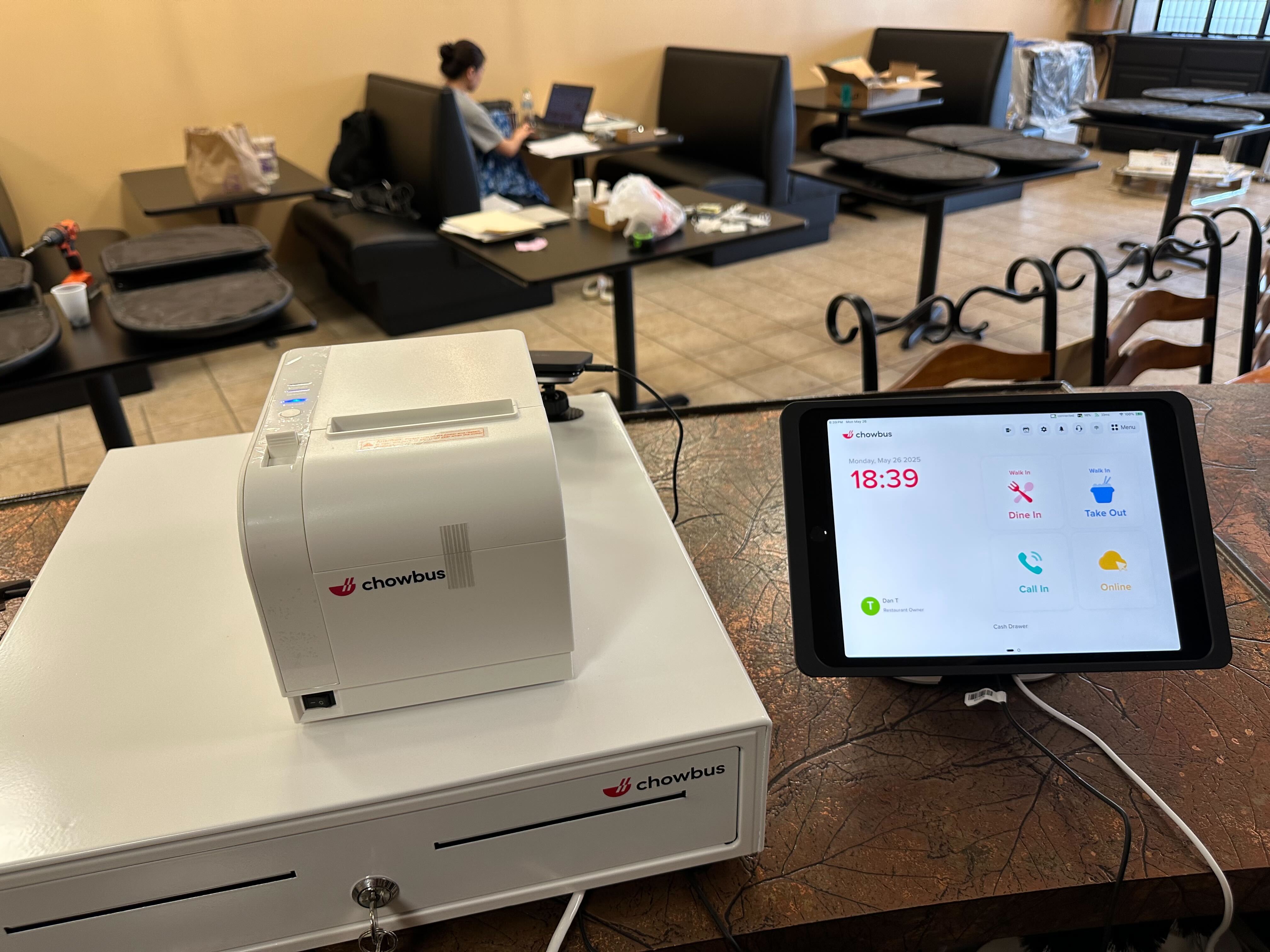
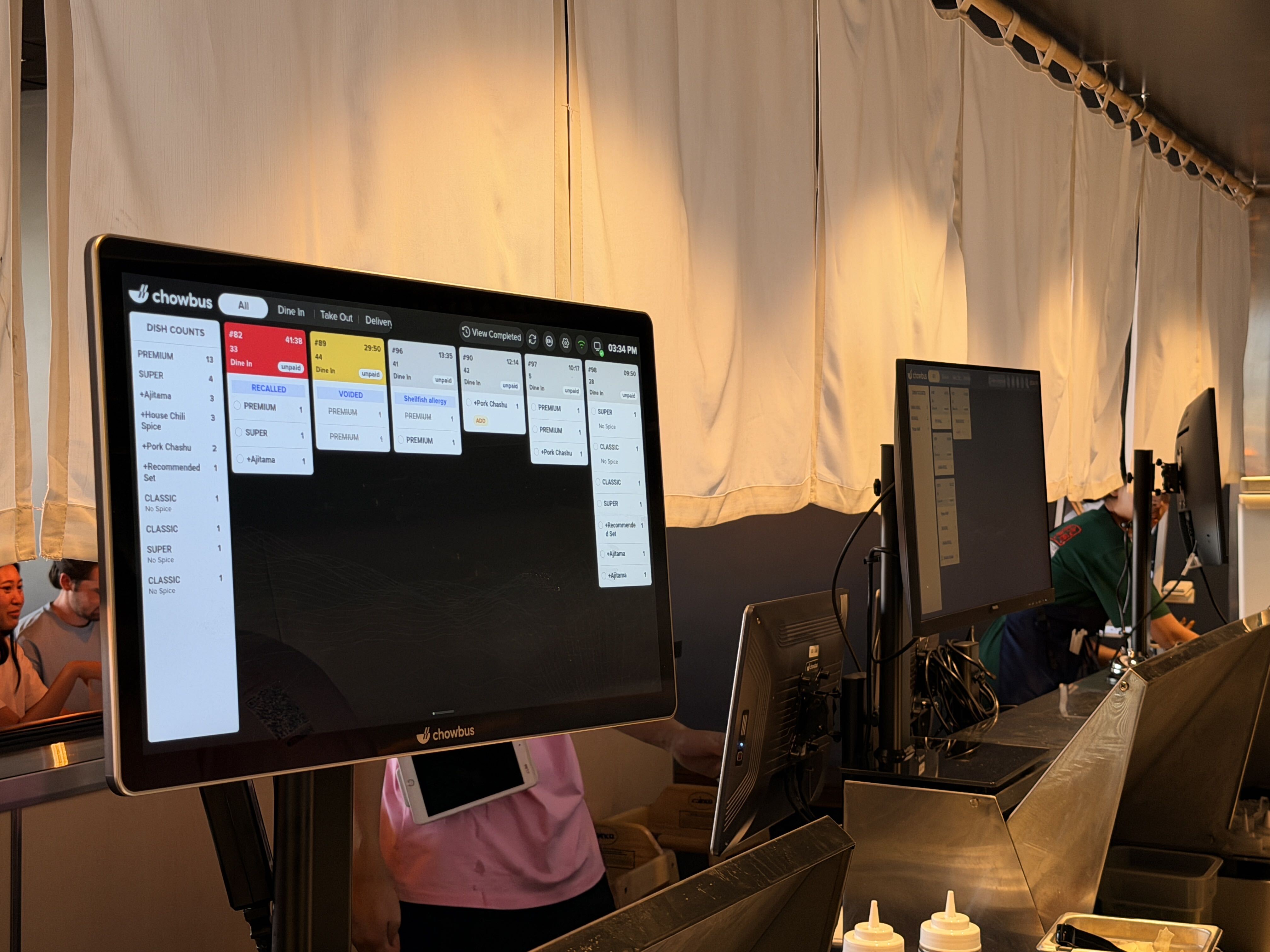
A POS-connected system then handles much of the enforcement for you. With the Chowbus reservation system, guests book through Google Maps or your website and receive a confirmation email right away, while you set capacity, booking intervals, open and close times and auto-notifications in the dashboard. Staff see reservations, the waitlist and tables in one view, check guests in, and assign tables from the POS. Treat those settings as part of the policy: intervals that match your seating length, capacity that reflects the tables you hold for walk-ins, and holiday hours loaded before booking opens.

Q1: What is a restaurant reservation policy?
It is the written set of rules for how your restaurant takes and honors bookings: how long you hold a table, how long a seating lasts, how large parties book, and what happens with late cancellations and no-shows. A good policy is short enough to show on the booking page and specific enough that a new host can apply it without asking the manager.
Q2: How long should the grace period be for a late reservation?
Fifteen minutes is common for full-service restaurants. Timed formats such as AYCE hot pot or Korean BBQ often keep the same hold but end the seating at its original time, so a late start shortens the meal instead of delaying the next party. Whatever you choose, put the number in the confirmation so it never surprises the guest.
Q3: Is a deposit or a card hold better for a large party reservation policy?
A deposit protects you more because the money is already collected, which suits banquet menus and private rooms where food is bought ahead. A card guarantee feels friendlier and suits large tables without a set menu. Before choosing, ask your processor how long holds last, since an authorization placed weeks ahead may expire before the reservation date.
Q4: How much should a restaurant charge for a no-show?
There is no standard figure. Many owners base it on what the empty table actually costs them, such as a share of the set-menu price or the per-person minimum for a private room. Any number you use in the policy should be one you have checked with your processor and local consumer rules, and it should be shown to the guest at the moment of booking.
Q5: A party booked a banquet for 12 and only 8 arrived. What should we charge?
It depends on what your policy said at booking. If it stated that you prepare and charge for the headcount confirmed 24 hours before, you can charge for twelve menus and pack the extra dishes to go. If the policy never mentioned headcount, consider charging for the guests who came and adding the headcount clause before the next banquet.
Q6: How do we introduce a new no-show policy without upsetting regulars?
Start with large parties and holiday dates, where most of the cost sits, and leave everyday small tables alone. Post the new terms on the booking page and in confirmations a few weeks before they take effect, and give managers permission to waive a first late cancellation for a known regular. Review no-show numbers after a month and adjust from there.
A reservation policy earns its keep at the host stand, when a late party, a shrinking banquet or a lingering KBBQ table needs an answer in thirty seconds. Clauses with sample wording, a reason and a clear enforcement step turn those moments into routine.
Start with the clause that costs you the most today, whether that is Saturday no-shows, AYCE tables that run long, or Lunar New Year banquets that shrink at the last minute. Write that clause, put it on the booking page and in the confirmation in every language your guests read, set your reservation system to match, and add the next clause once the team is comfortable with the first.