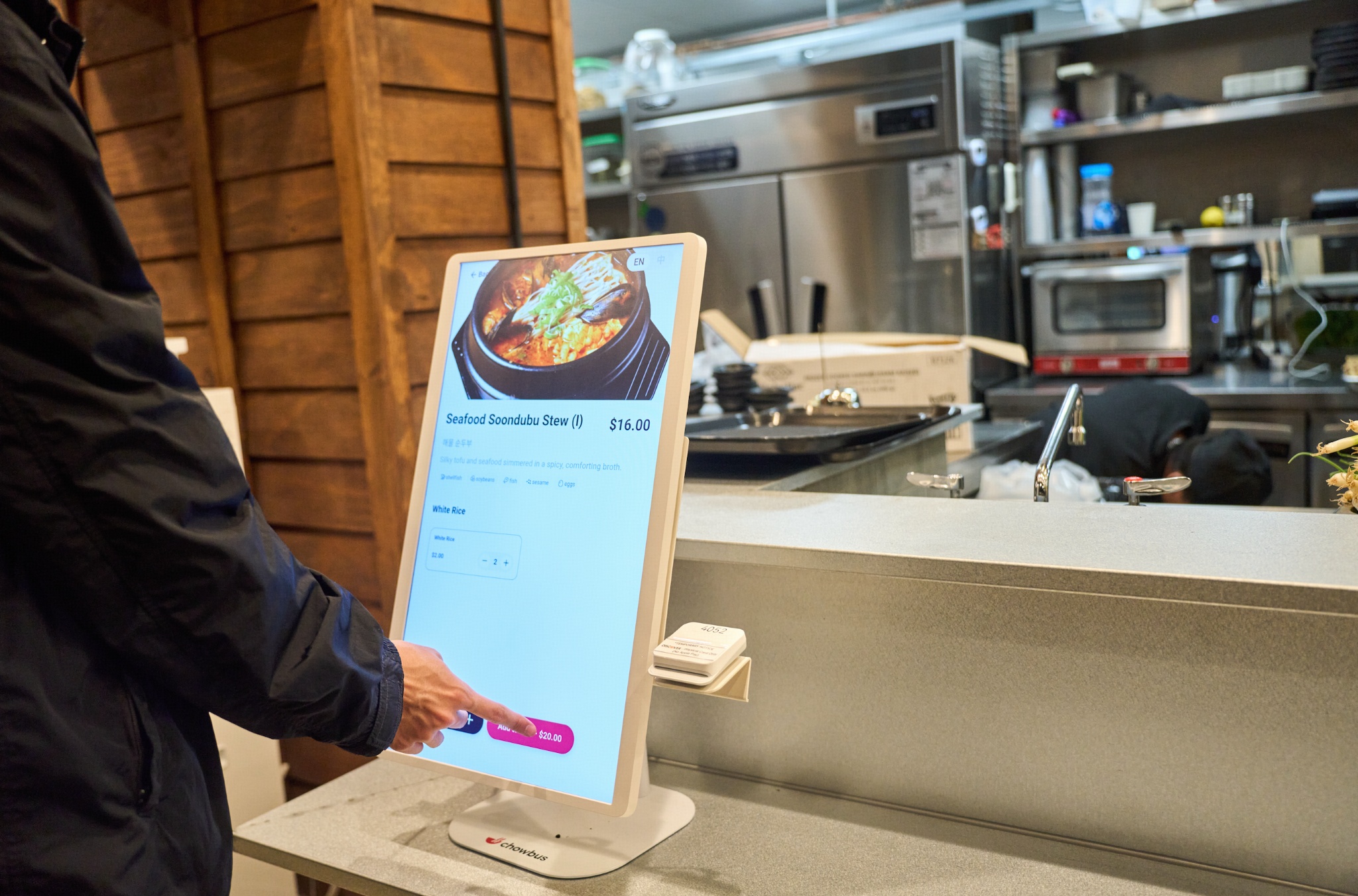
A table finishes its meal at 7:42. The next reservation isn't until 8:15, and there's a walk-in party of four standing near the host stand who've been waiting eleven minutes already. By the time that table is actually sat again, it's 8:03 — twenty-one minutes after the last plate left, and none of those minutes were spent cooking anything. Owners who track table turnover almost always start by looking at the kitchen, because a slow kitchen is the most visible suspect. Often it isn't the actual bottleneck.
Follow one table through a full cycle — from the moment the check gets paid to the moment new guests sit down — and the kitchen usually turns out to be a small fraction of that window. The rest of the time is spent on things that have nothing to do with cooking at all: bussing, resetting, seating logic, and payment.
Walk through where those minutes actually go, one stage at a time.
The clock on a table's next turn doesn't start when the guest asks for the check — it starts when the table is actually clear and reset. That gap, between a party standing up to leave and a busser physically getting to that table, is often the single largest unmeasured chunk of turnover time in a dining room. It depends entirely on how many other things a busser is doing at that moment and whether anyone's actually watching for a table that just cleared. A kitchen working at full speed doesn't help this stage at all, because the kitchen already finished its part of the job.
Asking for the check, waiting for a card machine, running the payment, and returning the receipt is a sequence that feels quick in the moment and adds up over a shift. If a server is juggling four other tables when a party is ready to pay, that request can sit for several minutes before anyone gets to it — minutes where a finished table is occupied by guests who are ready to leave but haven't been given the chance. A QR-code payment option that lets a guest pay directly from their phone removes this entire step from the server's plate, which is exactly why it shows up more often at restaurants focused on turnover than restaurants focused on anything else.
A host deciding where to seat a walk-in party isn't solving a simple math problem — they're weighing which tables are actually close to turning, which reserved tables might run late, and how a specific party size fits an available table without wasting seats. Get that judgment wrong even slightly and a four-top sits two people who could have used a smaller table, blocking a larger party from being seated later in the shift. This decision happens dozens of times a night, and a host working from a paper chart or memory alone is guessing at information a connected system could show in real time.
Kitchen speed still matters, to be clear — especially for the specific window between an order being placed and food reaching the table. But that window is usually shorter and more consistent than the stages before and after it. A kitchen firing in eighteen minutes instead of twenty-two saves four minutes. A busser who doesn't notice a cleared table for ten minutes loses more than twice that, on a task that has nothing to do with cooking at all.
Every extra ten minutes a table sits empty between parties is ten minutes that table isn't generating revenue during peak hours — the only hours where turnover actually matters, since an empty table at 3pm on a Tuesday isn't costing anyone anything. A 90-seat restaurant losing an average of fifteen minutes per turn across a busy Friday and Saturday dinner service can be looking at several fewer covers seated across the weekend, multiplied by an average check size. That's not a rounding error; it's a specific, calculable amount of lost revenue that never shows up as a line item anywhere, because nobody's tracking the minutes a clean table sat empty.
An all-you-can-eat or hot pot restaurant has a table-turnover problem that looks different from a standard full-service dining room, because the meal itself doesn't have a natural end point the way a plated entrée does. A party can linger well past the point where they've stopped ordering, and unless staff are actively tracking how long a table has been seated against the restaurant's own time policy, that table stays occupied by guests who are effectively done. This is less a bussing or payment problem and more a table-status problem: knowing, in real time, which tables have been seated long enough that a gentle check-in or a bill makes sense, rather than relying on a server to remember amid everything else happening during a rush.
A single restaurant tracking table turnover is watching one dining room. A group running several locations is trying to answer the same question — where is time actually being lost between parties — across stores that may each have slightly different floor plans, staffing levels, and habits around bussing and payment. Without a shared way to see table status and turnover speed across every location, a general manager ends up relying on anecdotes from each store rather than an actual comparison, which makes it much harder to tell whether one location's slower turnover is a real problem or just a normal difference in layout.
Pick one Friday or Saturday dinner shift and track four timestamps for five different tables: when the check was requested, when it was paid, when the table was bussed, and when the next party was seated. The gaps between those timestamps show exactly where the time is going — and for most restaurants, at least one of those gaps turns out to be far larger than anyone expected, usually somewhere that has nothing to do with the kitchen.
Restaurants that close these gaps usually don't hire more bussers or push their kitchen to work faster. They remove the delay between a table being ready and someone noticing it — a payment method that doesn't require a server to physically return with a machine, a system that flags a cleared table the moment it's actually clear, a host who can see real-time table status instead of relying on a walk-by glance. Food still comes out of the kitchen at the same pace it always did. What shrinks is the amount of time between one party leaving and the next one sitting down that was never actually necessary.

Q1: What actually slows down table turnover in a restaurant besides the kitchen?
The biggest gaps usually sit in bussing (the time between a table clearing and someone noticing and resetting it), payment (waiting for a card machine to reach the table and return), and seating logic (a host deciding where to place a walk-in without knowing which tables are truly close to turning). Kitchen speed matters, but it's often a smaller fraction of the total cycle than owners assume.
Q2: How can a restaurant find out where it's actually losing time between table turns?
Track timestamps for a handful of tables during a single busy shift: when the check was requested, when it was paid, when the table was bussed, and when the next party sat down. The gaps between those points usually reveal a bottleneck that has nothing to do with cooking.
Q3: Does faster table turnover mean rushing guests through their meal?
No. The delays that actually matter happen after a table has already finished — the gap between a cleared table and it being reset, or a paid check and the guests actually leaving. Addressing those doesn't change how long anyone spends eating.
Q4: How much revenue does slow table turnover actually cost a restaurant?
It depends on the restaurant's size and average check, but losing even fifteen minutes per turn across a busy weekend dinner service can add up to several fewer covers seated — a specific, calculable amount of lost revenue that rarely appears as its own line anywhere.
Q5: What's the fastest fix for slow table turnover — more staff or better tools?
More staff can help if bussing capacity is the actual bottleneck, but many restaurants lose more time to delays a system could catch automatically, like a cleared table nobody noticed or a host guessing at table status. Identifying which delay is actually happening matters more than adding headcount by default.
Q6: Does a QR-code or phone payment option really make a measurable difference in turnover?
It removes an entire step — waiting for a server to bring and return a card machine — from the sequence between a guest finishing their meal and a table being cleared. For restaurants running a busy dinner rush, that step alone often accounts for several minutes per table.
Table turnover isn't one number that lives or dies on kitchen speed — it's a sequence of small handoffs, most of which happen after the food is already gone. A busser who doesn't notice a cleared table, a server juggling a payment request among four other tables, a host guessing at which table will actually be ready next: each one adds a few minutes, and those minutes are where most of the lost revenue actually sits.
For an owner trying to improve turnover, timing an actual shift rather than guessing at the bottleneck is almost always the faster path to an answer, because the stage that feels slowest in the moment isn't always the one that's actually costing the most time.
Fixing this doesn't mean asking anyone to move faster. It means finding the specific gap where a table sat ready and empty longer than it needed to, and closing that gap first.