A table of twelve has just finished a long holiday dinner: a whole fish, two orders of Peking duck, hot pot for the kids' end of the table, and three rounds of drinks. The check arrives, and four different people reach for it at once. One uncle wants to pay for everything, two cousins want to split their family's share, and someone at the far end only had tea and noodles. The server stands there with one long receipt and a card terminal, and the table next door is waiting to order.
Family-style dining is the heart of many Asian restaurants, and it is also where POS payment gets complicated. Shared plates do not belong to one seat, large parties often pay as several households, and holiday weeks bring more of these tables than any other time of year. This article looks at how to set up and run split payments for large groups so the end of the meal is as smooth as the rest of it.
Most check problems can be traced back to the first ten minutes of the meal. If nobody asks how a large table plans to pay, the server rings everything onto one check and then has to rebuild it at the end, dish by dish, from memory and a crowded receipt. That is when mistakes happen: a dish split twice, a drink missed, a family charged for a round they did not order.
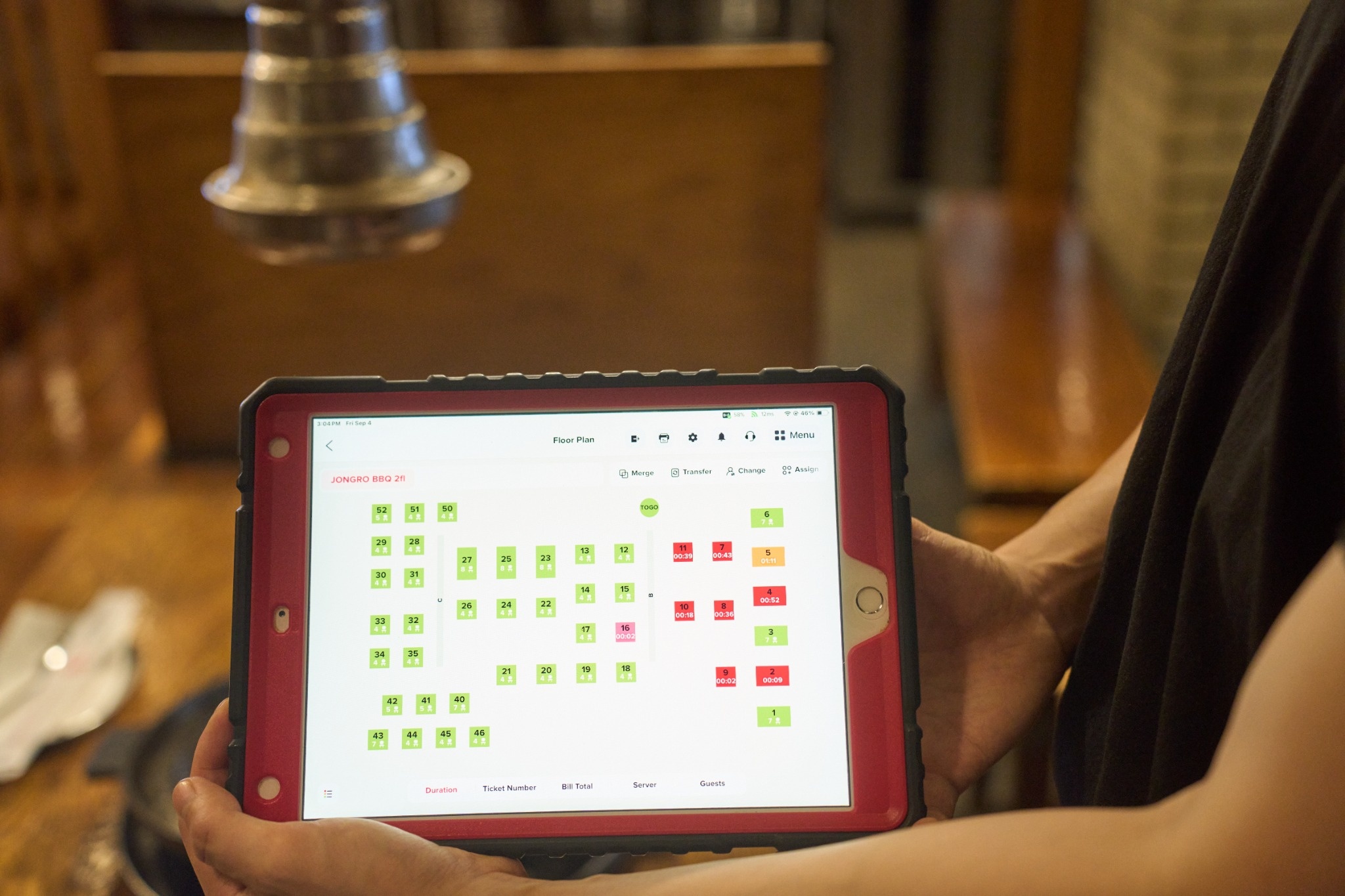
A simple question when the table orders saves most of that work: "Will this be one check, or are you splitting by family?" If the answer is split, the server can ring orders by seat or by group from the start. For a party that arrives as three households, three groups on one table in the POS makes the end of the meal a matter of printing three checks instead of rebuilding one.
Most modern POS systems support several kinds of splits, and large tables often need more than one at the same time. Splitting evenly divides the total by the number of payers, which works for groups that shared everything and do not mind small differences. Splitting by seat or by item assigns each dish to a person or family, which works when some guests ordered very differently from others. Splitting by amount lets each payer put a specific number on their card, which helps when one person wants to cover a set share, such as the grandparents' portion.
Shared dishes are the hard part. A whole fish ordered for the table belongs to everyone. A good POS can split a single item across several seats or groups, for example one dish divided between two families, without the server doing math on a notepad. Test this before the holiday with a real menu item, and make sure servers know where the option is on the screen. Check how the receipt shows a split item, too. A line that reads "Whole Fish 1/2" is easy for a guest to understand; a line with an unexplained partial price invites questions at the end of a long dinner.
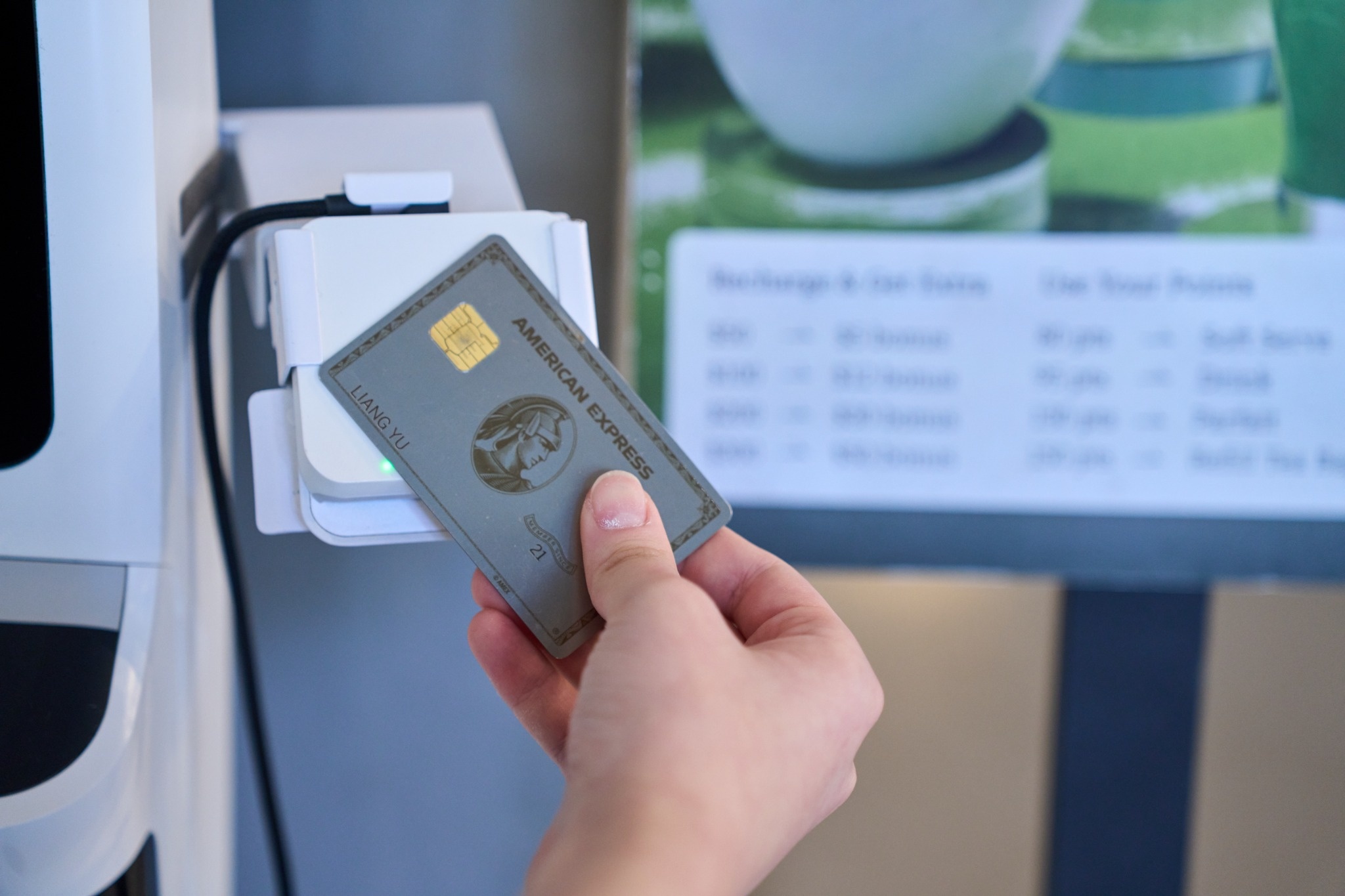
When a party of twelve splits five ways and everyone has to walk to the counter, the payment line blocks the entrance just when new guests arrive. Taking payment at the table solves that. With a handheld device or a tablet at the table, each payer can tap a card or phone in turn, add a tip, and receive a receipt without leaving their seat.
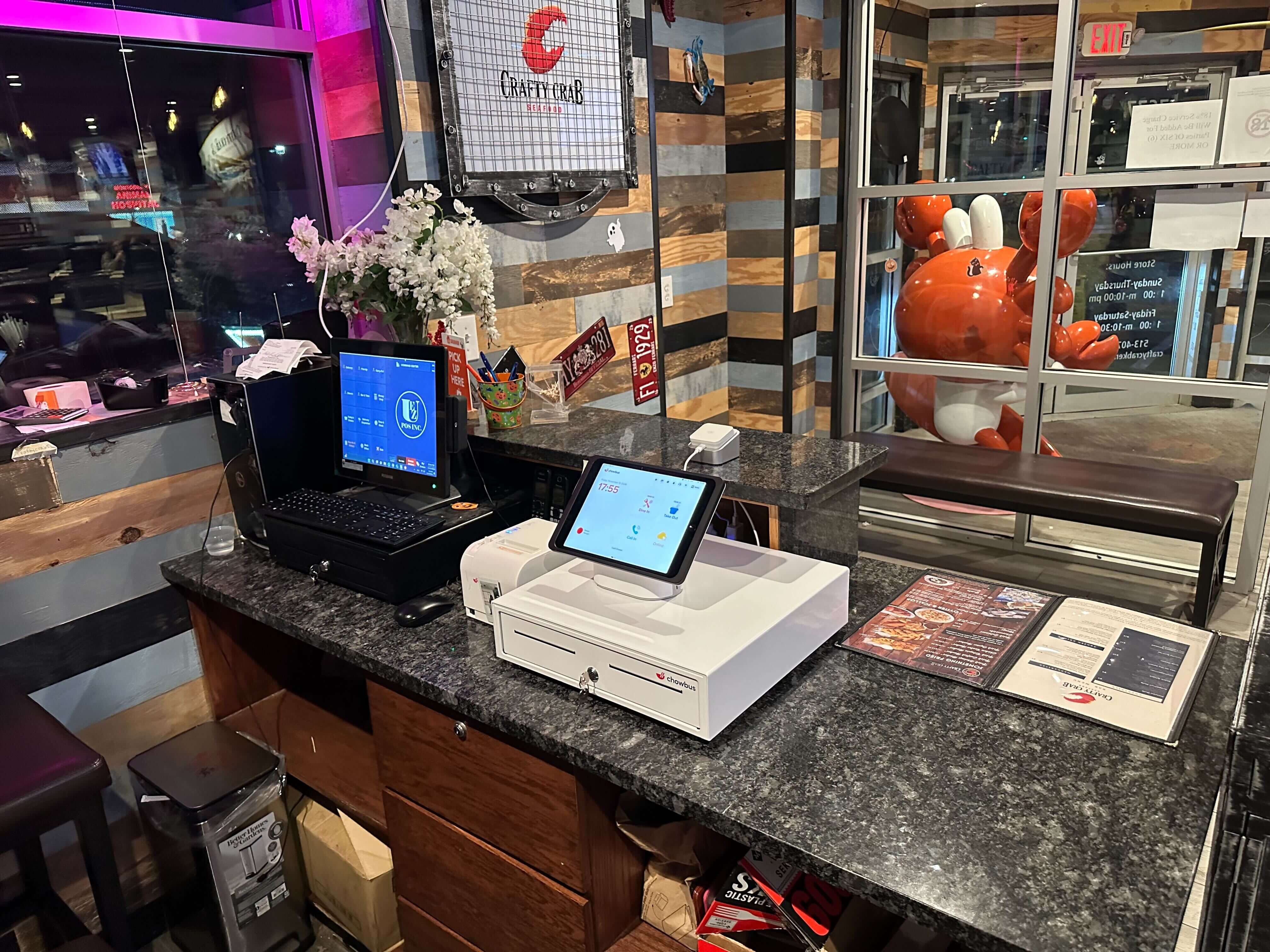
Chowbus POS, for example, offers a Guest Mode for tableside ordering and split-check processing and accepts credit cards and Apple Pay at the table. A handheld POS connected to the same system keeps every partial payment on the same order, so the check closes only when the full amount is paid and nothing is left open at the end of the night.
Large holiday tables often pay with a mix: one family pays cash, another uses two cards, and someone wants to use a gift card they received last year. The POS should let the server record each tender against the same check and show the remaining balance after each payment. Without that, servers end up writing balances on the back of the receipt, and the drawer does not match at closing.
Set a rule for cash change on split checks, since making change for several payers at once is where counting errors happen. Many restaurants have one person, usually a manager, handle cash for large tables while the server handles the cards.
Many restaurants add an automatic gratuity for large parties, commonly for groups of six or eight and up. If you do, say so on the menu, on the reservation confirmation, and when the table is seated. Guests who hear about it before they order are far less likely to dispute it at the end of the night.
Decide how the automatic gratuity applies to split checks. The usual approach is to apply the same percentage to each split so every payer sees it on their own check, rather than placing the whole gratuity on whoever pays first. Make sure your POS applies it automatically to each split instead of relying on the server to calculate it.
Holiday reservations for large parties often come with a deposit or a prepaid set menu. At the end of the meal, that deposit has to be applied before the check is split, or one payer ends up getting the full credit while the others pay their whole share. Record the deposit as a payment on the order when the table is seated, so the balance shown at checkout already reflects it, and the split divides only what is still owed.
If the deposit was paid by one person who wants it applied only to their family's portion, apply it to that group's check rather than to the whole table. Write the rule down for servers, because a deposit that disappears into the wrong split is one of the most common holiday billing complaints, and it is easy to prevent with a minute of setup.
Sometimes the most difficult part of a large check is the family politics. Two relatives both insist on paying, or one person wants to cover everything but another quietly hands over a card. Servers should not have to referee. A simple practice is to ask the person who made the reservation, or the person who asked for the check, how they want it handled, and follow that. If two people insist, offering an even split between them usually ends the discussion politely.
Above all, give the server time. A large table's payment can take ten minutes when handled well, and rushing it is how errors happen. On holiday nights, schedule enough floor staff that the server handling a party of twelve is not also covering four other tables during checkout.
Split payments create more transactions per table, which makes end-of-day reconciliation more important. After a holiday service, look at the report for open checks, partial payments, and voids on large tables. A check that was closed with a balance still due, or a payment that was entered twice, is much easier to fix the next morning than at the end of the month. Your POS reporting should show these by server and by table.

Q1: What is POS payment splitting?
It is the ability of a point of sale system to divide one table's bill into several payments, such as evenly, by seat, by item, or by a custom amount, and to accept different payment methods for each part of the check.
Q2: How do you split a shared dish on a POS?
Many POS systems let you divide a single item across several seats or groups, so a whole fish or a family-style platter can be split between households. Test this feature with a real menu item before a busy holiday week.
Q3: Is it better to split checks at the table or at the counter?
For large parties, at the table. Handheld devices or tableside tablets let each payer tap and tip without leaving their seat, which keeps the counter and entrance clear for arriving guests.
Q4: Should restaurants add automatic gratuity for large parties?
Many do, usually for groups of six or eight and up. It works best when the policy is shown on the menu and reservation confirmation and applied evenly to each split check by the POS.
Q5: How do I handle cash, cards, and gift cards on one check?
Use a POS that records each payment against the same check and shows the remaining balance after each one. Have one person handle cash change for large tables to avoid counting errors.
Q6: How can a server set up a large table to make splitting easier?
Ask how the table plans to pay when they order. If they are splitting by family, ring orders into separate groups or seats from the start so the checks are ready at the end of the meal.
Family-style meals are built for sharing, and the check should not undo that at the last minute. Ask how the table will pay before the first dish goes out, ring orders by group or seat, take payment at the table, and let the POS handle shared dishes, mixed tenders, and gratuity. Large holiday tables leave happy, and the next party gets seated on time.