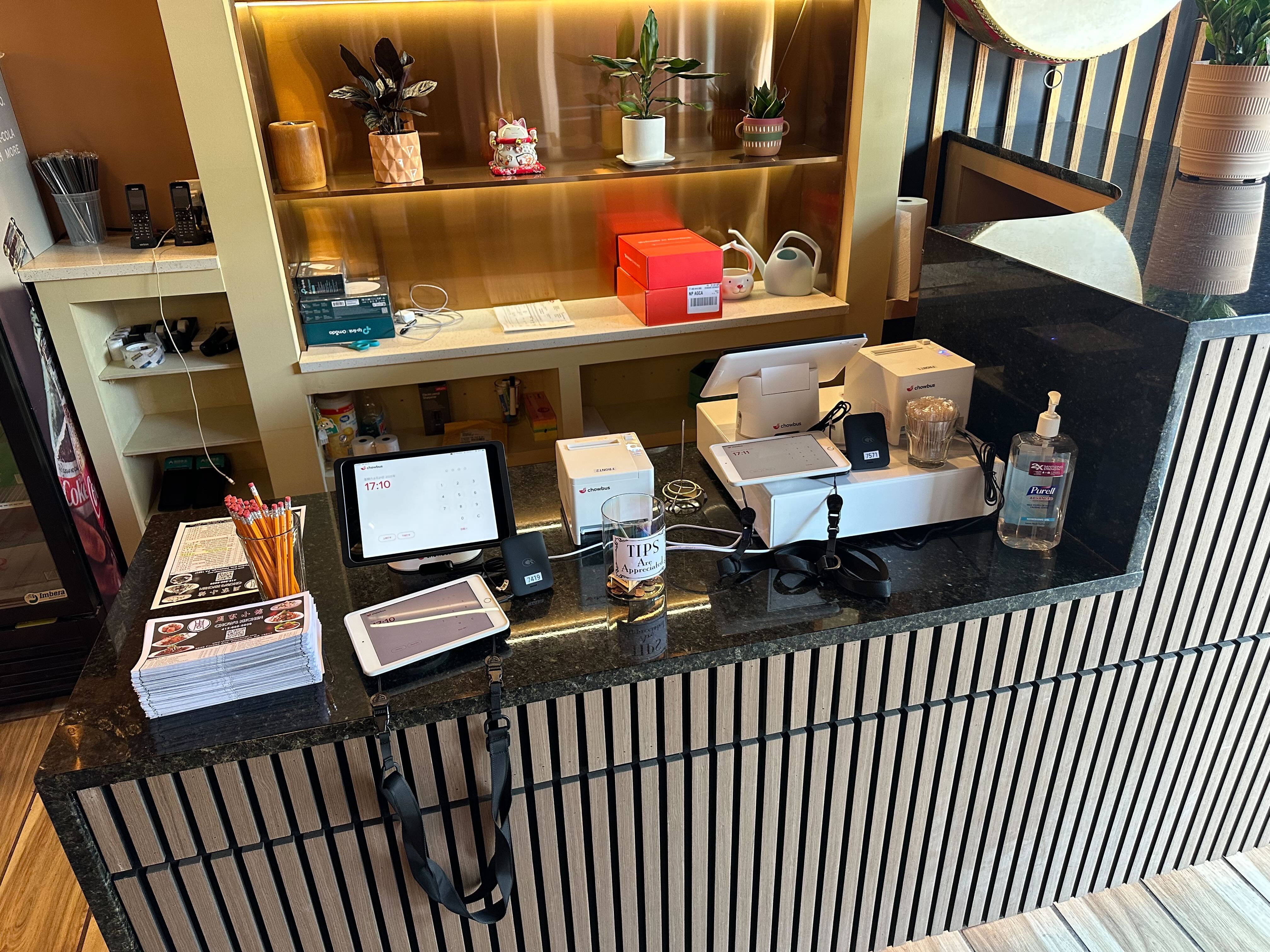
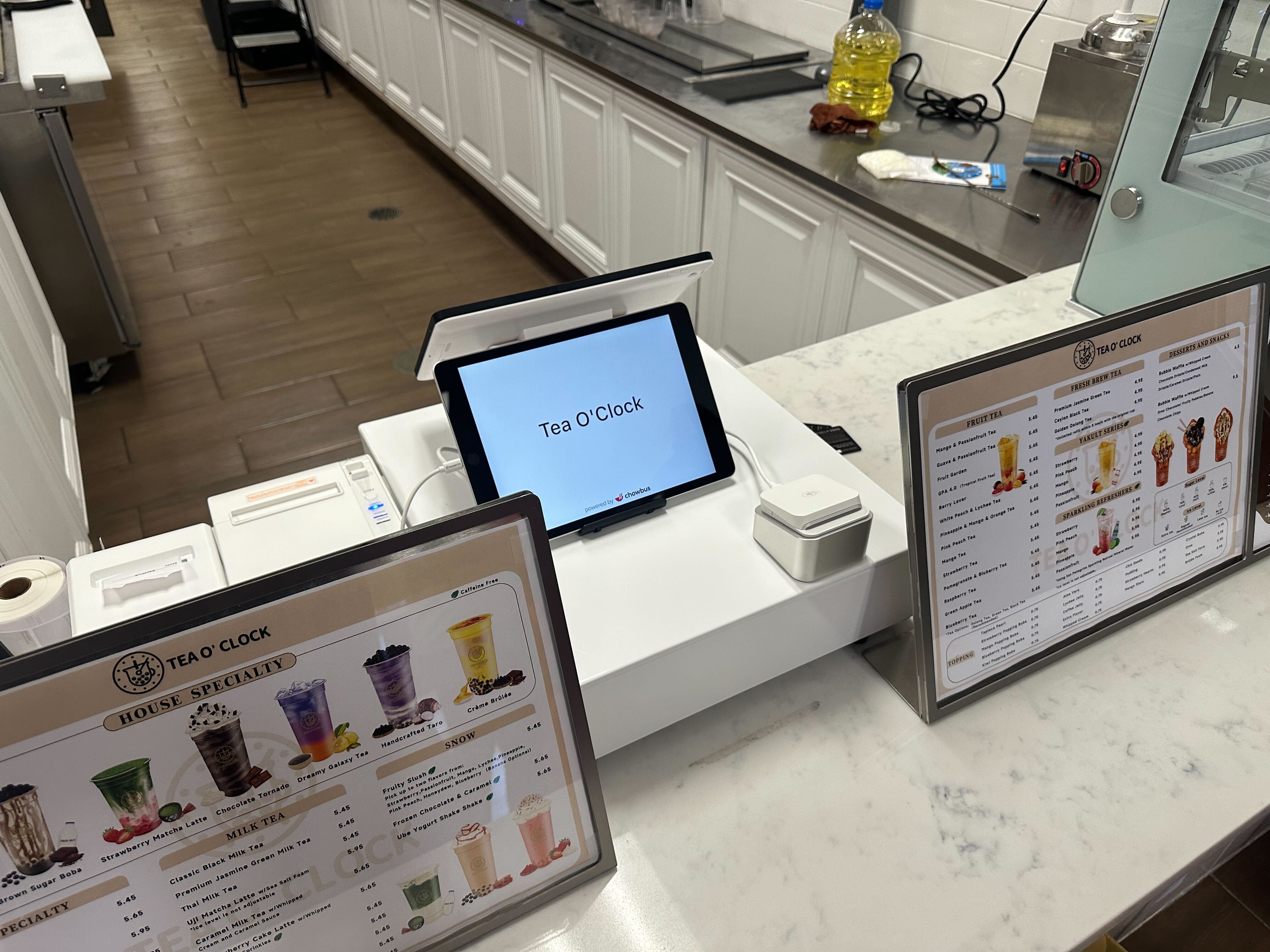
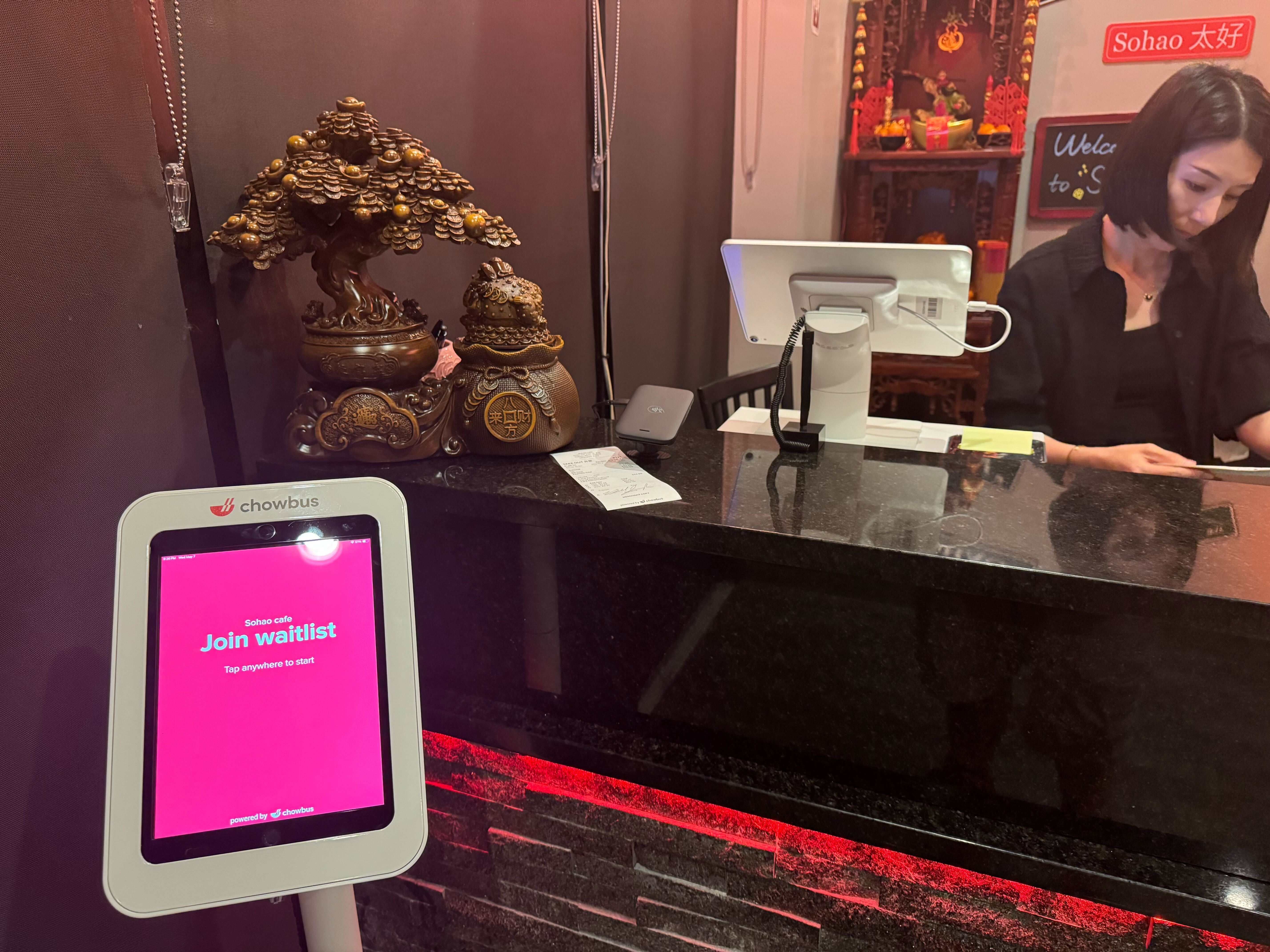
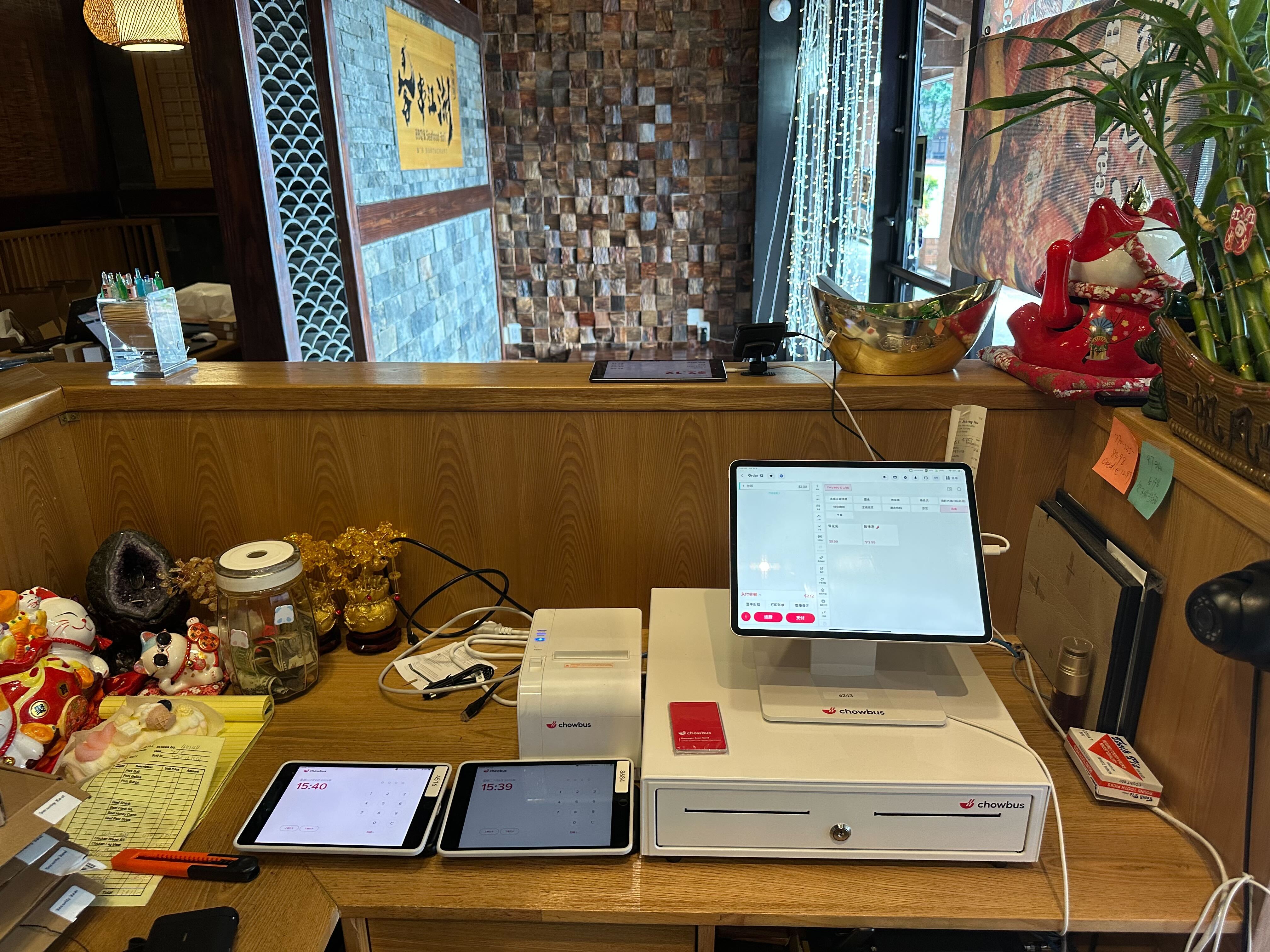
Most "best iPad POS" articles assume you've already decided on iPad. But that decision — iPad or Android tablet — quietly shapes your hardware bill, your repair costs, your offline reliability, and how locked-in you'll be three years from now. Before you pick a brand, it's worth comparing the two platforms honestly on the things that actually hit a restaurant's bottom line.
This isn't a spec sheet. It's a decision guide for restaurant owners — especially multi-station and Asian restaurants where uptime during a dinner rush and total cost over years matter more than which logo is on the tablet. Here's how iPad and Android POS really compare in 2026, and why the tablet brand matters less than the platform behind it.
Key takeaways: iPad POS tends to win on app polish, resale value, and a consistent hardware experience; Android POS tends to win on lower upfront hardware cost, wider device choice, and flexible all-in-one terminals. But for a restaurant, the bigger decision is the POS platform's offline reliability, total cost of ownership, and fit for your service type — not the operating system. Chowbus delivers a consistent, reliable POS experience with offline resilience and bilingual support across iPad-class and purpose-built hardware.

Android generally wins here. Android tablets and all-in-one Android terminals span a wide price range, so you can outfit multiple stations for less than the equivalent in iPads. Apple hardware carries a premium and a narrower range of models. If you're opening with several stations — a common situation for full-service and high-volume Asian restaurants — the upfront delta across four or five terminals is real money.
Restaurant tablets live near heat, grease, steam, and the occasional drop. Purpose-built Android POS terminals are often designed for this — spill-resistant, commercial-grade, sometimes with built-in receipt printers and cash-drawer connections. Consumer iPads are beautifully made but were designed for a living room, not a line station, so they usually need a commercial enclosure. Neither platform is inherently fragile; the question is whether the device was built for hospitality or adapted to it.
iPad holds resale value better and tends to receive OS updates for a long window, which can extend usable life. Android's advantage is replacement cost: if a unit dies, swapping it is cheaper. Over a three-to-five-year horizon, the two often land closer than the sticker suggests — which is exactly why you should compare total cost of ownership, not the purchase price. Total a full year of hardware, software, processing, and likely replacements for each path before deciding.
This is iPad's traditional strength: a controlled hardware lineup means POS apps behave consistently across devices, and the touch experience is polished. Android's strength is the opposite — variety. You can match the device to the job (a rugged handheld here, a large all-in-one there). The trade-off is that experience can vary more across different Android hardware.
Here's the uncomfortable truth for a restaurant owner: the operating system is rarely what determines whether your POS helps or hurts you. Two restaurants on the same iPad can have wildly different experiences depending on the POS platform running on it. The questions that actually decide your daily reality are platform questions, not OS questions:
Does it keep taking orders and payments when the internet drops? Does one price change update every station and channel instantly? Is support available in your language at 9 p.m. on a Saturday? Does it handle your service type — hot pot timing, AYCE per-head billing, family-style checks, boba modifiers? None of those are answered by "iPad" or "Android." They're answered by the platform.
So the smarter sequence is: pick the POS platform that fits your restaurant first, then choose whichever supported hardware — iPad-class tablet or purpose-built terminal — gives you the best cost and durability for your setup.
For a restaurant, the single most important reliability question isn't about the tablet at all. It's whether the POS can run locally during an internet outage and sync when the connection returns. A gorgeous iPad with a POS that freezes the moment Wi-Fi hiccups is worse than a modest Android terminal with rock-solid offline mode. Whatever platform and hardware you choose, test an outage scenario before you buy — put the device offline, run a full transaction, and confirm it recovers cleanly. This matters even more for high-volume rooms where a few minutes of frozen terminals during peak service is real lost revenue.
Asian restaurants often run several stations — front counter, server handhelds, a kitchen display, maybe a kiosk — and that changes the calculus toward two things: consistency across stations and total hardware cost. A platform that runs the same way on every device, in both Chinese and English, and that you can outfit affordably across many stations, beats a marginally nicer single-device experience. The moat isn't the OS; it's a platform built for how an Asian restaurant runs, on hardware priced for how many stations you actually need.
Work through it in this order. First, choose the POS platform on fit (service type, offline mode, support, integration). Second, confirm which hardware that platform supports. Third, within those options, run the numbers: total a full year of hardware plus software plus processing for an iPad setup versus an Android setup at your real station count. Fourth, weigh durability and resale for your environment. The OS falls out of that process as a detail, not the headline — which is exactly where it belongs.
Neither is universally better. iPad tends to win on app consistency and resale value; Android tends to win on upfront hardware cost and device flexibility. For a restaurant, the platform's offline reliability, total cost of ownership, and fit for your service type matter more than the OS — choose the platform first, then the hardware.
Android usually has a lower upfront hardware cost and cheaper replacements, while iPad holds resale value better and gets long OS support. Over three to five years the total cost of ownership often converges, so compare the full annual total — hardware, software, processing, replacements — rather than the sticker price.
It depends on the POS platform, not the iPad. A good platform caches your menu and processes orders and payments locally during an outage, then syncs when reconnected. Always test an outage scenario on the actual device before buying — the tablet brand doesn't guarantee offline capability.
You can, but consumer tablets aren't built for heat, grease, and drops, so they usually need a commercial enclosure and may wear faster. Purpose-built POS terminals are designed for hospitality. Either way, durability for your specific environment should factor into the cost comparison.
Less than you'd think. Core features — offline mode, modifiers, multi-location, loyalty, language support — come from the POS platform, which usually runs on both iPad-class and purpose-built hardware. Pick the platform for the features and fit you need, then choose supported hardware.
Prioritize consistency across stations and total cost at your real station count over a single device's polish. A platform that runs identically on counter tablets, server handhelds, a kitchen display, and kiosks — in both Chinese and English — and that you can equip affordably across many stations, serves a multi-station Asian restaurant best.
The iPad-versus-Android debate gets more attention than it deserves because it's concrete and easy to argue about. The decisions that actually move your numbers — offline reliability, total cost over years, fit for your service type, support in your language — sit one level up, at the platform. Get those right and the hardware question becomes a straightforward cost-and-durability comparison rather than a leap of faith.
If you're weighing tablet options for 2026, start with the platform and let the hardware follow. Explore the Chowbus POS platform and compare the full annual cost on the hardware that actually fits your restaurant.