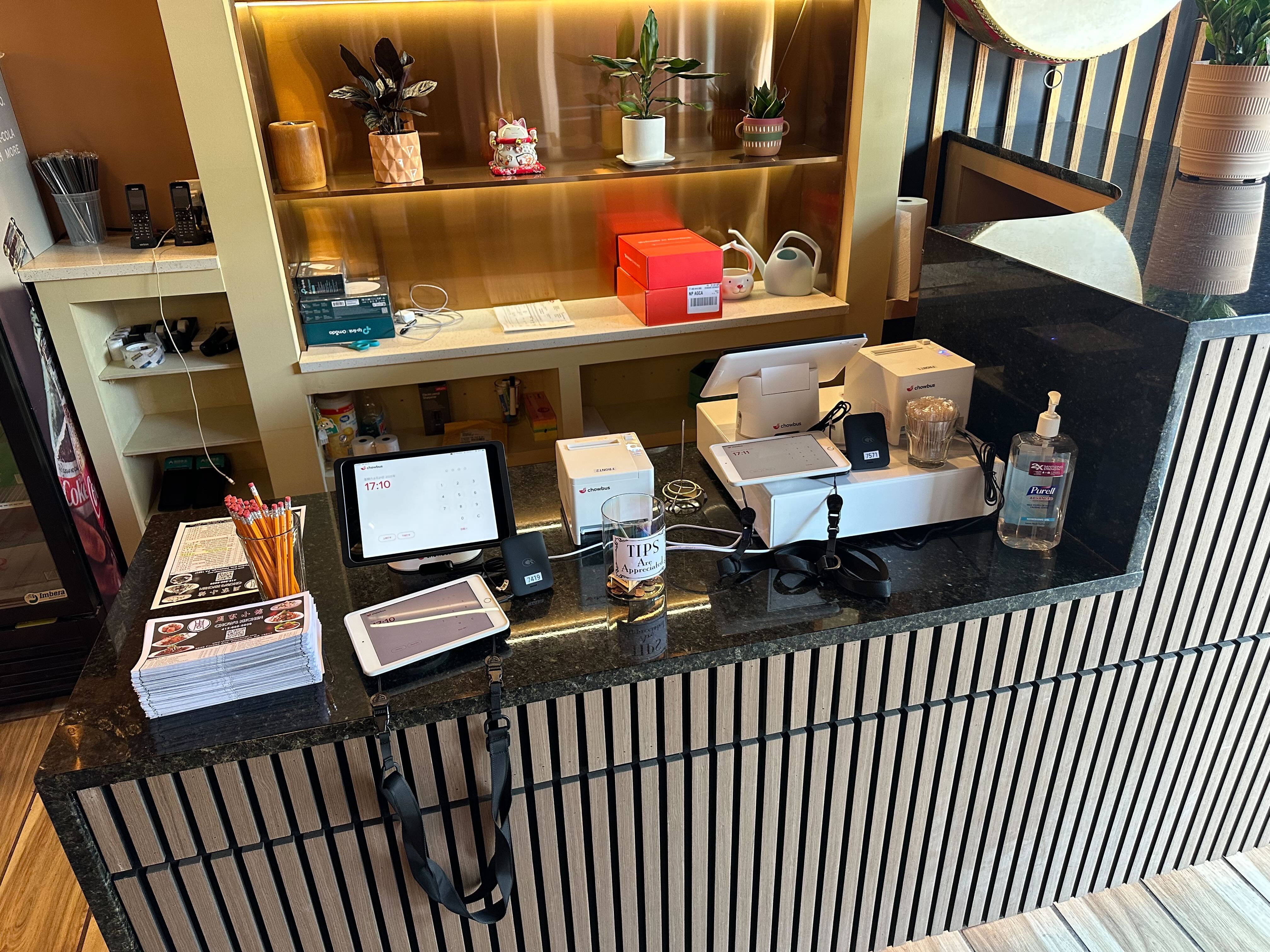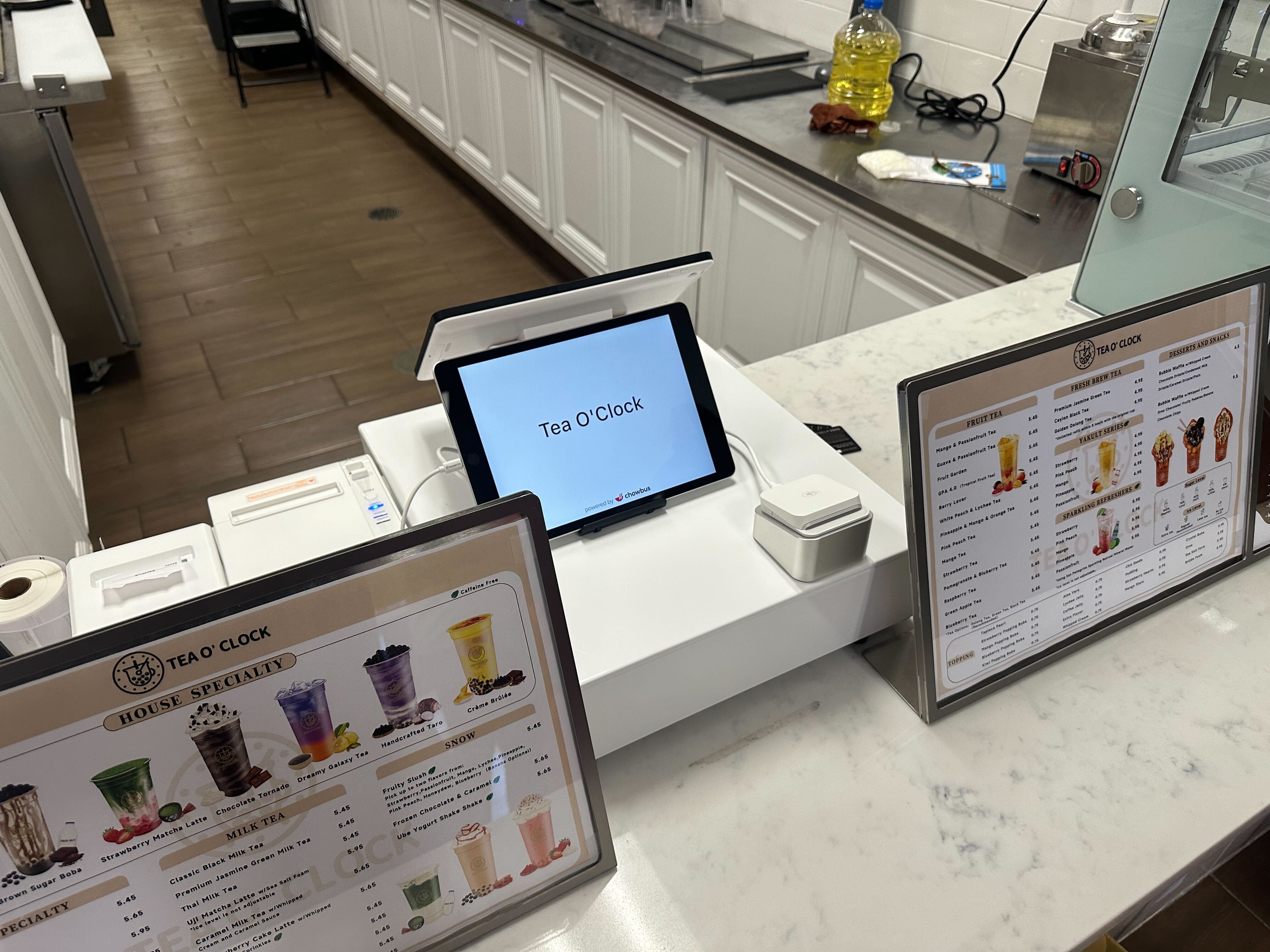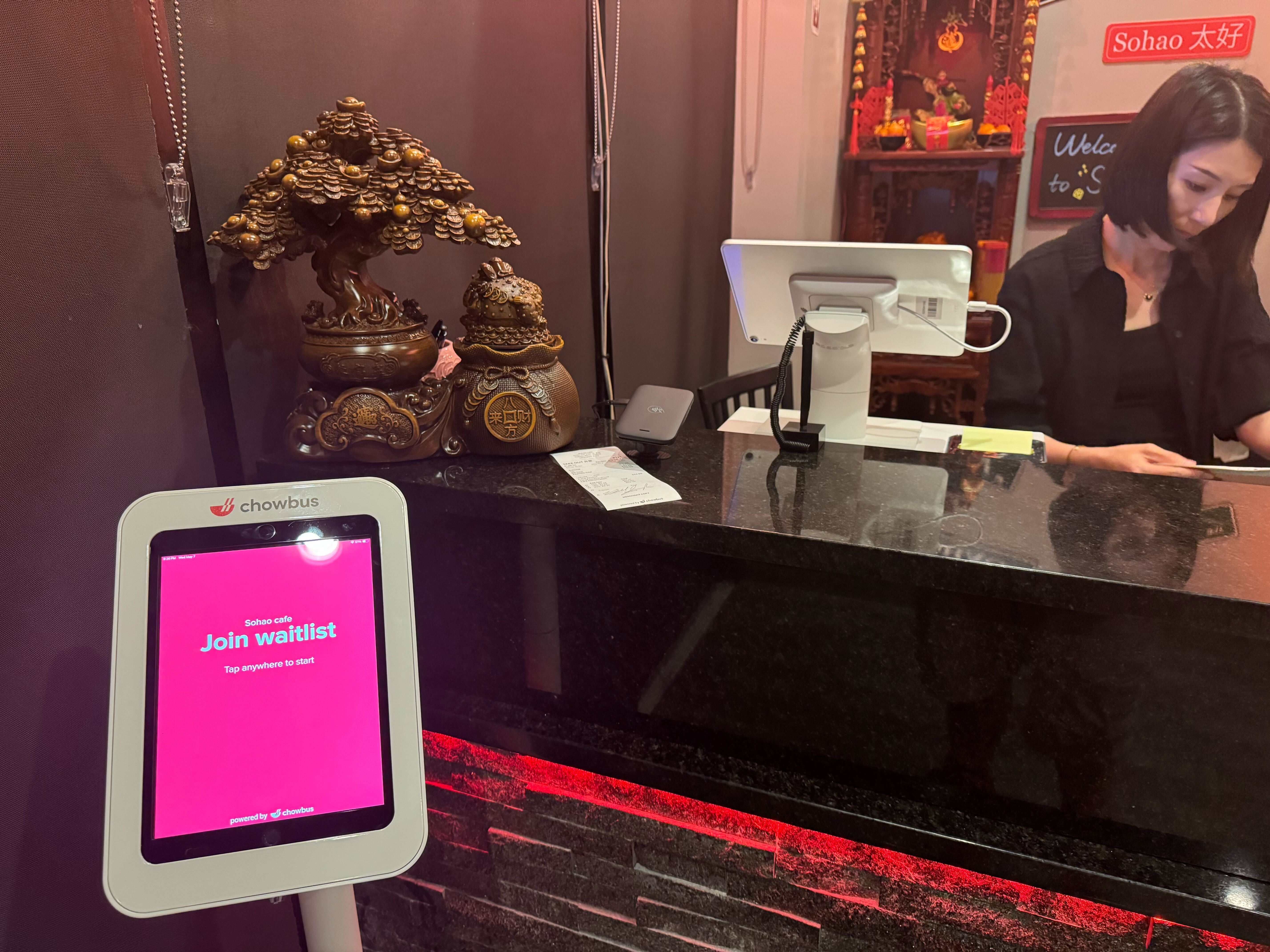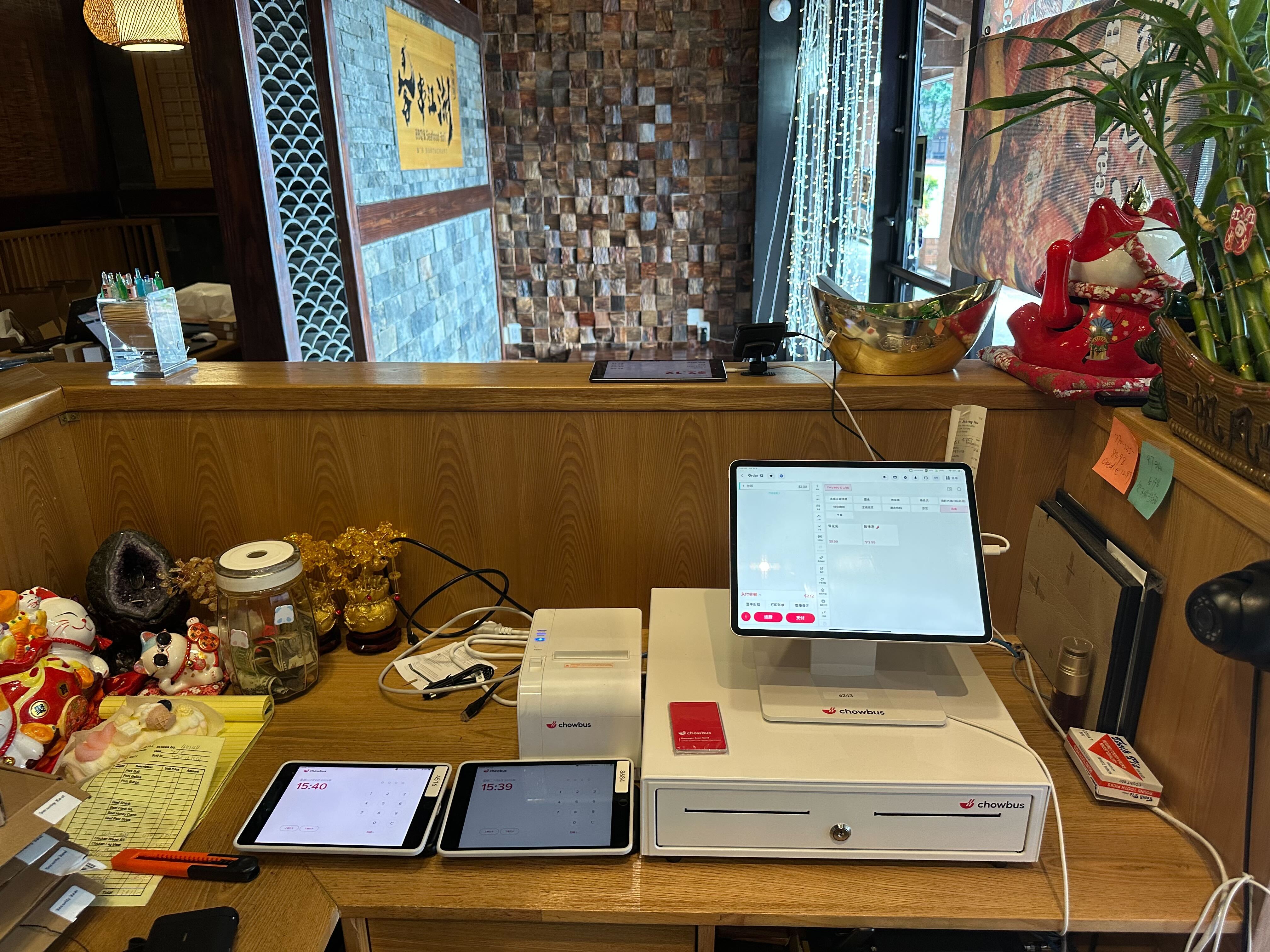
Ask three vendors what a restaurant POS costs and you'll get three monthly numbers — and none of them is the real answer. The advertised "$X per month" is the tip of an iceberg that includes payment processing, hardware, per-order fees, add-ons, and a handful of charges that don't appear on the quote at all. For Asian restaurants specifically, a few of those hidden fees hit harder, and a few of the savings are bigger. This is the honest breakdown.
This isn't a generic "POS pricing" overview. It's a line-by-line look at where Asian restaurant POS costs actually accumulate, the fees operators most often miss, and how to think about ROI so you're comparing the right number — not the headline rate.
Key takeaways: A restaurant POS's true cost includes software, payment processing, hardware, per-order/add-on fees, and onboarding — not just the monthly fee, and processing usually dominates. Asian operators most often miss processing markups, per-order delivery-integration fees, and paid feature add-ons. Weigh those against ROI: labor saved, higher table turnover, commission avoided, and retention from owned data. Chowbus offers transparent all-in pricing built for Asian restaurants.

Forget the monthly headline for a moment. Here's what actually leaves your account because of your POS, over a year.
1. Software subscription. The advertised monthly or annual fee. Real, but usually the smallest piece.
2. Payment processing. The big one. Your card volume times the all-in effective rate, every day. On meaningful volume this dwarfs the software fee — a small rate difference is thousands a year.
3. Hardware. Terminals, handhelds, kiosks, kitchen displays, printers. One-time or financed, and higher the more stations you run.
4. Per-order and integration fees. Charges per online order, or for third-party delivery integration. These scale with your busiest, most digital days — exactly when you can least afford a per-order skim.
5. Add-on modules. Online ordering, loyalty, reservations, multi-location — sometimes bundled, sometimes each a separate line. A stack of add-ons can quietly exceed an all-in plan.
6. Onboarding and training. Setup, menu build, and training time. Higher if you're running multiple disconnected systems instead of one.
7. Switching and exit cost. What it takes to leave later. Tied directly to data portability and hardware lock-in — invisible until you want out.
Three line items trip up Asian restaurants in particular.
First, the processing markup. Because many Asian restaurants run high volume on relatively thin margins, even a small markup on the effective rate is significant. Always get the all-in effective rate and multiply by your real monthly card volume — don't accept a teaser "as low as" rate.
Second, per-order fees on a delivery-heavy mix. Asian restaurants often skew heavily toward online and third-party delivery. A POS that charges per online order, or marks up delivery integration, bills you most on your busiest days. Confirm whether online ordering is commission-free or per-order.
Third, paid add-ons for things you'll use daily. If loyalty, a kitchen display, or multilingual support are paid extras, your true monthly cost is well above the headline. Ask for the all-in price with every feature you'll actually use turned on.
Cost only means something against return. A POS isn't only an expense — done right, it pays itself back through four channels, and for Asian restaurants these can be substantial:
Labor saved. Faster ordering, kiosks, and a kitchen display reduce the staff hours needed per cover and cut errors. In a tight labor market, recovered hours are real dollars.
Higher table turnover. Faster ordering, splitting, and payment move tables faster — especially in high-volume hot pot, AYCE, and family-style rooms where turnover is the whole business model.
Commission avoided. Commission-free online ordering on your own channel keeps the 20–30% a third-party app would take on repeat orders. For a delivery-heavy Asian restaurant this is often the single biggest return.
Retention from owned data. Unified loyalty and CRM turns one-time guests into regulars. Even a small lift in repeat rate compounds over a year.
The right way to judge POS cost is cost minus these returns — not the sticker alone. A platform that costs a bit more monthly but saves labor, lifts turnover, avoids commission, and grows retention can be far cheaper in net terms than a "cheap" POS that does none of those.
Before signing, total a year for each option: software + (card volume × effective rate × 12) + hardware + per-order/add-on fees + onboarding. Then estimate annual return: labor hours saved × wage, plus turnover lift, plus commission avoided on repeat orders, plus an estimate of retention gains. Compare net cost (true cost minus return) across options. More often than not, a purpose-built platform with fair processing and bundled features wins on net cost even if its monthly fee isn't the lowest — because the processing rate, per-order fees, and missing-feature costs decide the comparison, not the headline.
There's no single number — true cost combines software, payment processing, hardware, per-order/add-on fees, and onboarding, totaled over a year. Processing usually dominates: your card volume times the effective rate often exceeds the software fee several times over. Always compare the all-in annual total, not the monthly headline.
The most common are payment-processing markups on the effective rate, per-order fees for online or delivery orders, paid add-on modules (loyalty, KDS, online ordering), proprietary hardware costs, and exit/switching costs tied to data portability. None of these show in the advertised monthly fee.
Because it applies to every transaction, every day, scaled to your card volume. On meaningful volume, even a half-percent difference in the effective rate is thousands of dollars a year — far more than the monthly software fee. That's why you compare the all-in effective rate on your real volume.
Estimate annual return across four channels: labor hours saved times wage, higher table turnover, commission avoided through commission-free online ordering, and retention gains from owned loyalty data. Then judge the POS on net cost — true annual cost minus this return — not on the monthly fee alone.
Processing markups (high volume on thin margins amplifies them), per-order fees on a delivery-heavy mix, and paid add-ons for features you'll use daily like loyalty, multilingual menus, and kitchen display. Ask for the all-in effective rate and the all-in price with every feature you need turned on.
Yes — often. A platform with a slightly higher monthly fee but fair processing, commission-free ordering, labor-saving features, and unified data can have a lower net cost than a "cheap" POS once you subtract the labor, commission, and retention returns. Judge on net cost, not sticker price.
POS pricing is designed to be compared on the wrong number. The monthly fee is small and visible; the processing rate, per-order fees, and missing-feature costs are large and hidden — and the return side rarely gets mentioned at all. Total the real annual cost, subtract the real annual return, and the "expensive" platform often turns out to be the cheap one.
If you're pricing a POS for your Asian restaurant in 2026, build the cost-and-ROI worksheet above before you compare headlines. See transparent, all-in pricing on the Chowbus POS platform and run your real volume and return through it.