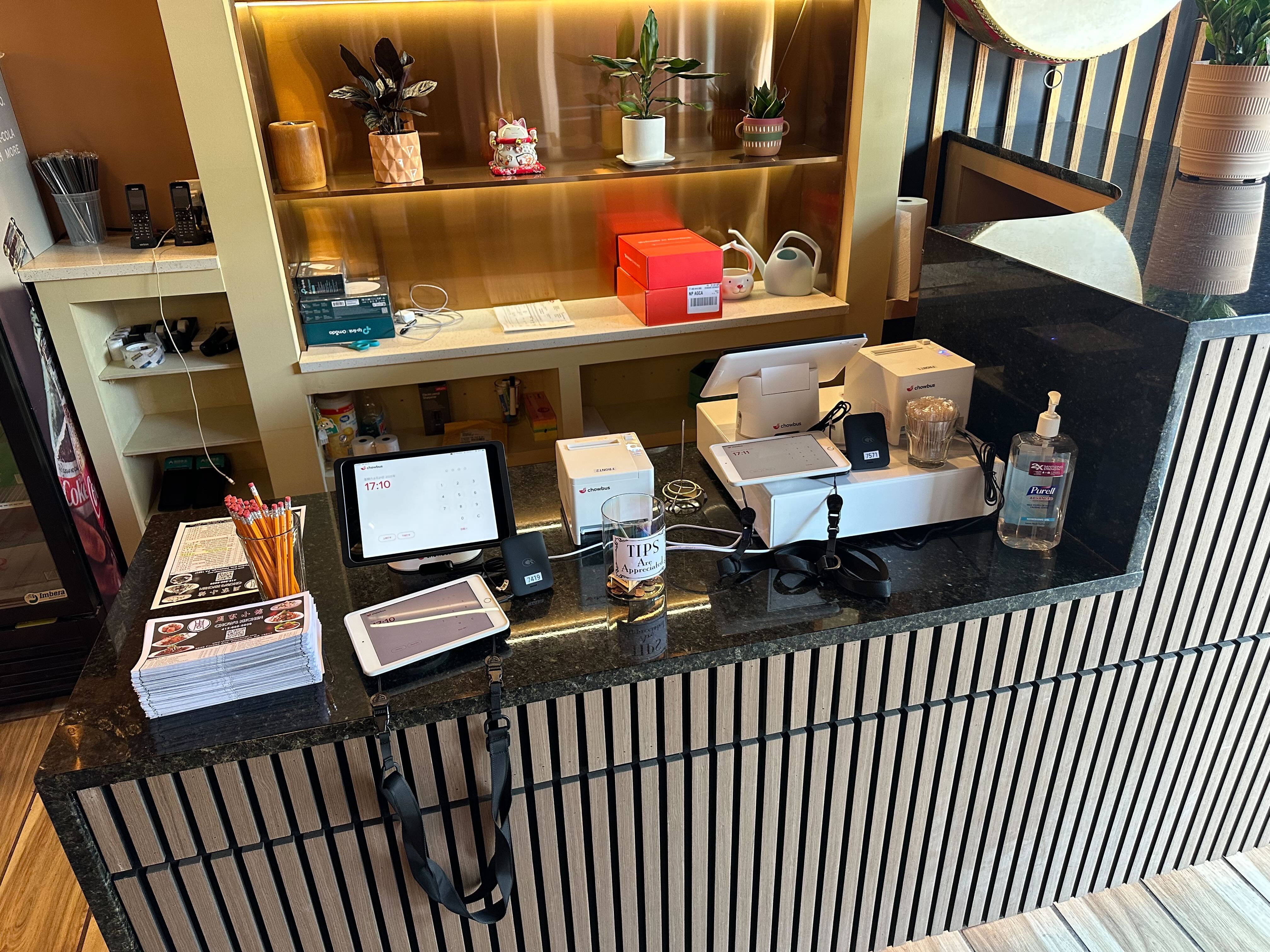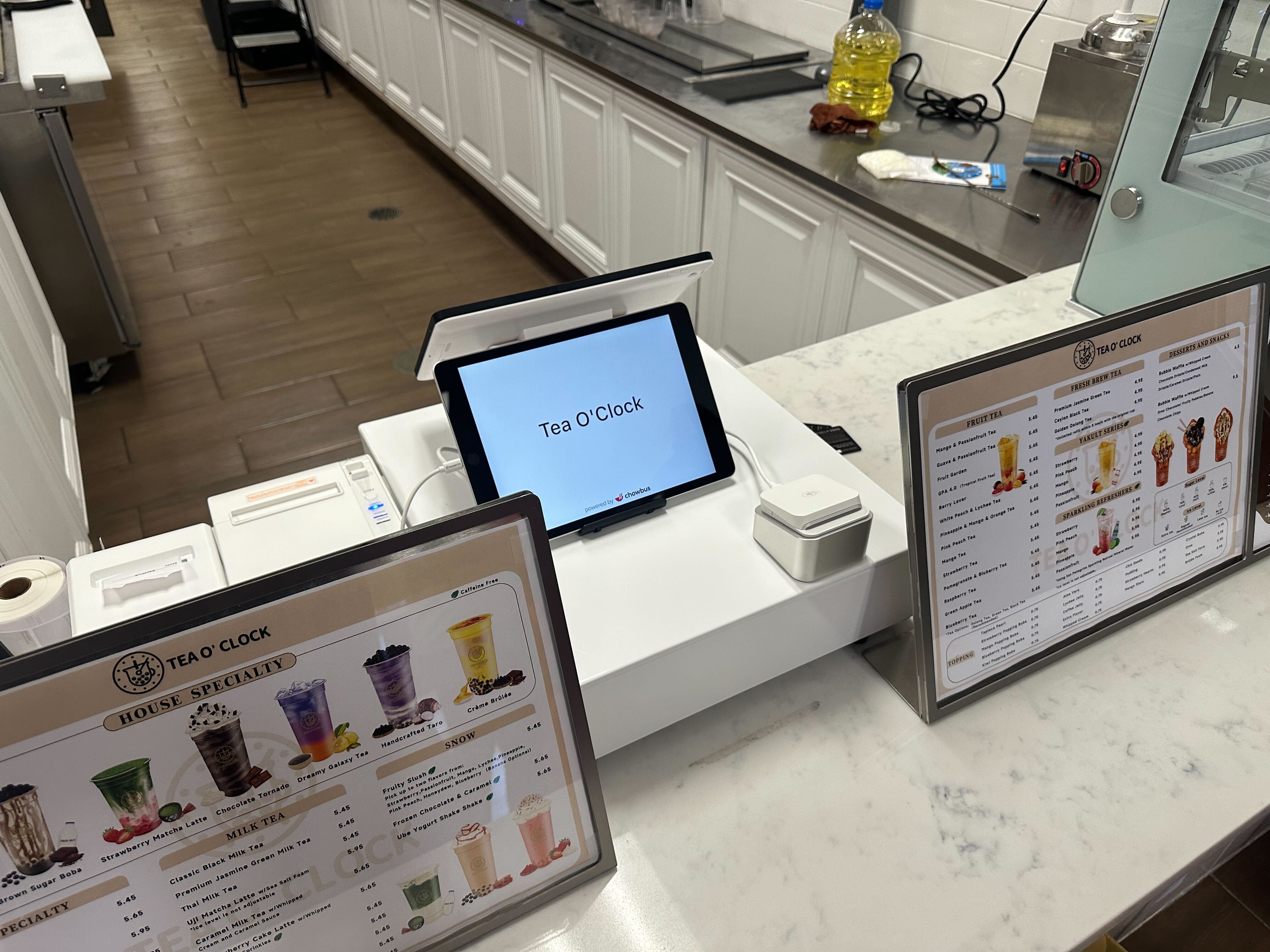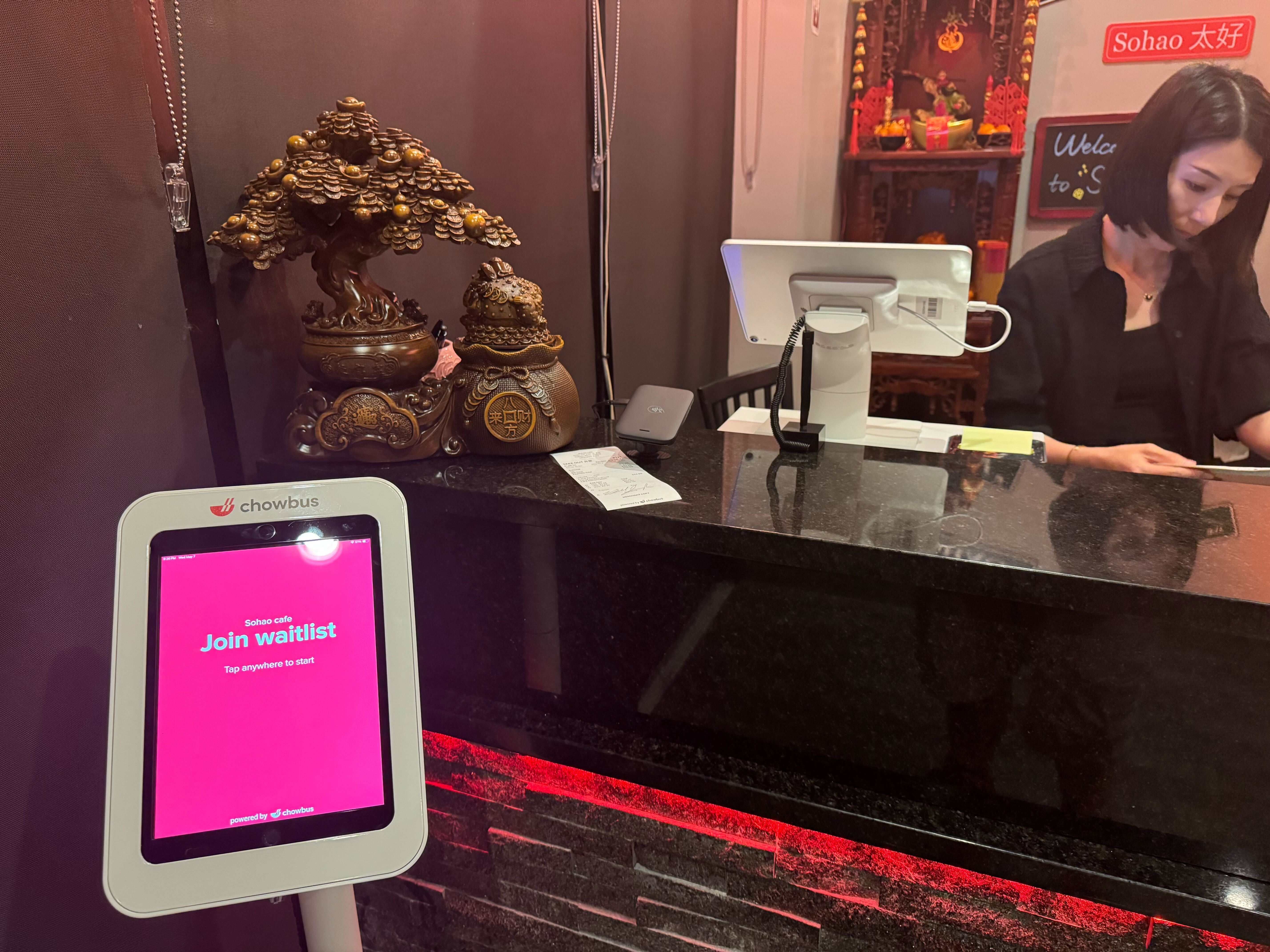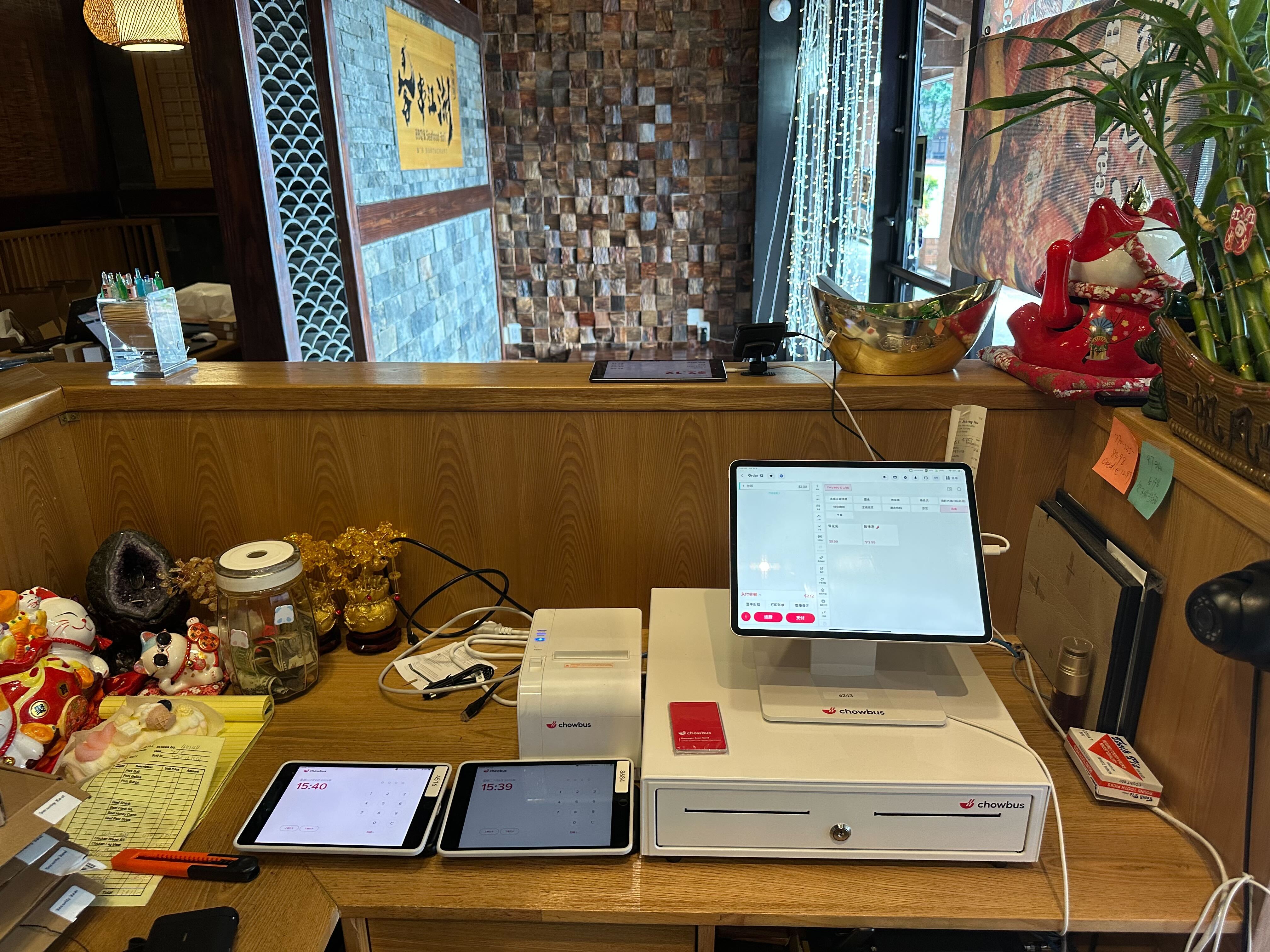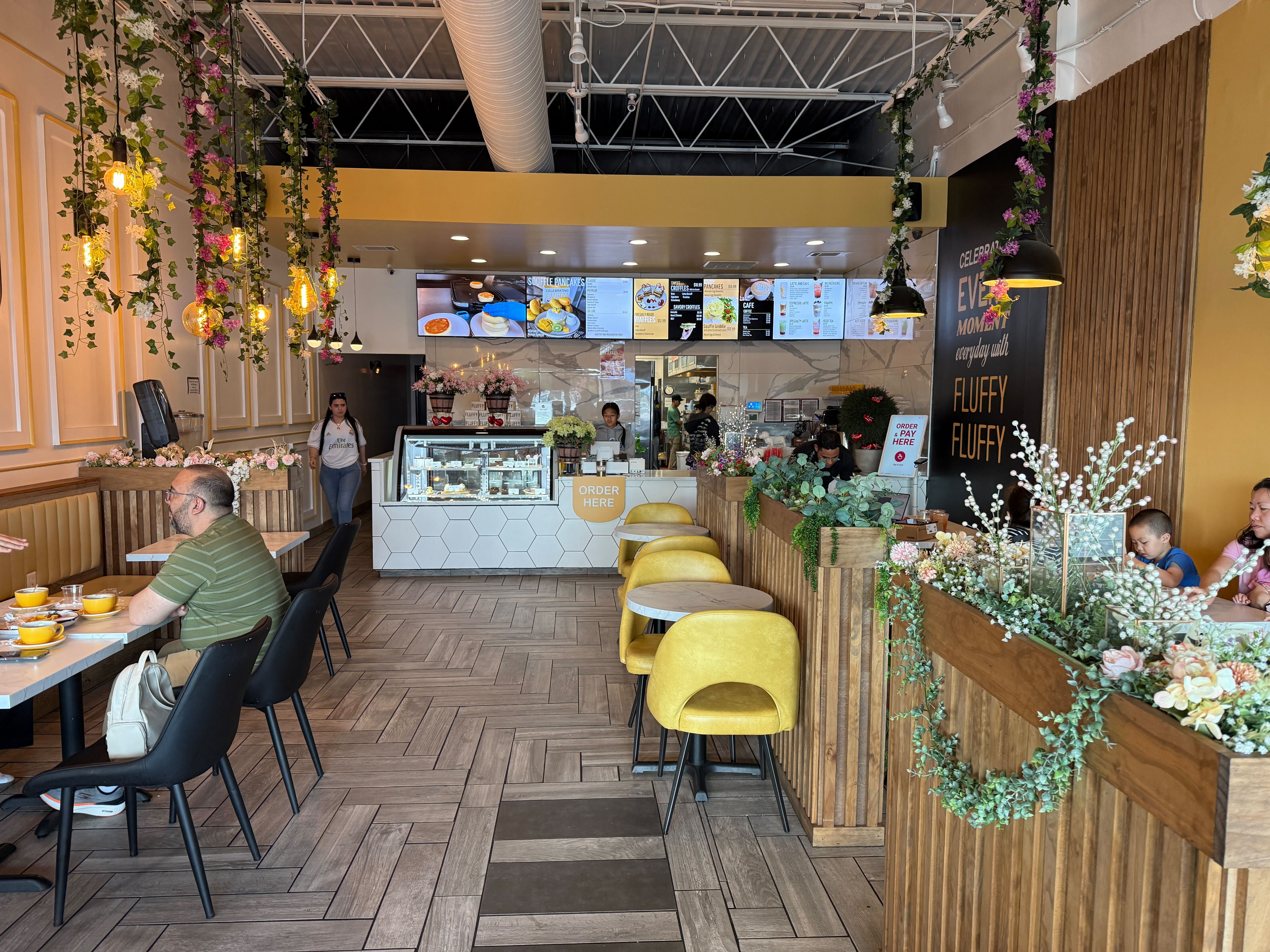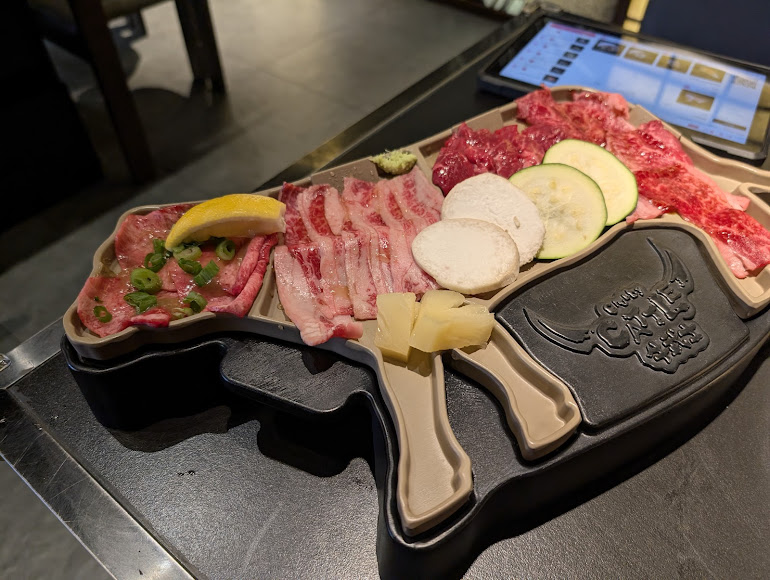
Watch a sushi bar, an izakaya, a ramen shop, and a teppanyaki house run a Friday night, and you'll see four operations that share almost nothing except a cuisine label. The sushi bar runs on chef-paced courses and premium fish that sells out by item. The izakaya runs on continuous small-plate rounds and sake service. The ramen shop runs on speed and seat turns. The teppanyaki house runs on reservations and per-person set menus. A Japanese restaurant POS system has to bend to whichever of these you run — and most generic systems bend to none of them. Across 9,000+ restaurants in all 50 states, Chowbus has built its platform around exactly this kind of format diversity within Asian dining. This guide breaks down what each Japanese restaurant format demands from its POS, where generic software falls short, and how to evaluate a system against your actual service style. The differences start at the menu itself.
An elegant Japanese sushi restaurant interior, sushi chef slicing fish behind a hinoki wood counter, plates of nigiri arranged precisely, soft pendant lighting over the bar, diners seated at the counter in softly blurred background, warm ambient light, shot on Canon EOS R5, 35mm lens, shallow depth of field, ultra-realistic, photorealistic, no text, no watermark — no logos, no text overlay, no watermark, no cartoon, no illustration, no CGI
Japanese menus punish shallow POS systems in three specific ways.
First, item complexity. A sushi menu carries dozens of fish, each available as nigiri, sashimi, or in rolls, at different counts and prices — plus omakase tiers, combination boxes, and daily specials that change with the fish delivery. Modeling this as flat menu items produces a 400-button mess; modeling it with proper variants and modifiers keeps ordering fast and reporting clean. Ask any vendor to build "salmon — nigiri 2pc / sashimi 5pc / roll" as one item with variants, not three unrelated buttons.
Second, sell-outs are a feature of the format, not an exception. Bluefin, uni, and the day's limited specials run out mid-service, and the moment they do, every channel — the printed-QR menu at the table, the online ordering page, the kiosk — must reflect it instantly. On a cloud system this is one tap; on anything else it's an apologetic server and a disappointed table.
Third, language. Many Japanese restaurants in North America run kitchens and sushi bars that read Japanese or Chinese, with front-of-house operating in English. Chowbus handles this natively: menu items carry multilingual names, kitchen tickets print in the language each station reads, and the staff interface switches per user among English, Japanese, Chinese, Korean, and Spanish. Order accuracy in a bilingual operation isn't a training problem — it's an infrastructure problem, and this is the infrastructure.
The sushi bar needs course pacing and chef communication. Omakase and chef's-choice service mean the kitchen display has to present orders as a sequence the itamae controls, not a pile of tickets. Per-seat tracking matters because two guests at the same counter may be on different omakase tiers. And premium-item controls — counting remaining portions of uni or A5 — protect both margins and the guest experience of "sorry, we just sold the last one."
The izakaya behaves like a Japanese tapas bar: continuous rounds of small plates, drinks flowing all night, parties that grow and merge. That's a round-based ordering operation, and it's where QR table ordering earns its keep — guests order round three the moment they want it, drinks never wait on a busy server, and the check builds accurately through a long, loud evening. Izakaya checks also split in ugly ways (shared plates, separate drinks), so per-guest splitting needs to be a ten-second operation.
The ramen shop is a throughput business wearing full-service clothes. Seats turn in 25–40 minutes, the menu is compact but modifier-heavy (broth richness, noodle firmness, extra chashu, spice level), and lunch lives or dies on line speed. The right configuration leans on fast counter ordering or self-service kiosks, a kitchen display that sequences bowls by seat-down time, and a waitlist that keeps the lunch line orderly instead of out the door.
The teppanyaki / set-menu house runs on reservations, per-person pricing, and timed seatings — closer to hot pot economics than to a la carte. Reservation and waitlist management tied into the POS, set-menu pricing per head, and deposit handling for large parties are the make-or-break features.
One platform serving all four formats isn't a luxury — many Japanese restaurant groups run two or three of these concepts side by side, and operators move between formats as they grow.
Japanese food travels well, and takeout often runs 30–50% of volume — which makes the 25–30% commissions on third-party platforms an enormous leak for exactly this cuisine. Direct, commission-free ordering through your own site keeps that margin, and a POS-native ordering page keeps the menu honest: when the kitchen 86's the toro, the online menu follows in the same second.
There's also a sushi-specific trap: delivery platforms flatten menu nuance. Roll customizations, "no wasabi," brown rice substitutions — on a stitched-together stack these arrive as free-text notes the kitchen has to interpret. On an integrated system they arrive as structured modifiers in the kitchen's language. For a cuisine where a missed "no raw" note is a genuine safety issue, structure isn't cosmetic.
Loyalty closes the loop. Sushi customers are habitual — the same faces every week — and phone-number loyalty that accrues across dine-in, QR, and online ordering turns those habits into a database you can actually reach: omakase-night announcements, slow-Tuesday promotions, a heads-up when the bluefin comes in.
Skip the generic demo. Bring your three hardest realities and watch each vendor handle them.
If you run a sushi bar: an omakase for two at different tiers, a mid-service uni sell-out propagating to all channels, and a kitchen ticket in Japanese. If you run an izakaya: five rounds on one table via QR, a party of eight splitting by guest, and a drink-heavy check that stays accurate at 11pm. If you run ramen: your full modifier set rung in under 15 seconds, a 40-bowl lunch hour on the kitchen display, and a waitlist text flow. If you run teppanyaki: a Saturday of timed seatings with deposits, per-person set menus, and a party moving from six to nine guests.
Then ask every vendor the same closing question: who answers the phone at 9pm on a Saturday, and in what language? Chowbus answers 24/7 in English, Chinese, and Spanish with a 2-minute average response — and for a restaurant whose busiest hours are exactly when systems break, that answer matters more than any feature matrix.
Japanese restaurants delay POS changes longer than most formats because the menu rebuild looks terrifying — hundreds of items, variants, and translations. A vendor who serves this segment does the rebuild for you, bilingual names included, and runs the new system in parallel before cutover. Ask directly: "Who rebuilds my menu, in both languages, and how long does go-live support last?" The answer separates vendors who know this cuisine from vendors who sell to it.
The operational payoff arrives fast: cleaner tickets at the sushi bar, faster rounds at the izakaya tables, shorter lunch lines at the ramen counter, and a takeout channel that finally keeps its own margin.
What is the best POS system for a Japanese restaurant?
The best Japanese restaurant POS matches your specific format — course pacing and premium-item controls for sushi bars, round-based QR ordering for izakayas, speed and kiosks for ramen shops, reservations and set-menu pricing for teppanyaki — plus multilingual menus and kitchen tickets throughout. Generic systems handle none of these natively; Chowbus was built around Asian restaurant formats and supports Japanese, English, Chinese, Korean, and Spanish across the whole system.
Can a POS print kitchen tickets in Japanese?
Purpose-built systems can. With Chowbus, each menu item carries multilingual names and kitchen tickets print in the language each station reads — sushi bar in Japanese, wok station in Chinese if needed — regardless of the language the order was taken in. Generic systems typically require duplicated items with translated names, which doubles menu maintenance.
How do sushi restaurants handle items selling out during service?
On a cloud POS, 86'ing an item once removes it everywhere simultaneously — table QR menus, kiosks, and the direct online ordering page. This matters more in sushi than almost any cuisine because daily fish and limited specials sell out routinely; systems without synced channels leave online customers ordering items that no longer exist.
How much does a Japanese restaurant POS system cost?
Expect standard restaurant POS economics — monthly software, payment processing, hardware — with the real variable being how much comes bundled. Sushi and izakaya operations typically need QR ordering, online ordering, and loyalty; on generic platforms those stack as separate fees, while all-in-one platforms like Chowbus include them in one ecosystem, which usually wins on total monthly cost.
Is QR code ordering appropriate for a high-end Japanese restaurant?
It's a fit question, not a quality question. Izakayas and casual sushi spots gain speed and round frequency from QR ordering; omakase counters and high-end teppanyaki usually keep human-led service and use the POS for coursing, per-seat tiers, and reservations instead. A flexible platform lets you run QR at some tables or concepts and not others.
What should I test in a demo before choosing?
Bring your hardest real scenarios: a variant-heavy fish item built properly, a mid-service sell-out propagating to every channel, a kitchen ticket in your kitchen's language, your format's signature flow (omakase coursing, izakaya rounds, ramen lunch rush, or teppanyaki seatings), and a per-guest split. Then call the vendor's support line on a weekend evening and time the answer.