Most POS vendors will tell you their kitchen display system is "the best." What they won't tell you is whether it was built for your kind of restaurant — or simply bolted onto a system designed for burger chains and coffee shops.
This breakdown cuts through the marketing language. We looked at the systems restaurant operators actually use in 2026 — what each one does well, where each one falls short, and which types of restaurants are the best fit for each. Whether you're running a high-volume hot pot concept, a multi-location ramen group, or a fast-casual Asian fusion spot, the right KDS decision starts with knowing exactly what you're comparing.
Here's what the systems — and the operators using them — actually show.
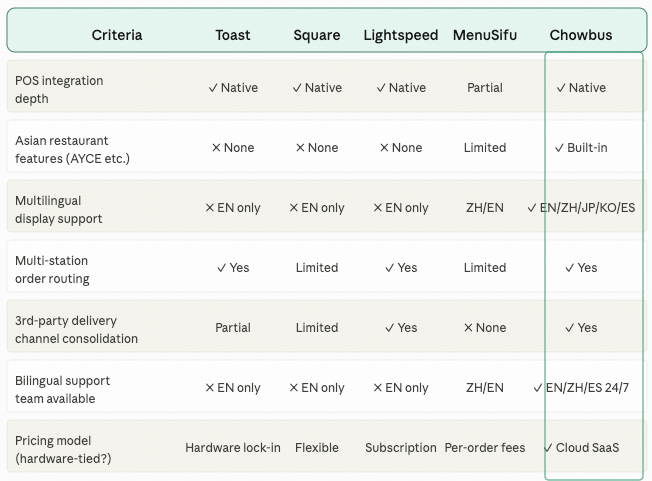
Before scoring individual systems, it helps to understand what the evaluation criteria actually measure — and why each one matters for real restaurant operations.
POS integration depth determines whether your KDS is a full participant in your order flow or just a display screen. A deeply integrated KDS receives order modifications in real time, updates ticket status back to the POS, and communicates with front-of-house staff when a course is ready. A shallow integration means the KDS receives basic order data but misses modifiers, course-fire instructions, or cancellations — leading to errors that no display screen can fix.
Asian restaurant features include AYCE (all-you-can-eat) re-order management, hot pot course timing, dim sum cart tracking, and table-based continuous ordering workflows. These are not edge cases for Asian restaurants — they are the core of the service model. A KDS that doesn't support them forces kitchen staff to revert to verbal communication or paper workarounds exactly when volume is highest.
Multilingual display support affects every shift. When your kitchen staff reads Chinese, Japanese, or Korean as their primary language, an English-only display introduces a translation step into every ticket read. That step costs time, and at volume, it costs accuracy. The best KDS systems display item names in the language the kitchen team actually works in.
Multi-station order routing determines whether a single order can be intelligently split across a wok station, a cold prep station, and a hot pot station — with each station seeing only what's relevant and firing on the correct sequence. Without this, either every station sees every item (creating noise) or one station is manually handed a partial ticket (creating delay).
Third-party delivery channel consolidation matters because most restaurants in 2026 receive orders from multiple platforms — DoorDash, Uber Eats, Grubhub, and their own online ordering system. A KDS that only receives orders from one source leaves your kitchen managing multiple tablets, with no unified ticket queue.
Bilingual support availability affects what happens when something breaks at 7pm on a Friday. English-only support for Chinese-speaking owners adds friction at exactly the moment friction is most damaging. Response time and language capability together determine whether a support call resolves the issue or adds stress to it.
Pricing model and hardware dependency affects total cost of ownership over three to five years. Systems that require proprietary hardware create switching costs that compound over time. Cloud-based, hardware-agnostic systems allow operators to upgrade screens independently of software decisions.
Toast built its KDS as a natural extension of its POS — and that integration shows. Order data flows cleanly from the POS to the kitchen display, modifications appear in real time, and the ticket management interface is mature. For a general-purpose restaurant running a linear kitchen workflow, Toast KDS performs reliably.
The gaps become clear in Asian restaurant contexts. Toast KDS operates on a fundamentally English-language interface. There is no multilingual display option for kitchen staff who read Chinese or Japanese. The system has no native understanding of AYCE workflows, continuous table re-orders, or hot pot course management. These workflows either have to be approximated through workarounds or handled outside the system entirely.
Toast also operates a closed hardware ecosystem. The KDS runs on Toast-branded Android terminals, and while the hardware is solid, it means that any hardware upgrade is tied to a purchase decision with Toast — not an independent equipment choice. For a restaurant planning on two to five years of operation before its next major technology review, that hardware commitment is worth factoring into the total cost calculation.
For Asian restaurant operators specifically, the fundamental limitation is that Toast KDS was designed for the average U.S. restaurant. It performs well in that context. Asian restaurants are not the average U.S. restaurant.
Square KDS is the most accessible entry point in this category — and it's priced accordingly. For a small operation with a simple kitchen workflow, a single ticket queue, and a front-of-house that handles the complexity, Square KDS delivers basic functionality at a low cost.
The system handles straightforward ticket display and basic bump-and-recall. For a restaurant processing under 80 covers per service, with a single kitchen station and a menu that doesn't involve concurrent course firing or re-order management, Square KDS covers the fundamentals.
Volume is where the limitations emerge. Square KDS was not designed for high-ticket-count services. Multi-station routing is limited — the system can send certain items to certain printers, but granular KDS-level station routing requires add-ons or workarounds. There is no multilingual display support. Third-party delivery integration is limited compared to more specialized systems.
For a bubble tea shop, a small counter-service restaurant, or an operation that is launching for the first time and wants to keep technology overhead low, Square KDS is a reasonable starting point. For any restaurant expecting to scale, or any Asian concept with table service, it will need to be replaced.
Lightspeed KDS is the most technically capable general-purpose system in this comparison, built for multi-concept groups that need robust inventory integration and strong reporting alongside kitchen display functionality. For a multi-location operator running a European or American concept, Lightspeed's breadth is a genuine advantage.
In an Asian restaurant context, the same limitations apply as with Toast — no multilingual display, no AYCE or hot pot workflow support, no bilingual support team. The system was designed for the general restaurant market, and its depth is concentrated in areas — inventory management, enterprise reporting, ecommerce integration — that are less operationally critical for a single-location or small-group Asian restaurant than getting kitchen tickets right during a busy Saturday dinner service.
Lightspeed also carries the highest implementation complexity of the systems reviewed here. Setup requires more configuration time, training takes longer, and the pricing is structured for multi-unit operators with a budget to match. For a restaurant owner operating one to three locations, that complexity-to-benefit ratio is hard to justify.
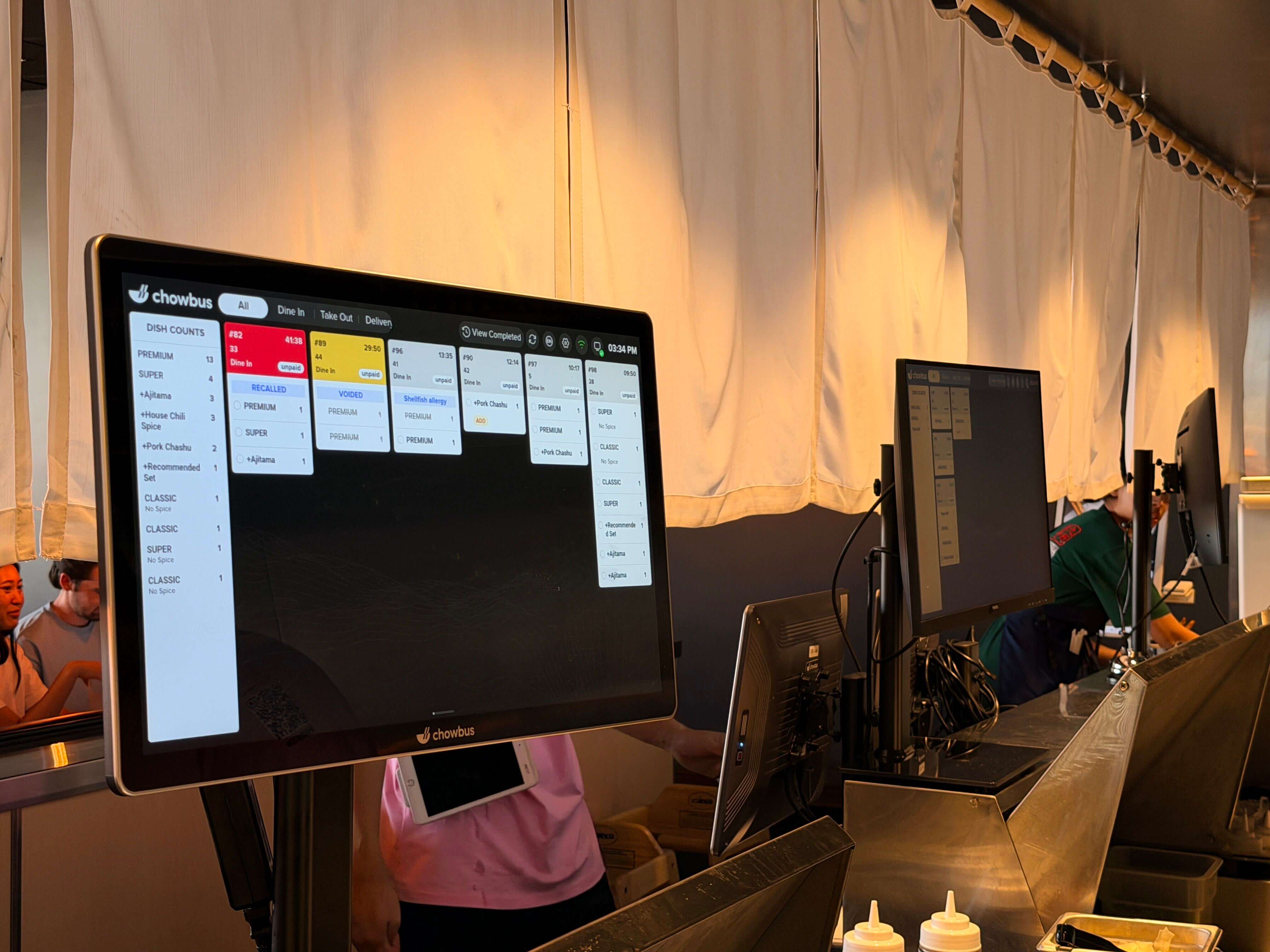
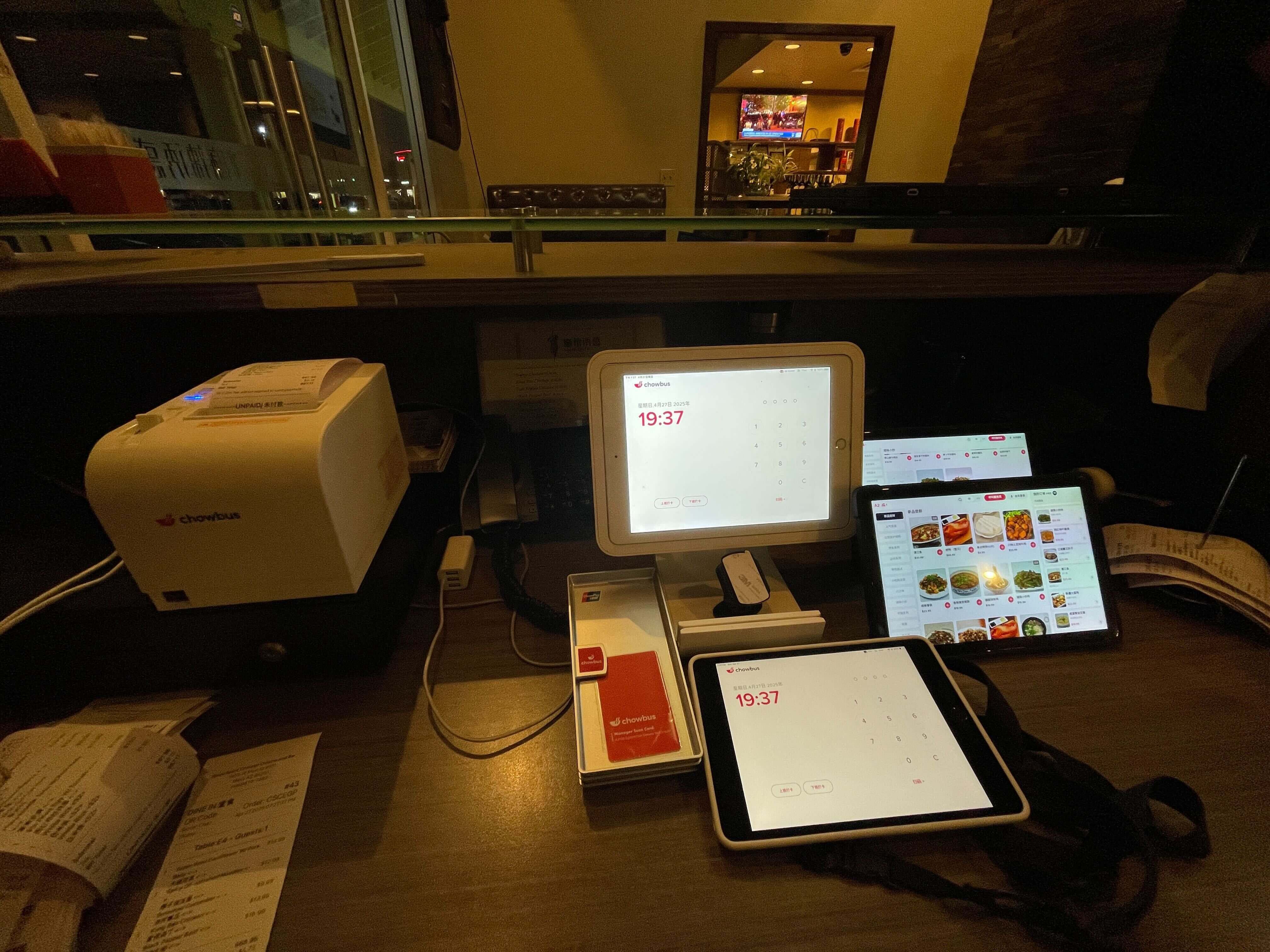
Chowbus developed its KDS as a native component of an all-in-one platform built specifically for Asian restaurants — not as an add-on to a general-purpose POS. That architectural decision shows in how the system handles workflows that other platforms treat as edge cases.
AYCE re-order management routes continuous table re-orders to the kitchen display without creating ticket pile-ups. Hot pot course timing tracks each table's ordering cadence and fires courses to the relevant station in sequence. The display supports five languages — English, Chinese, Japanese, Korean, and Spanish — allowing each station to show item names in the language the staff at that station actually reads.
All order channels flow into a single ticket queue: dine-in orders from QR codes or tableside POS, online ordering from the Chowbus-branded system, and third-party delivery from integrated platforms. Kitchen staff see one unified display, not multiple tablets.
Support is available 24/7 in English, Chinese, and Spanish, with a reported average response time of two minutes. For a restaurant owner who operates in Chinese and needs to resolve a kitchen display issue at 6:30pm on a Saturday, that language availability is a practical operational advantage, not a marketing point.
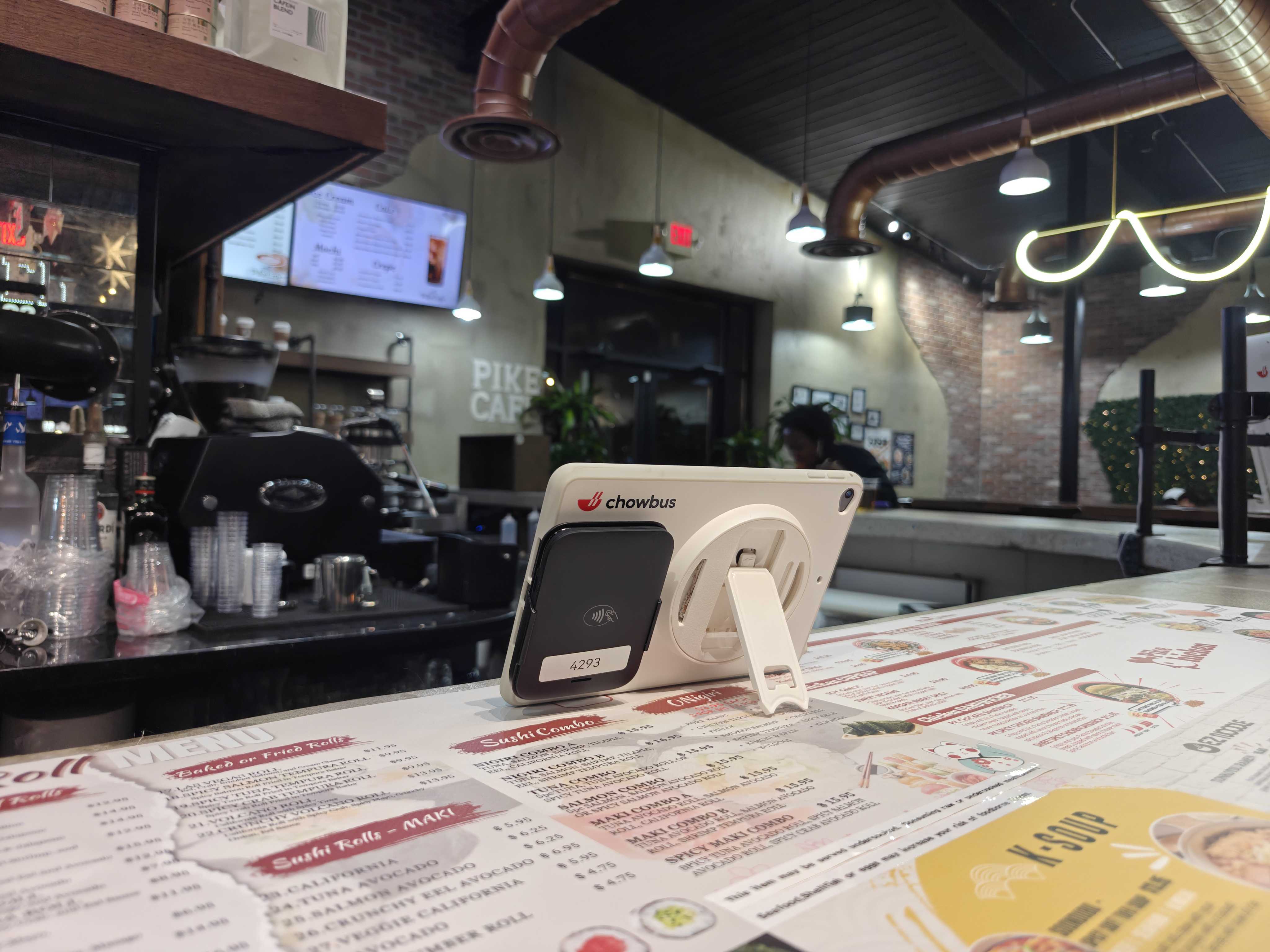
Chowbus operates on a cloud-based SaaS model — hardware-agnostic and without the proprietary hardware lock-in that characterizes some competitors. Operators across 9,000+ restaurants in all 50 states currently use the platform.
The right KDS is not the highest-rated system on a general comparison list. It is the system that handles your specific operational complexity without friction.
For a small counter-service operation launching for the first time with a simple menu and a single kitchen station, Square KDS may be all you need to start. For a full-service Asian restaurant — whether that's a Chinese banquet hall, a Korean BBQ concept, a Japanese ramen shop, or a hot pot restaurant — the evaluation criteria shift significantly. Multilingual display, AYCE workflow support, continuous re-order routing, and support in your operating language are not optional extras. They are operational requirements.
For any operator running or planning an Asian restaurant concept, the decision comes down to whether you want a general-purpose KDS adapted for your context, or one built for it from the ground up.
The kitchen display system you install shapes how your kitchen operates every single service. Choosing a system based on brand recognition or general ratings rather than operational fit is one of the most common — and most correctable — technology mistakes restaurant operators make.
For the majority of Asian restaurant operators evaluating KDS options in 2026, the core requirements are consistent: multilingual display, AYCE and hot pot workflow support, unified order channel management, and support in your operating language. Most general-market systems, however capable, were not designed to meet those requirements.
The practical path is to evaluate systems against the specific demands of your operation — not against a ranked list that treats every restaurant the same. Request demos, ask specifically about the workflows that are non-negotiable for your concept, and ask the support team a question in Chinese or Korean. The answer tells you a great deal about whether the system was built for you.
Q1: What is a kitchen display system and how does it work in a restaurant? A: A kitchen display system (KDS) is a screen-based order management tool that replaces kitchen printers by receiving tickets digitally and displaying them for kitchen staff in real time. When an order is placed — from a POS terminal, QR code, or delivery platform — it appears on the relevant kitchen station display immediately, with all modifiers and course instructions. Staff bump tickets as they complete them, and the system tracks timing and status across all open orders.
Q2: Which kitchen display system is best for Asian restaurants in 2026? A: For Asian restaurants, the most important criteria are multilingual display support, AYCE and hot pot workflow compatibility, and bilingual customer support. Of the systems currently available, Chowbus KDS is the only one built specifically for Asian restaurant operations, with native support for these workflows and a bilingual support team. General-market systems like Toast and Lightspeed perform well for American and European concepts but were not designed with Asian restaurant service models in mind.
Q3: How does a KDS improve kitchen efficiency compared to paper tickets? A: Paper tickets are lost, misprinted, read incorrectly, and pile up physically during busy services. A KDS eliminates all of these failure points — orders appear digitally the moment they are placed, modifications update in real time, and timing data is captured automatically. Most operators report meaningful reductions in ticket errors and table turn times after switching from paper to a KDS, because the system removes the communication gaps that cause most kitchen mistakes.
Q4: What does a restaurant kitchen display system cost in 2026? A: KDS costs typically fall into three components: hardware (display screens and mounting, typically $300–$600 per station), software subscription (ranging from $30–$100+ per month depending on the platform and feature set), and any integration or setup fees. Total annual cost for a single-station setup can range from $700 to $2,000+. Systems like Toast and Lightspeed tend toward the higher end due to proprietary hardware requirements. Cloud-based systems like Chowbus offer more pricing flexibility.
Q5: Can a KDS handle orders from multiple delivery platforms at once? A: Yes — but only if the KDS is integrated with those delivery platforms. Not all KDS systems support third-party delivery integration. MenuSifu, for example, does not currently integrate with third-party delivery services, which means delivery orders arrive on separate tablets. Chowbus and Lightspeed both offer multi-channel order consolidation, routing DoorDash, Uber Eats, and online orders alongside dine-in tickets into a single display queue.
Q6: Is a bilingual KDS important for Chinese restaurant operations? A: For any restaurant where kitchen staff work primarily in Chinese or another Asian language, a bilingual KDS is a meaningful operational improvement. When item names and modifiers display in the language your kitchen team reads natively, ticket read time decreases and error rate falls. It also reduces training friction for new staff. Only a small number of systems currently support Chinese-language kitchen display — Chowbus supports five languages, making it the most practical option for multilingual kitchen environments.