A restaurant running three delivery apps usually has three tablets lined up behind the counter, and a staff member whose actual job, several times an hour, is walking between them. That job isn't listed on any schedule. It's absorbed into whoever's closest when a tablet chimes, which means it competes directly with everything else that person is supposed to be doing — running food, bussing a table, answering the phone. The question of whether to keep running delivery this way or consolidate it into one system isn't really about the apps. It's about what that walking-and-retyping time is actually worth, and what it costs to keep paying it every single shift.
Nationally, close to 75% of restaurant traffic now happens off-premises — takeout, delivery, and drive-thru combined — according to National Restaurant Association research. For a lot of Asian restaurants, a meaningful share of that off-premises volume arrives through DoorDash, Uber Eats, or Grubhub, each running on its own tablet with its own notification sound and its own separate order queue. Standalone tablets are the default because they require no decision — the platform ships one, a staff member plugs it in, and it works on day one. Whether that default is still the right call once a restaurant is doing real delivery volume is a different question, and it comes down to a straightforward cost-and-time framework rather than a preference.
A standalone setup means every delivery platform's tablet operates as its own island: its own order queue, its own accept-and-confirm workflow, and no connection to the POS or kitchen display a dine-in order already flows through. When an order comes in, someone has to read it off that tablet and manually re-enter it — into the POS for accounting purposes, and often again by hand-writing or re-keying it into whatever the kitchen actually works from. Every one of those steps is a place where a modifier, a note about a food allergy, or a special instruction can get dropped, and every one of them takes real time that a manual re-entry of a dine-in order doesn't require, because a server keying a table's order into the POS directly is already the system of record.
The commission each platform takes — commonly 15% to 30% per order, depending on the platform and service tier — is the cost every restaurant owner already knows about, because it shows up as a line item on a weekly payout statement. The tablet-juggling cost is different: it's a labor cost that never appears as its own line anywhere, because it's distributed in small increments across a shift rather than billed as a single fee. A staff member walking to a second tablet to accept an order, then walking back to re-key it, might cost ninety seconds. Multiply that by every order across three platforms during a six-hour dinner shift, and the total is a meaningful chunk of paid labor spent on data entry rather than service or food quality — the exact kind of cost that's easy to miss because no single instance of it looks expensive.
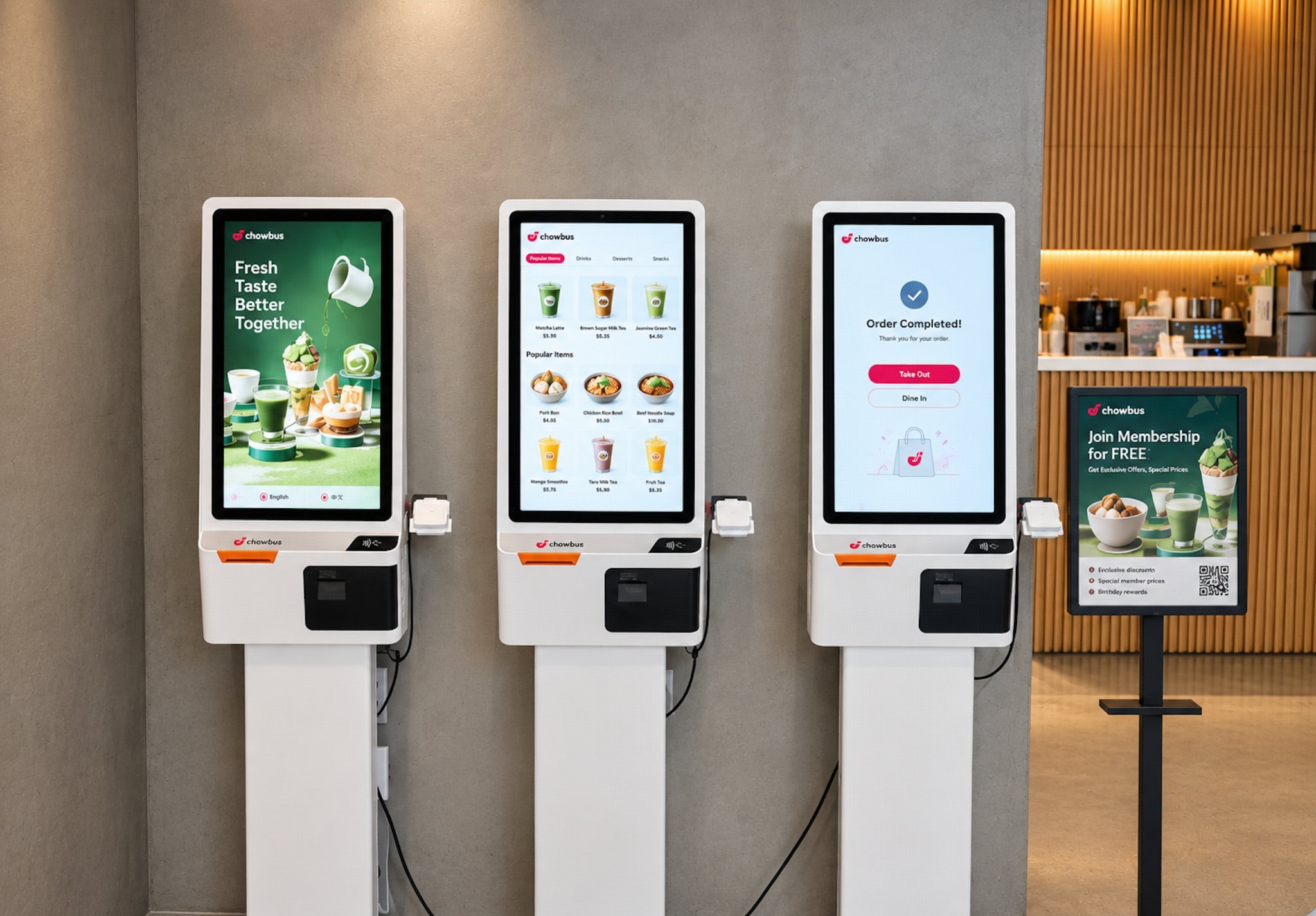
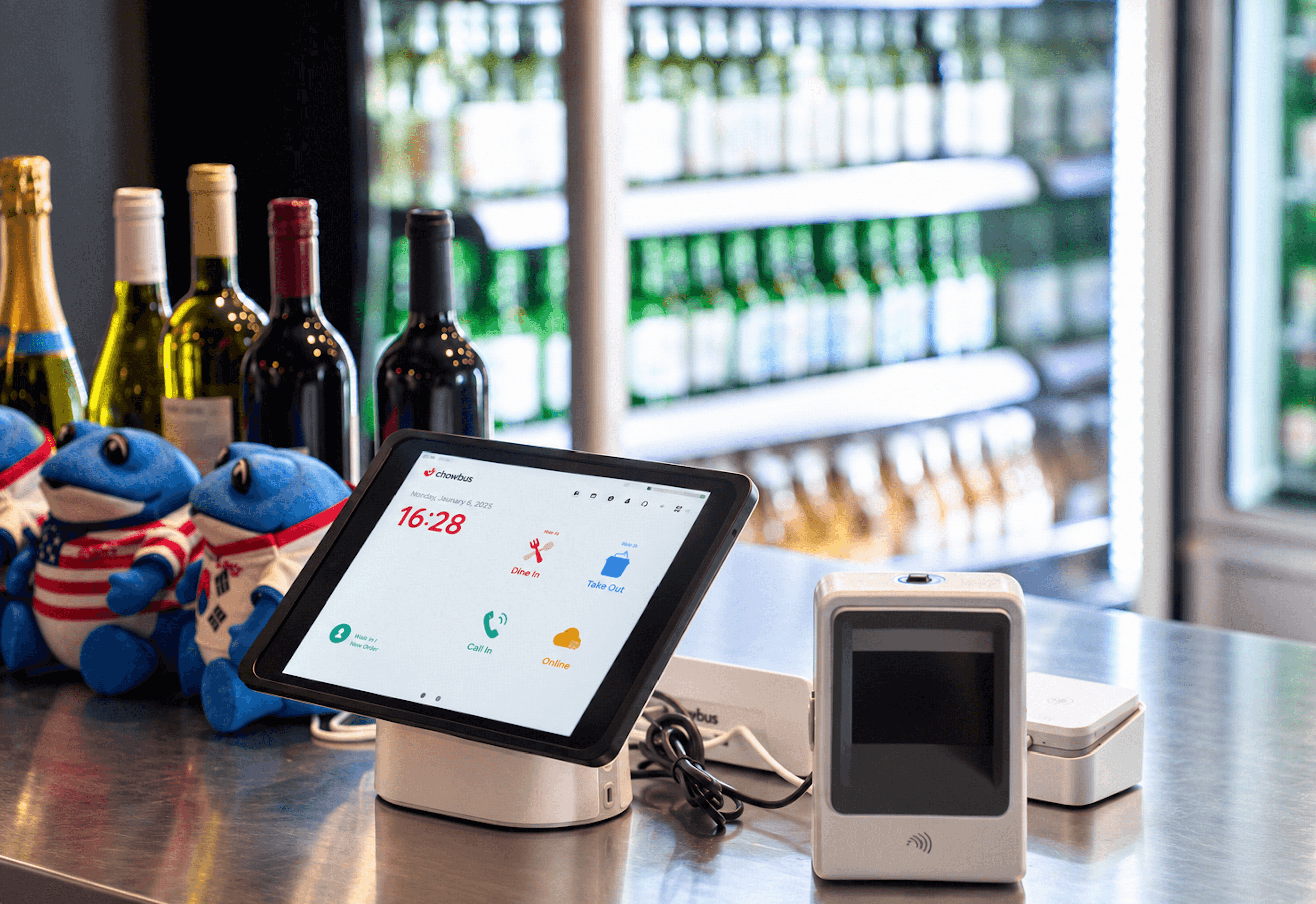
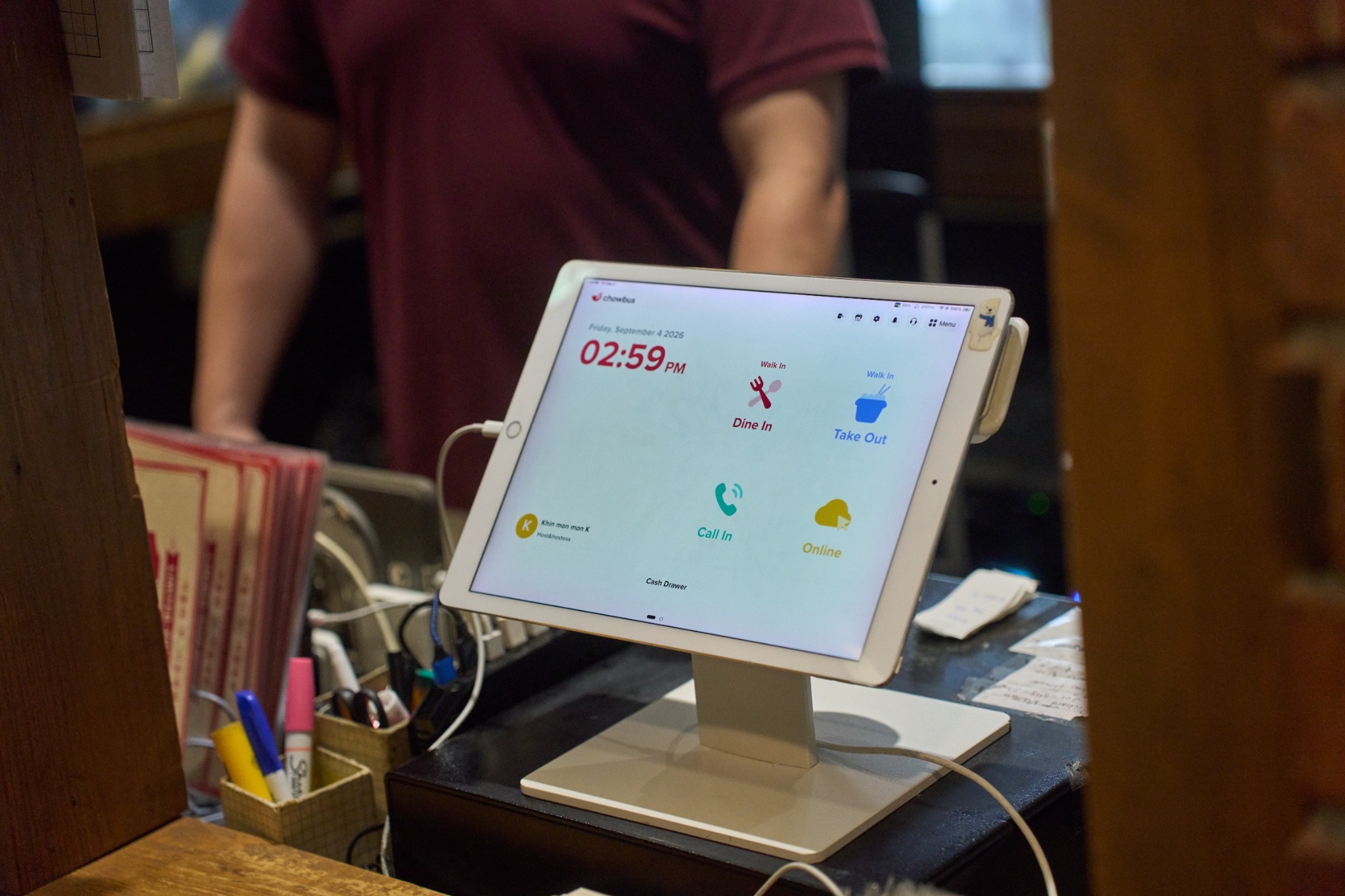
An integrated setup routes every delivery platform's orders into the same system a dine-in order already uses — the same POS, the same kitchen display, the same reporting. The practical change isn't cosmetic: an order that used to require a staff member to read a tablet screen and manually retype it into the POS instead arrives already formatted correctly, already routed to the kitchen display alongside every other active ticket, with no re-entry step in between. Chowbus's third-party delivery integration is built around exactly this consolidation — pulling DoorDash, Uber Eats, and Grubhub orders into the same dashboard and the same kitchen display system that dine-in and direct pickup orders already use, so a kitchen sees one unified order stream instead of managing three separate ones on three separate screens.
A framework only holds up if it's honest about the cases where the simpler option is still correct. A restaurant doing a handful of delivery orders a night, on one platform, with staff who aren't otherwise slammed during the hours those orders come in, may not have enough volume for the manual re-entry cost to matter much. The math changes specifically as volume and platform count go up: two tablets are a mild inconvenience, three tablets running through a Friday dinner rush is a structural problem, and a restaurant running delivery across multiple locations without a shared system multiplies that same inefficiency by every additional store.
Beyond the per-order re-entry time, standalone tablets carry a second, less visible cost: the time it takes a manager to reconcile sales at the end of a shift or a week. With delivery orders sitting outside the POS, a manager pulling nightly totals has to check the POS for dine-in and pickup, then separately check each delivery platform's own dashboard, then manually add all of it together to get an accurate revenue picture. That reconciliation step, repeated every closing shift, is exactly the kind of manual handoff that compounds across a month — and it's also where discrepancies are hardest to catch, since nothing forces the numbers from four separate systems to agree with each other automatically.
The decision comes down to three numbers a restaurant can usually estimate without much difficulty: how many delivery orders arrive per shift, how many separate platforms are running at once, and how many labor-hours per week currently go into manually keying those orders and reconciling the totals afterward. A restaurant running two or more delivery platforms doing meaningful nightly volume is almost always past the point where the labor cost of standalone tablets exceeds the cost of consolidating them — the question isn't really whether to integrate, it's how much labor is currently being spent on a workflow that could run automatically instead.
The math above compounds specifically for restaurants running more than one concept or more than one location, which describes a meaningful share of Asian restaurant groups — a hot pot restaurant that also runs a bubble tea counter, or a group operating the same brand across three cities. Every additional concept or location that runs delivery through separate, unintegrated tablets multiplies the manual re-entry and reconciliation cost by that same factor, and it does so without adding any corresponding increase in visibility — a general manager overseeing several locations loses the ability to see delivery performance in one place exactly when they need it most. Chowbus's POS system is built to hold dine-in, pickup, and integrated delivery data in one place across every location a group runs, in English, Chinese, Japanese, Korean, and Spanish, so a manager checking numbers across five stores in three cities isn't reconstructing them from five sets of separate delivery dashboards by hand.
Moving from standalone tablets to an integrated setup doesn't require dropping a delivery platform or renegotiating commission rates — the platforms themselves stay exactly the same from a customer's perspective. What changes is the plumbing behind the counter: orders that used to land on an isolated tablet instead route into the same system already handling dine-in and pickup, and the tablets themselves can typically come off the counter entirely once that connection is live. For a restaurant deciding whether the timing is right, the more useful reading on the operational side of this same question is Chowbus's breakdown of what actually changes on the line when delivery moves off separate tablets, and the commission math itself is covered separately in a guide to reducing third-party delivery costs.

Q1: What's the real difference between standalone and integrated delivery management for a restaurant?
Standalone means each delivery platform runs on its own tablet with no connection to the POS or kitchen display, requiring a staff member to manually read and re-enter every order. Integrated means all delivery platforms route into the same system a restaurant's dine-in and pickup orders already use, removing the manual re-entry step and putting every order on one kitchen display instead of three separate tablets.
Q2: How do I calculate whether integrating delivery management is worth it for my restaurant?
Estimate three numbers: delivery orders per shift, number of separate delivery platforms running at once, and the labor-hours per week spent manually keying those orders and reconciling nightly totals across platforms. A restaurant running two or more platforms with meaningful nightly delivery volume is usually past the point where standalone tablets cost less in labor than an integrated system would.
Q3: Is integrated delivery management better than running separate tablets for every platform?
For any restaurant with meaningful delivery volume across more than one platform, yes — it removes the manual re-entry step that causes both wasted labor time and order errors, and it gives a manager one unified view of sales instead of requiring a separate check of every platform's own dashboard. For very low delivery volume on a single platform, the gap is small enough that standalone tablets may still be reasonable.
Q4: What does it cost to integrate third-party delivery into a restaurant's POS?
Cost varies by provider, but the more useful comparison is against the labor cost already being spent on manual re-entry and reconciliation every shift — a cost that doesn't show up as its own line item but adds up across a month. Chowbus's third-party delivery integration is built into the existing POS system rather than sold as a separate add-on requiring its own subscription and hardware.
Q5: My restaurant runs delivery through three different apps on three tablets — is that actually costing us money?
Almost certainly, in labor time even if commission rates stay the same. Every order that requires a staff member to walk to a tablet, read it, and manually re-key it into the POS is time not spent on service, plus a point where a modifier or special instruction can get dropped. Across three platforms during a busy shift, that adds up to a real, if invisible, labor cost.
Q6: What's the first step to moving from standalone delivery tablets to an integrated system?
Start by counting: how many delivery orders arrive per shift, across how many platforms, and how many labor-hours currently go into manually handling them. That number makes the cost of the current setup visible for the first time, which is usually what turns an assumed default into an actual decision.
Making this switch doesn't require abandoning delivery platforms or negotiating better commission terms — both of those stay exactly the same for a restaurant either way. What changes is whether the labor behind the counter is spent walking between tablets and retyping orders, or whether that same order arrives already routed to the kitchen the same way a dine-in ticket does. For a restaurant running one platform at low volume, standalone tablets are still a reasonable, low-effort choice. For a restaurant running two or more platforms at real volume — which describes most delivery-heavy Asian restaurants doing meaningful off-premises business — the labor math almost always points the same direction, and it's a math that gets easier to see once someone actually counts the hours instead of treating tablet-juggling as a fixed cost of doing delivery.