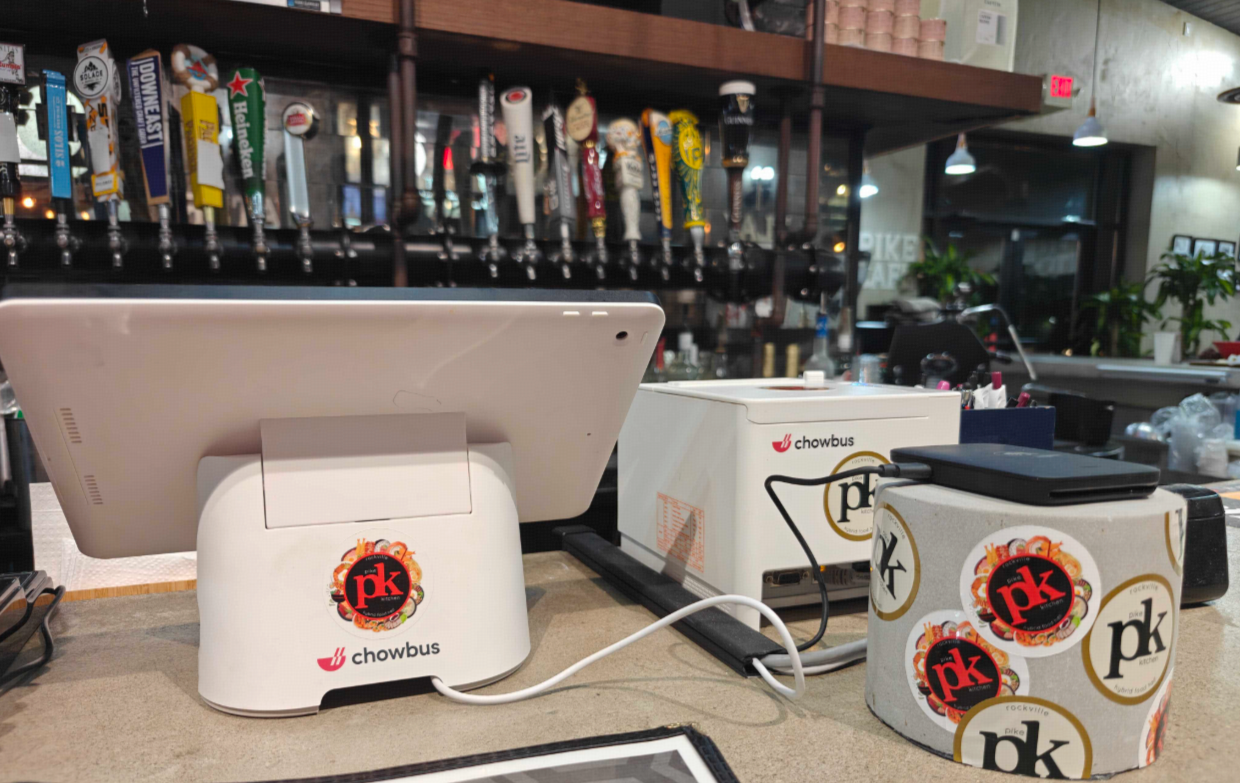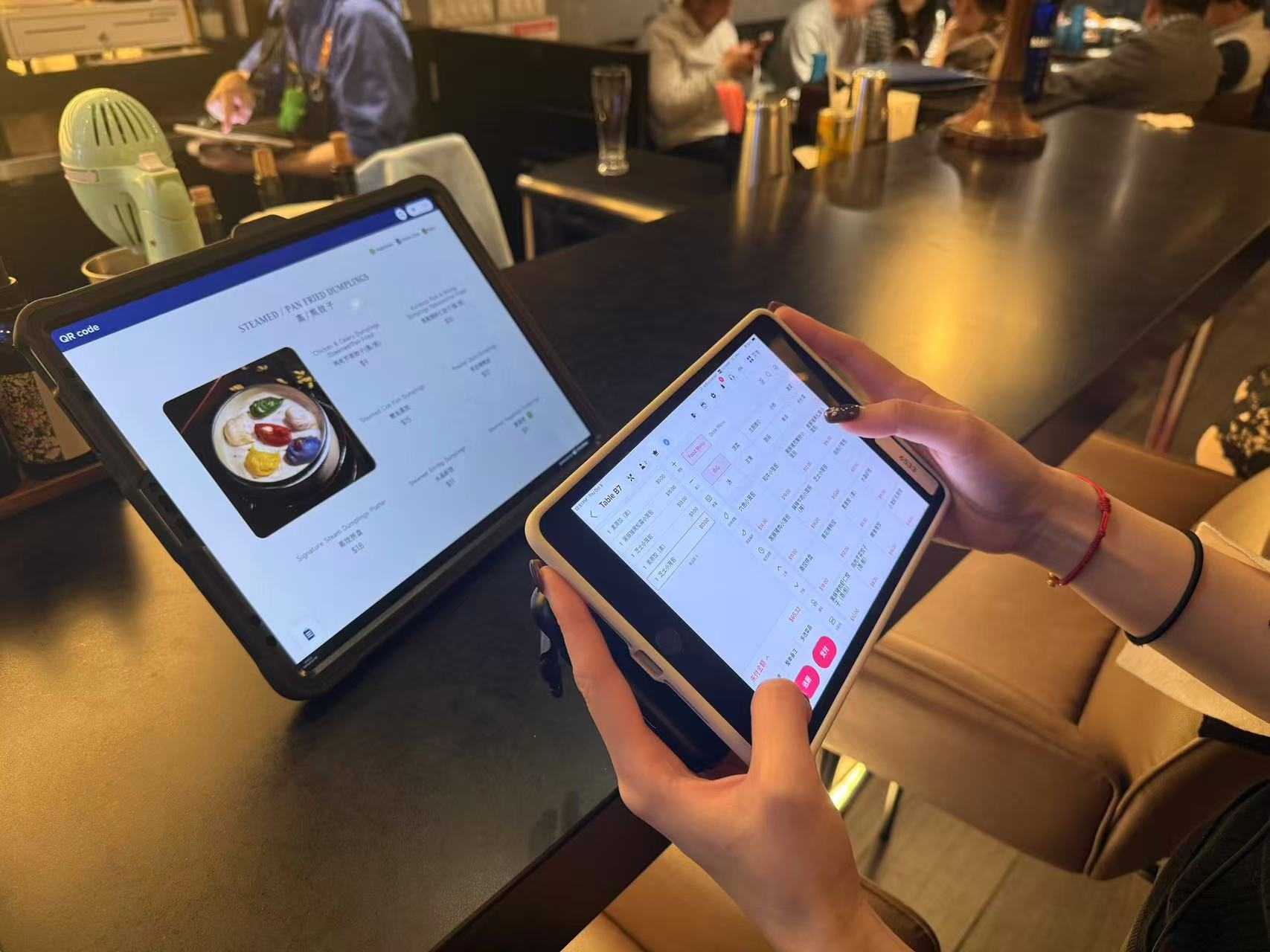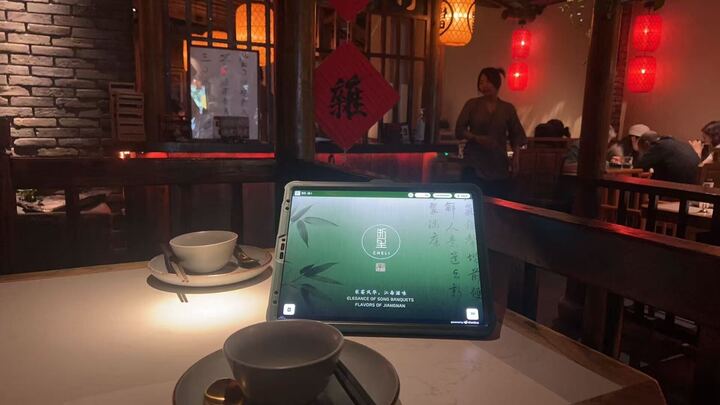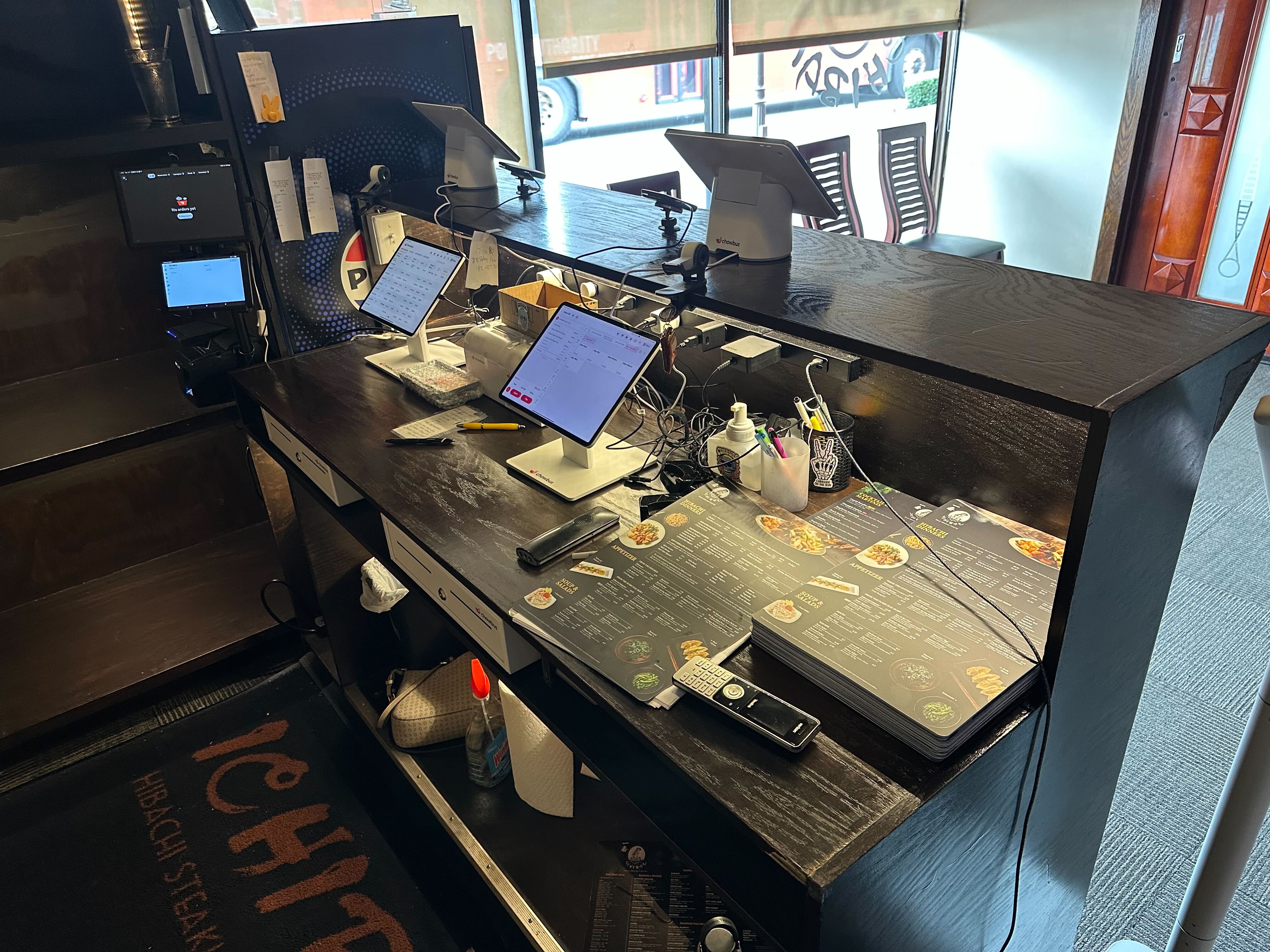
Behind the counter of most Asian restaurants doing real delivery volume, there's a small forest of tablets. One for DoorDash. One for Uber Eats. Maybe a third for Grubhub, and a fourth running the restaurant's own online ordering page. Every one of them chimes independently, prints its own ticket format, and keeps its own running total for the night. A server or expo has to watch all four screens at once, catch each order as it comes in, and manually key most of them into the POS so the kitchen display shows one consistent ticket. It works — until a Friday night rush hits and four tablets are chiming at once while someone is also trying to seat a table.
That setup isn't a failure of effort. It's what happens when a restaurant adds delivery apps one at a time, as each one becomes popular enough to matter, without ever going back and asking whether the whole stack still makes sense together. Most restaurants end up here by accretion, not by choice.
Trace a single delivery order from the moment it lands to the moment food leaves the kitchen. It arrives on the DoorDash tablet as a notification and a printed ticket. Someone working expo has to notice it, read it, and manually type each item — including modifiers, allergies, and special instructions — into the POS by hand, because the POS and the tablet don't share any data. That re-typed order is what actually reaches the kitchen display. If the person typing it misses a modifier, mishears an item, or simply runs out of time during a rush and rushes the entry, that mistake goes straight to the kitchen and straight to the guest.
Now multiply that by three or four delivery platforms, each running its own tablet, each requiring the same manual translation step before the kitchen ever sees the order. During a slow Tuesday afternoon, this is a minor inconvenience. During a Friday or Saturday dinner rush, it's a queue of tablets nobody has time to babysit properly, and it's one of the most common sources of the wrong-item and missing-item complaints that show up in delivery app reviews.
A direct delivery integration removes the manual translation step entirely. The order comes in from DoorDash, Uber Eats, or Grubhub and lands in the POS exactly the way a dine-in order would — same ticket format, same kitchen display queue, same modifiers carried over automatically instead of retyped by hand. Nobody is standing at four tablets anymore. There's one queue, and it looks the same regardless of which app the order came from.
The time savings are real, but the more important change is what happens to errors. Every manual re-entry step is a chance for a mistake, and removing that step doesn't just save minutes — it removes an entire category of error that has nothing to do with kitchen skill or training and everything to do with a person retyping information under pressure. A kitchen that's good at cooking can still send out a wrong order if the ticket it received was wrong to begin with.
Tablet juggling doesn't just cost time during service — it costs time again at close. A manager reconciling sales across four separate delivery dashboards plus the POS has to manually add up numbers that live in different systems, formatted differently, updated on different schedules. One consolidated view of dine-in, online ordering, and third-party delivery sales turns a nightly spreadsheet exercise into something that takes minutes instead of the better part of an hour. Over a month, that adds up to real hours a manager could be spending on the floor instead of behind a screen after close.
That doesn't mean dropping the delivery apps that bring in real volume. The platforms themselves still put a restaurant in front of a large pool of hungry customers who'd never find it otherwise, and that discovery value is genuinely useful, particularly for a newer restaurant still building its own direct customer base. The real question is narrower than "should we use third-party delivery" — it's whether the connection between those apps and the kitchen still requires a person typing the same order twice.
A restaurant running two or three delivery platforms through separate tablets, with a busy dinner rush most nights of the week, is exactly the profile where direct integration tends to pay for itself fastest — fewer errors, less time spent babysitting screens, and a single, cleaner picture of the night's sales when the doors close.
A hot pot restaurant with a build-your-own broth and ingredient system, or a bubble tea shop with a dozen sweetness and ice-level combinations per drink, has far more room for a re-typed order to go wrong than a restaurant selling a handful of fixed combo plates. Every modifier is another chance for a manual re-entry step to drop or garble a detail the kitchen actually needs, which is exactly why the restaurants that benefit most from direct integration tend to be the ones running menus with the most customization, not the simplest ones.
Direct integration doesn't change what DoorDash, Uber Eats, or Grubhub charge per order — those commission structures are set by the platforms, not by the restaurant's own POS. But a cleaner picture of channel-by-channel sales tends to surface something a lot of owners haven't actually looked at closely: exactly what share of total revenue is running through a 25 to 30 percent commission versus a direct online order that costs a fraction of that. That's not a reason to abandon third-party delivery — it's a reason to know the real number instead of guessing at it, and a consolidated reporting view is what makes that number visible in the first place instead of buried across four separate app dashboards. For a closer look at what that commission gap actually costs over a year, and what's realistic to do about it, see our breakdown on reducing third-party delivery commissions.
A single restaurant juggling four tablets is a staffing and error problem. A five-location group running the same setup at every store multiplies that problem by five, with no consistent way to compare performance across locations because each store's delivery numbers live in a different silo. A general manager overseeing multiple stores ends up asking each location to email or text over their own delivery totals rather than pulling one report that covers the whole group. Direct integration across every location turns that into a single dashboard, which matters just as much for spotting which store is quietly losing volume to a slow delivery queue as it does for the labor savings on any single night.
Count the tablets behind your counter right now. If the number is two or more, and someone on your team is manually re-typing orders from any of them into your POS during a rush, that's the exact workflow direct integration replaces. The next question is simply how many of those re-typed orders, on your busiest night of the week, turn into a wrong item, a missing modifier, or a guest complaint that traces back to a mistake made under pressure rather than a mistake made in the kitchen.
Put a rough number on the tablet-juggling model: an expo or server spending even 15 seconds manually re-typing each delivery order, across 60 delivery orders on a busy Friday night, comes out to roughly 15 minutes of pure re-entry work in a single shift — before accounting for the time lost noticing a chime, walking to the right tablet, or fixing an order that got mistyped the first time. Across a full week of dinner service, that's well over an hour of a trained employee's time spent purely on manual translation between systems that were never built to talk to each other, on top of whatever time gets spent fixing the mistakes that re-entry step inevitably introduces.
The clearest way to see the difference is to watch the same shift twice — once with four tablets chiming independently and someone racing between them, and once with every delivery order landing in one queue that looks identical to a dine-in ticket. The food doesn't come out faster because the kitchen got better at cooking. It comes out more accurately because fewer hands touched the order between the moment a guest placed it and the moment it reached a line cook. That's the actual value on the table — not a marketing promise about efficiency, but one fewer place for a Friday night order to go wrong.

Q1: What is direct delivery integration for a restaurant POS?
It means orders from DoorDash, Uber Eats, Grubhub, and similar platforms land directly in the restaurant's POS and kitchen display in the same format as a dine-in order, instead of arriving on a separate tablet that a staff member has to manually retype into the system.
Q2: Does direct integration change what commission delivery platforms charge?
No. Commission rates, typically in the 25 to 30 percent range, are set by the delivery platforms themselves and don't change based on how the order reaches the kitchen. What integration changes is visibility — a consolidated sales view makes it clear exactly how much revenue is running through commissioned channels versus direct, lower-cost ones.
Q3: How many delivery tablets does a restaurant need before integration is worth considering?
There's no fixed number, but two or more tablets running during a regular dinner rush, with staff manually re-typing orders into the POS, is typically the point where the time lost to re-entry and the resulting order errors start outweighing the setup effort of connecting those platforms directly.

.jpg)