Most restaurant owners spend weeks comparing payment processing software on rates and features, then sign the contract in five minutes. The rate gets the attention. The rest of the agreement decides how long you are locked in, what leaving will cost, and whether the price you were quoted is the price you will pay in year two.
This article goes through a typical processing agreement in the order you are likely to read it, with the questions to ask at each part. It also covers the software side: how the processing system connects to your POS and what that means on a busy night. Contracts differ from provider to provider, so use this as a checklist to bring to the conversation, and have anything unclear explained in writing before you sign.
Begin by finding the length of the agreement. Some processors offer month-to-month terms. Others ask for three years or more. A longer term isn't automatically bad, especially if it comes with better pricing, but you should know the number before anything else.
Next, look for automatic renewal. Many agreements renew for another full term, or for one year at a time, unless you cancel in writing within a specific window, often 30 to 90 days before the end date. Owners who miss that window can find themselves in a new term they never meant to agree to. Put the cancellation window on your calendar the day you sign.
Questions to ask: How long is the initial term? Does it renew automatically, and for how long? How and when do I give notice if I don't want to renew?
Early termination fees vary widely. Some are a flat amount. Others are calculated as the processor's estimated lost revenue for the remaining months of the contract, which can add up to thousands of dollars if you leave early. Some agreements also include a separate fee for closing the account, even at the end of the term.
Restaurants change more than most businesses expect. You might sell a location, close for a remodel, or switch to a new POS that comes with its own processing. Ask what happens in each of those cases. If the rep says the fee is "usually waived," ask for that in the contract, because a verbal promise does not travel with the account if the rep leaves.
Card terminals and POS hardware can come to you in a few ways. You can buy them outright. You can lease them through a separate leasing agreement. Or the hardware can be "free" in exchange for a processing commitment.
Equipment leases deserve particular care. They are often written as separate, non-cancelable agreements with a third-party leasing company, which means canceling your processing account doesn't end the lease payments. Over a multi-year lease, the total can exceed the cost of buying the device. If the hardware is included with processing, ask what happens to it when you leave: do you return it, buy it out, or keep it? And ask whether the terminals are locked to this processor, because locked devices become useless if you switch.
The rate on the proposal is a starting point. Look for language that lets the processor change pricing during the contract, and how much notice they have to give. Many agreements allow increases with 30 days' notice, often announced in a single line on a monthly statement.
Ask which parts of your pricing can change. Interchange rates set by the card networks change periodically for everyone. The processor's own markup is a different matter. You can ask for that markup to be fixed for the term of the contract. Also ask which pricing model you are on, whether flat-rate, interchange-plus, or tiered, because the model affects how changes reach you. If you want a refresher on how those models differ, this restaurant payment processing guide explains each one.
Ask the provider for a complete fee schedule, then go through it line by line. Common fees include a monthly account fee, a monthly minimum fee if your volume falls below a set amount, a payment gateway fee for online transactions, a batch fee each time you close out, a chargeback fee for each dispute, and an annual fee.
PCI fees deserve their own question. Some processors charge a PCI compliance fee every month or year. Others charge a non-compliance fee if you haven't completed your annual security questionnaire. Ask what you need to do to stay compliant, how much each fee is, and whether the processor helps you complete the questionnaire. For background on what PCI requires, see this guide to PCI compliance.
Funding terms affect your cash flow as much as the rate does. Ask when card sales are deposited, whether next-day or two business days later, and whether weekend sales arrive on Monday or later. Ask whether fees are taken out daily or as one charge at the end of the month, since that changes how your daily deposits look.
Also ask about reserves and holds. Some agreements allow the processor to hold back a percentage of your sales, or to delay deposits, if they see unusual activity. A sudden jump in volume, such as a very large catering order during the holidays, can trigger a review. Know the rules before it happens, and ask who to call if a deposit is held.
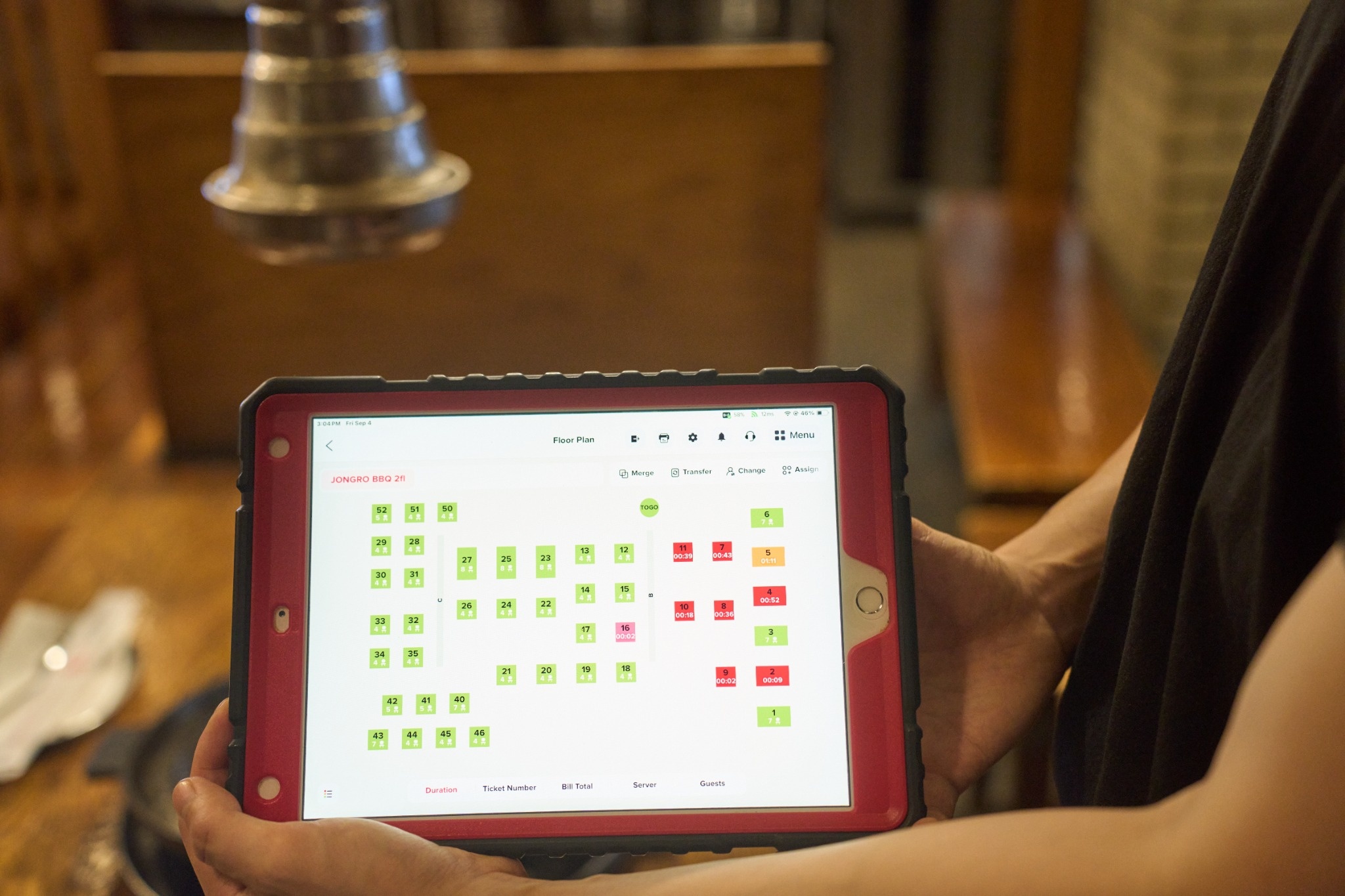
Payment processing software is only as useful as its connection to the rest of your restaurant. If the processor's system is separate from your POS, servers will key amounts into a standalone terminal, which leads to typos and long closing reconciliations. If payments run through the POS, the check amount goes to the payment device automatically, and tips and refunds attach to the same check.
Ask what payment methods are covered: tableside, counter, online orders, phone orders, and contactless wallets. Ask whether servers can adjust tips after the payment, and how refunds and partial refunds work. Ask what happens if the internet goes down during dinner service. Some systems can keep taking payments offline and process them once the connection returns, while others stop until the network is back. Chowbus POS, for example, runs on iOS devices with an offline mode for ordering and payment, and supports card and Apple Pay at the table through its handheld devices.
Ask who supports what. When a card reader fails at 8 p.m. on a Saturday, you need to know whether to call the POS company, the processor, or the hardware vendor. Ask about support hours, response times, and whether help is available in the language your managers speak most comfortably.
Then ask about reporting and records. Can you see deposits, fees, and chargebacks in one place? Can you export your transaction history? If you leave, how long do you keep access to past statements, and in what format? Taking these steps before signing makes a future switch far less painful.
If you run more than one location, ask how accounts are structured. Some processors set up one merchant account per location, each with its own statement and fees, while others group locations under one agreement. Ask whether adding a new location later uses the same pricing or requires a new contract, and whether you can see all locations in one report. Finally, ask for a sample monthly statement and a written quote based on your real sales volume, so you can compare providers on the same terms.

Q1: What is payment processing software for restaurants?
It is the system that accepts card and mobile wallet payments, sends them for authorization, and settles the funds to your bank account. In many restaurants it is built into the POS, so payments, tips, and refunds are recorded on the same check.
Q2: What should I look for in a payment processing contract?
Check the term length, automatic renewal, early termination fees, equipment terms, how rates can change, the complete fee schedule, PCI fees, and deposit timing. Ask for anything that was promised verbally to be added in writing.
Q3: Are equipment leases from payment processors a good idea?
They can be expensive. Many leases are separate, non-cancelable agreements that continue even after you close the processing account, and the total cost over the lease can exceed the purchase price. Compare the lease total with buying the hardware outright.
Q4: Is integrated payment processing better than a standalone terminal?
For most busy restaurants, yes. Integrated processing sends the check amount to the payment device automatically, which reduces typing errors and makes tip and closing reconciliation faster.
Q5: How much does it cost to cancel a payment processing contract early?
It depends on the agreement. Some charge a flat fee, while others charge the processor's estimated lost revenue for the remaining term. Read the early termination section and ask the provider to show the fee in dollars for your situation.
Q6: What should I ask about deposits before signing?
Ask when card sales are deposited, how weekend sales are handled, whether fees are deducted daily or monthly, and under what conditions the processor can hold funds.
The processing rate is the number everyone compares, and it is only one part of the agreement. The term, the renewal clause, the termination fee, the equipment terms, and the fee schedule often decide what you really pay over three years, and how easy it is to leave if things go wrong.
Bring these questions to every provider you are considering, write down the answers, and compare them side by side. Ask for any important promise to be put in the contract. An hour spent on the fine print now can save a restaurant from years of fees it never saw coming.