"All-you-can-eat loses money on big eaters" is the most persistent myth in restaurant economics. AYCE doesn't fail because guests eat too much — it fails because the rules that make the averages work go unenforced: tiers blur, timers slip, premium items walk out of the kitchen unmetered, and food cost climbs until the model collapses. The format itself is thriving; AYCE sushi, hot pot, Korean BBQ, and buffet concepts have been growth engines of an Asian dining sector that has expanded 135% over 25 years. What separates profitable AYCE operations from struggling ones is rarely the menu price — it's whether the business rules run in software or in servers' memories. In this analysis, you'll see exactly how an AYCE restaurant POS system enforces the economics, where it adds revenue beyond protecting margins, and how to evaluate one against your concept. Start with why AYCE math is uniquely fragile.
A vibrant all-you-can-eat Asian restaurant table covered with shared plates — sushi rolls, sliced meats ready for grilling, small appetizer dishes — diners passing plates family-style, a small table-edge tablet visible, warm ambient light, lively dining room softly blurred in the background, shot on Canon EOS R5, 35mm lens, shallow depth of field, ultra-realistic, photorealistic, no text, no watermark — no logos, no text overlay, no watermark, no cartoon, no illustration, no CGI
Every AYCE concept is an actuarial bet: a fixed per-person price against a variable consumption curve. The bet pays as long as three conditions hold — the average guest consumes near projection, tables turn on schedule, and high-cost items flow at a controlled rate.
Each condition has a specific failure mode. Consumption creeps when over-ordering goes unchecked and plates of untouched food hit the trash; the food cost of waste is pure loss. Turns slip when tables camp past their window — at peak, a 20-minute overstay per table compounds into a lost seating across the floor. Premium flow breaks when the items that justify your upper tiers (toro, wagyu, king crab, marinated short rib) get ordered freely from lower tiers or in unlimited rounds.
Manual enforcement fails not because staff are careless but because the task is structurally impossible: tracking 25 tables' tiers, clocks, and order histories during a rush is not a human-sized job. It's a database job.
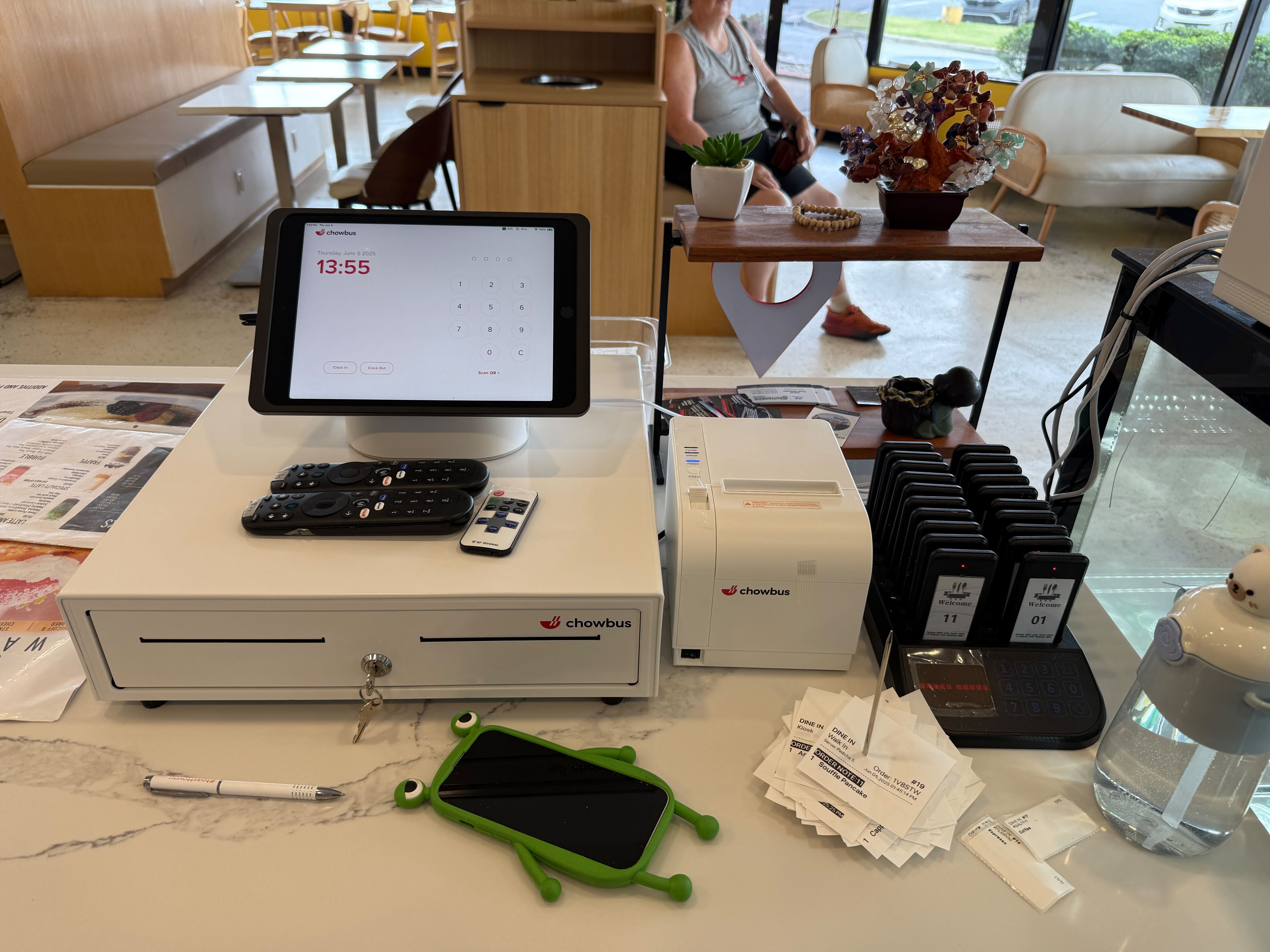
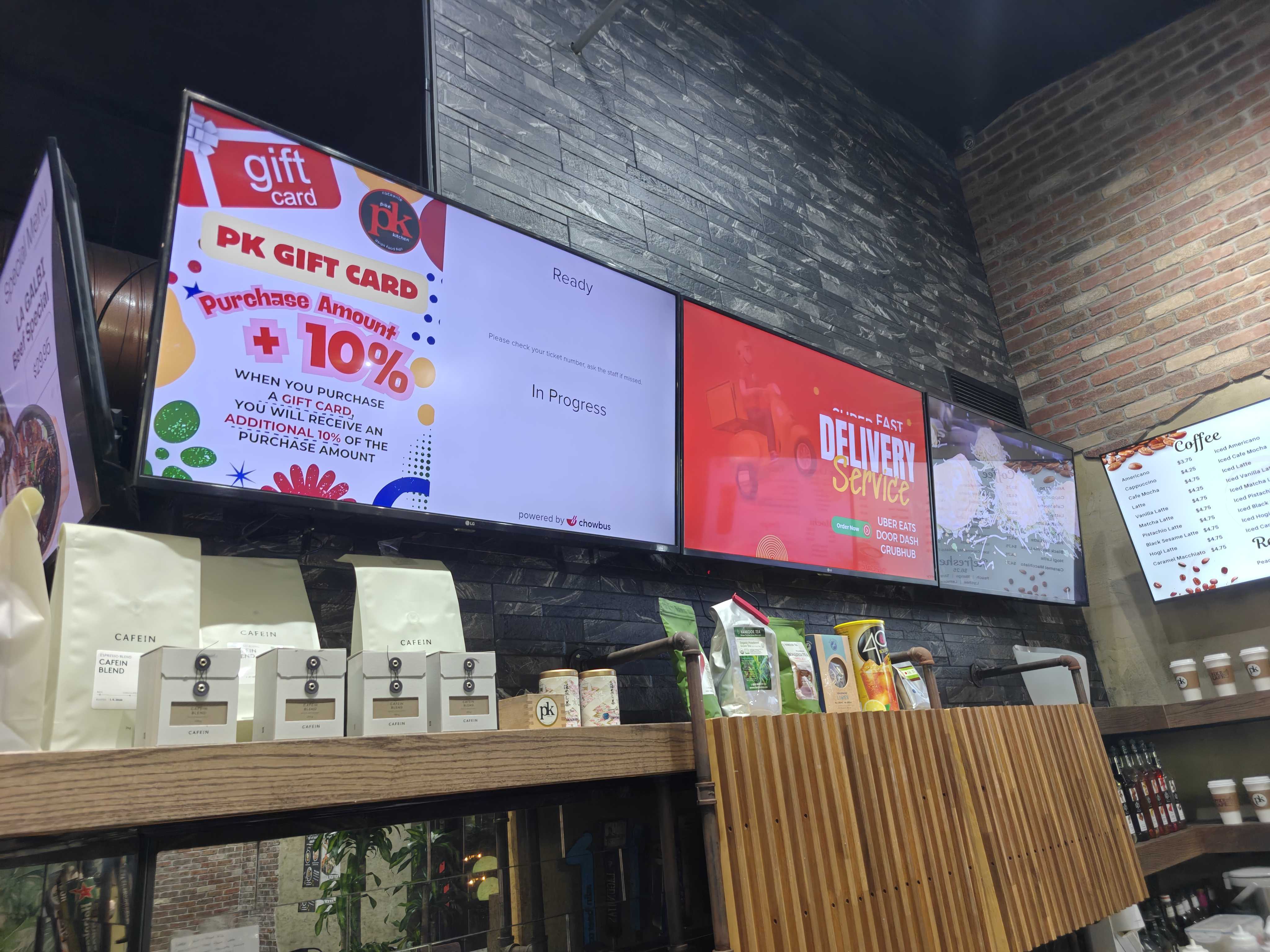
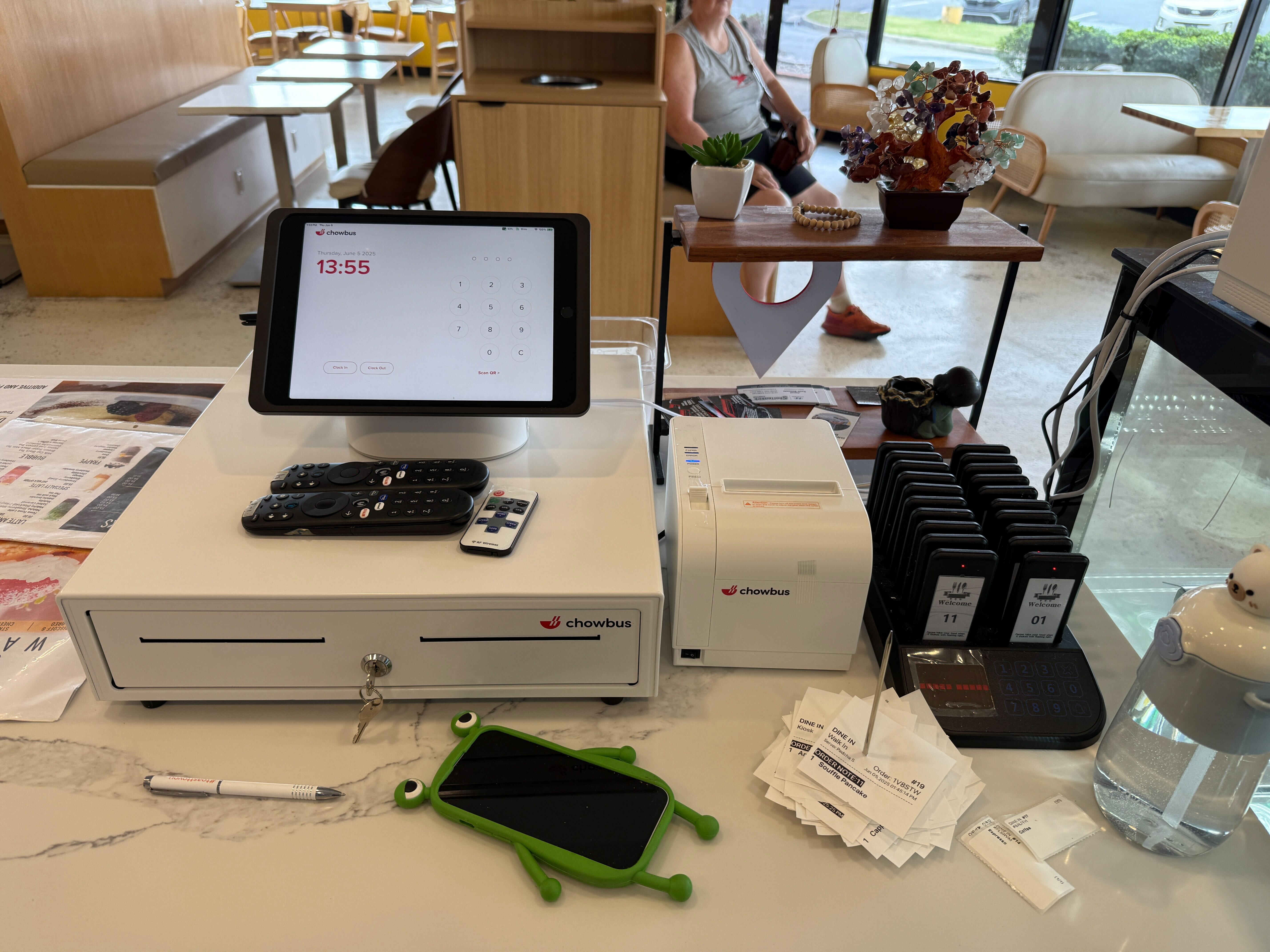
That's what an AYCE restaurant POS system is: the business rules as running code. Per-person tier pricing assigned at seating. Menus filtered automatically by tier. Time windows with visible timers and last-call alerts. Round-size metering and premium-item caps. Automatic surcharges for off-tier orders. Children's and senior pricing handled cleanly. Chowbus builds this AYCE engine natively into its POS — the same controls powering its hot pot and Korean BBQ deployments — so the actuarial bet you designed is the one that actually runs.
Margin protection justifies the system; the revenue features pay the bonus.
Ordering at the table accelerates everything. AYCE guests order continuously, and QR table ordering — with each guest's tier applied automatically — removes the server-wait from every round. Faster rounds mean denser meals inside the time window, better guest experience, and shorter total table times. With Chowbus TablePRO, menus display in English, Chinese, Japanese, Korean, or Spanish, and tickets hit the kitchen in the language the line reads.
À la carte add-ons ride the AYCE base. Drinks, desserts, premium one-off items outside the package — these carry the best margins in the building, and a system that surfaces them at the right moments (on the QR menu, at the kiosk, at timer's end: "add 30 minutes?" where your concept allows) converts them without staff effort.
Waitlist and turn management monetize the queue. Weekend AYCE is waitlist-driven; SMS waitlists, accurate party sizing, and timer-disciplined turns convert standing demand into seated covers. The same data tells you when to add a tier, adjust the window, or change pricing — because the system knows actual consumption and dwell times per tier, per daypart.
Loyalty fills the soft nights. AYCE concepts skew social and episodic; phone-number loyalty captures groups at the table and brings the organizer back — birthday campaigns and double-point Tuesdays flatten the weekly demand curve. In the Chowbus ecosystem, loyalty and CRM share one customer record with the POS, and AI-driven ads extend the reach to nearby diners automatically.
A practical sequence for owners formalizing their AYCE model:
Price the tiers from data, not vibes. Your POS's item-level reporting shows true consumption patterns; build standard and premium tiers around what average parties actually eat, and price the gap to the real food-cost difference of the premium list.
Set time windows you'll actually honor. Common practice runs 90–120 minutes by format. The window only disciplines turns if it's visible and neutral — a timer on the table's QR page beats a server's awkward reminder every time.
Meter, don't police. Round-size limits ("up to 4 premium plates per round") control kitchen flow and waste without ever telling a guest no. Caps on the handful of genuinely expensive items protect the tail risk; everything else can stay truly unlimited — which is the experience guests are buying.
Decide the waste policy and encode it. Many AYCE operations charge for excessive uneaten food; if you do, the POS should handle it as a clean line item with a stated threshold, not a negotiation.
Then verify in the demo that every rule you just designed can be configured — tier-filtered menus, timers, metering, surcharges, waste fees — and run a full table lifecycle: seat mixed tiers, order rounds via QR, expire the timer, split the check per guest. A system that can't model your rules in a demo won't enforce them on a Saturday.
Revisit the rules quarterly once you're live. The reporting that enforcement generates — consumption by tier, dwell time by daypart, premium-item velocity — is the data your original pricing never had. Most operators find their second version of the tier structure, written from three months of real numbers, outperforms the first by a wide margin.
All-you-can-eat is a model that rewards discipline and punishes improvisation. The price on the door is a bet about averages, and every unenforced tier, expired timer, and unmetered premium round moves the odds against the house. Run the rules in software and the bet pays the way you designed it to.
The operators winning with AYCE understand that the system isn't there to restrict guests — it's there to make generosity sustainable. Guests get the abundance they came for; the kitchen gets controlled flow; the floor turns on time; nobody has an awkward conversation.
If your AYCE concept runs on a generic register and hand-tracked rules today, pull one week of food-cost and table-time data and look at the variance. That variance is the price of unenforced rules — and it's usually several times the cost of the system that would eliminate it.
Q: What is an AYCE restaurant POS system?
A: AYCE profits on averages: a per-person price set above the mean consumption cost, protected by tiered menus, time windows, and controlled flow of expensive items. The model fails not from big eaters but from unenforced rules — which is why profitable AYCE operations run the rules in their POS rather than on the floor.
Q: How do restaurants make money on all-you-can-eat?
A: Buffets mostly need per-head pricing and gate control, since guests serve themselves. Ordered AYCE — sushi, hot pot, KBBQ — needs much more: continuous round-based ordering, tier-filtered menus per guest, kitchen metering, and per-item controls. If your concept takes orders, you need the full AYCE engine, not a buffet register.
Q: What's the difference between an AYCE POS and a buffet POS?
A: Standard restaurant POS economics apply — monthly software, processing, hardware — but the decisive factor is whether AYCE controls and QR ordering are native or workarounds. Generic platforms require fragile menu hacks that break exactly when busy; purpose-built platforms like Chowbus include the AYCE engine natively, so quote your real configuration and compare all-in totals.
A: You can simulate pieces — a fixed-price item per guest, separate menus — but generic systems can't filter menus by guest tier, run table timers, meter rounds, or auto-surcharge off-tier orders. Operators trying it end up enforcing manually, which is where AYCE margins go to die. Purpose-built systems encode the model directly; Chowbus does this across hot pot, KBBQ, and AYCE sushi concepts among its 9,000+ restaurants.
A: Many AYCE operations do, with a stated threshold (e.g., a per-ounce fee on excessive uneaten food) — primarily as a deterrent rather than a revenue line. A purpose-built POS handles it as a clean, pre-configured line item, which keeps the policy consistent and removes the negotiation from your servers' shoulders.