Most restaurant owners searching for POS pricing find the same thing: a list price that looks reasonable, followed by a contract full of line items that weren't mentioned in the demo. Hardware fees. Processing rates. Setup charges. Add-on modules for features you assumed were included.
The Asian restaurant sector is projected to reach $240 billion by end of 2026, yet many of the operators driving that growth are still making POS decisions based on incomplete price information. This guide exists to fix that.
In this breakdown, you'll see exactly how Chinese restaurant POS costs are structured, what you're actually paying for, and how to evaluate whether a system's total cost — not just its sticker price — makes sense for your operation.
The full picture is less complicated than vendors make it seem. Let's work through it.
POS vendors have every incentive to lead with a low headline number and bury the real cost in contract terms. It's a strategy borrowed directly from the telecom industry, and it works because most restaurant owners are evaluating three or four systems simultaneously while also running a full service.
The cost categories you need to understand:
Monthly software subscription — This is the number advertised. It covers access to the software, cloud storage, and basic support. It does not cover most of what you actually need.
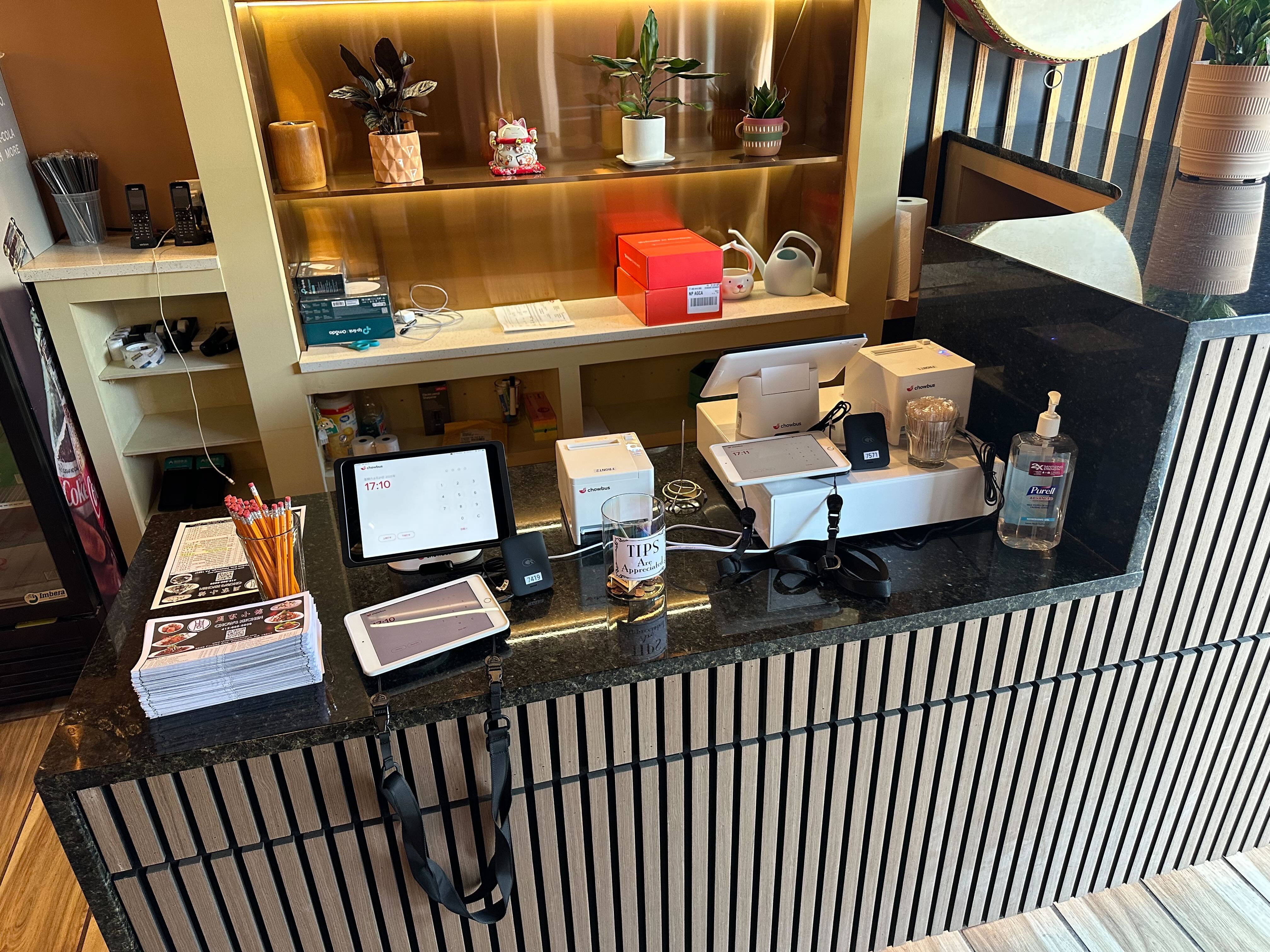
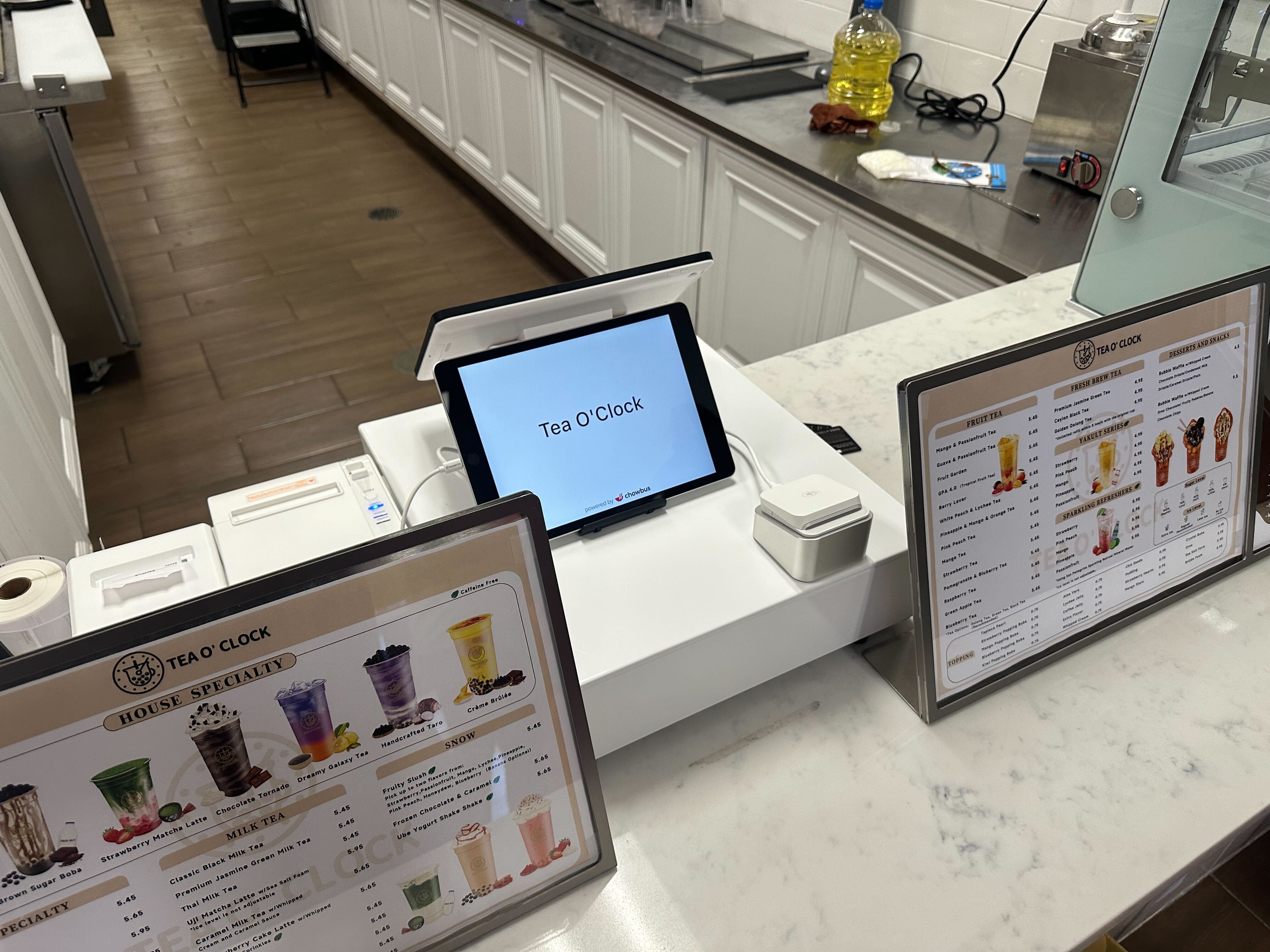
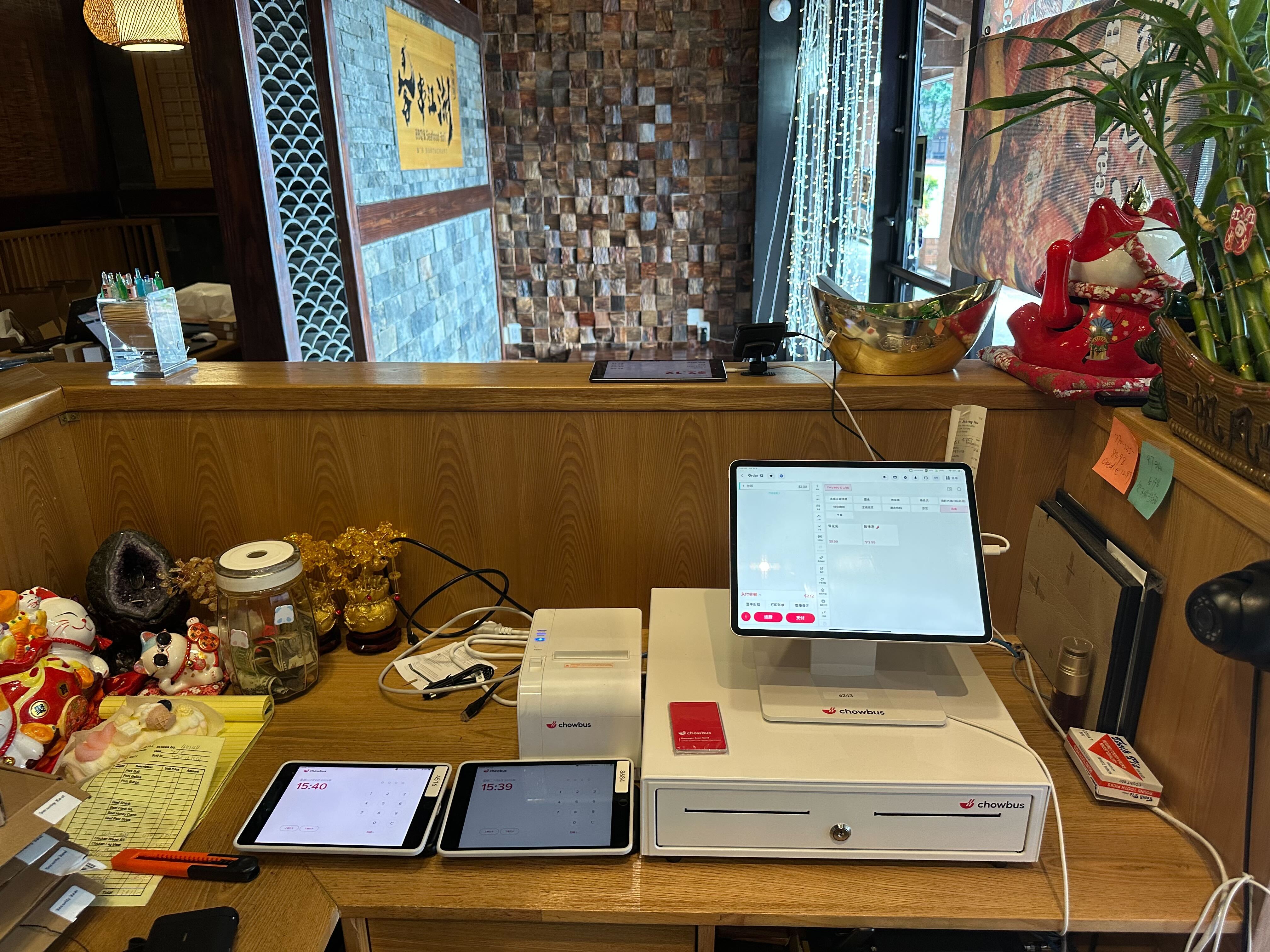
Hardware costs — Terminals, tablets, kitchen display screens, receipt printers, card readers. Some vendors lease hardware (locking you into their ecosystem). Others let you purchase outright or use your own devices. This is one of the biggest total cost variables.
Payment processing fees — The number that most operators underestimate. Processing fees of 2.5–3.5% per transaction add up fast. On $100,000 in monthly revenue, the difference between 2.5% and 3.5% is $1,000 every single month.
Setup and onboarding — Some systems charge $500–$2,000 for installation and initial configuration. Others include it. This is negotiable more often than vendors let on.
Add-on modules — Loyalty programs, online ordering, delivery integration, marketing tools. In some systems these are included. In others, each is a separate monthly fee that compounds the base cost significantly.---
Entry-level systems (Square for Restaurants, basic setups)
Monthly software: $0–$60 Hardware: $49–$800 per device (Square Terminal, iPad, etc.) Processing: 2.6% + $0.10 per transaction Add-ons: Loyalty, advanced reporting, team management each billed separately
Realistic monthly cost for a single-location Chinese restaurant: $200–$600/month once processing and any add-ons are included.
What you don't get: Multilingual menu support, complex modifier management for dim sum or hot pot, AYCE controls, bilingual customer support, delivery app aggregation.
Mid-market systems (Toast, Clover)
Toast: $69–$165/month base (Plus and Point of Sale plans) Hardware: $627–$1,024 per terminal, or $0 down with a higher processing rate Processing: 2.49% + $0.15 per transaction (standard) — or higher if you take the $0 down option Add-ons: Online ordering, loyalty, delivery integrations each additional
Clover: Starts at $135/month; proprietary hardware required, significant add-on costs
Realistic monthly cost for a Chinese restaurant: $400–$1,200/month depending on transaction volume and add-on selections.
What you don't get: Asian-restaurant-specific features, multilingual support, built-in AYCE/hot pot management, culturally familiar support team.
Purpose-built Asian restaurant systems (Chowbus, MenuSifu)
These systems are priced based on restaurant type, size, and feature configuration. The headline number is typically similar to Toast's mid-tier — but the feature set included at that price is substantively different.
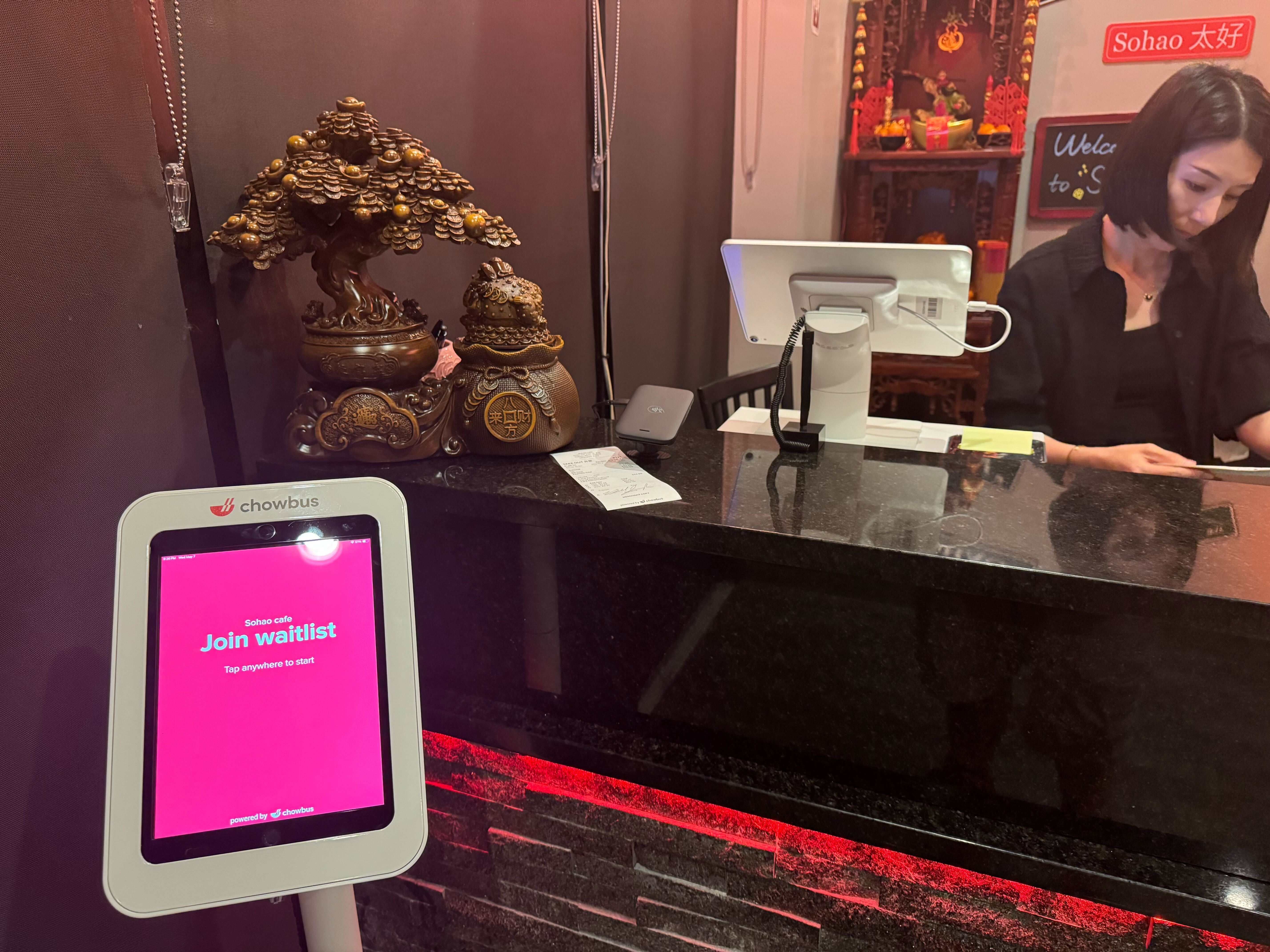
With Chowbus, multilingual menus, QR code ordering, delivery aggregation, AI advertising tools, and 24/7 bilingual support in English, Chinese, and Spanish are part of the platform — not line items on an add-on invoice.---
Transaction fees on third-party delivery
If your POS doesn't integrate delivery apps, you're either manually entering orders (labor cost + error rate) or managing multiple tablets on your counter. The aggregation problem is real, and its cost is often invisible until you calculate your staff hours lost to it.
MenuSifu, for example, charges per-order fees on top of subscription costs, and does not integrate third-party delivery at all — meaning operators pay both the POS cost and the full 25–30% platform commission without the benefit of aggregation.
Support costs — the non-obvious one
English-only support is a real operational tax for Chinese-speaking restaurant owners. When a system issue happens mid-service, the time spent trying to communicate a complex technical problem through a language barrier is measured in covers lost and stress accumulated. Bilingual support — available 24/7 — isn't a premium feature. It's a baseline requirement.
Hardware lock-in
Clover requires proprietary hardware. Toast's $0 down hardware option ties you to a higher processing rate for the contract term. If you ever want to switch systems, the hardware you own may not be compatible. Understanding the lock-in terms before signing is critical for Chinese restaurant operators who plan to scale.
Don't compare monthly subscription costs. Compare total 12-month cost of ownership:

When you add the cost of features Chinese restaurants actually need, the generic systems stop looking cheaper.---
Q1: What is the average cost of a POS system for a Chinese restaurant? A: The honest range is $200–$1,200+ per month, depending on your transaction volume, hardware setup, and which features you need. Entry-level systems look cheaper upfront but require costly add-ons for features Chinese restaurants actually use. Mid-market systems like Toast start around $69/month but can reach $800–$1,000/month once hardware financing, processing fees, and add-ons are included. Purpose-built systems for Asian restaurants like Chowbus are often comparable in total cost while including multilingual support, delivery aggregation, and culturally specific features that generic systems charge extra for — or don't offer at all.
Q2: Is a free POS system like Square good enough for a Chinese restaurant? A: Square's free plan works for simple, single-location operations with low modifier complexity. For a Chinese restaurant with dim sum-style customization, multilingual staff, QR code ordering, delivery app management, or any AYCE format, Square's limitations surface quickly. The cost of workarounds — extra tablets, manual order entry, English-only support — tends to exceed the "savings" of a free plan within the first few months of operation.
Q3: What's the difference between Chowbus and MenuSifu for Chinese restaurants? A: Both are designed for Chinese restaurant operators, but they differ significantly in features and model. MenuSifu does not offer QR code ordering or third-party delivery integration — operators manage delivery separately, at full commission. MenuSifu also charges per-order fees that compound with volume. Chowbus integrates QR ordering, delivery aggregation, online ordering, loyalty, and AI advertising into a single platform. Operators who have switched from MenuSifu to Chowbus have reported significant reductions in annual operating cost — in documented cases, savings of $15,000+ per year from eliminating per-order fees and reducing delivery commission dependency.
Q4: How do payment processing fees work with restaurant POS systems? A: Processing fees are charged as a percentage of each transaction, plus a fixed per-transaction fee. The typical range is 2.49–3.5% + $0.10–$0.15 per swipe. On a restaurant doing $80,000/month in card transactions, a 1% difference in processing rate equals $800/month — or nearly $10,000/year. Some vendors offer lower rates in exchange for higher monthly subscription fees; others offer $0 down hardware in exchange for locked-in higher processing rates. Always model your expected monthly transaction volume when comparing processing terms.
Q5: Can I negotiate POS pricing as a Chinese restaurant owner? A: Yes — more than most vendors will volunteer. Setup fees, contract length, hardware costs, and sometimes processing rates are negotiable, particularly if you have multiple locations or are willing to commit to a longer contract term. For Chinese restaurant operators, the more important negotiation is about what's included versus what's an add-on — specifically multilingual support, delivery integration, and bilingual customer service. Know what you need before the sales call, and ask explicitly whether each feature is included or separately billed.
Q6: What should I ask before signing a POS contract for my Chinese restaurant? A: Six questions worth asking every vendor: (1) What is the total monthly cost including processing fees at my expected volume? (2) What hardware do I need, what does it cost, and what happens to it if I switch systems? (3) Is multilingual menu support included or an add-on? (4) Does the system integrate with third-party delivery platforms natively? (5) What does customer support look like — hours, languages, response time? (6) What are the contract exit terms? The answers to these six questions will tell you more about total cost than any pricing page.
Chinese restaurant POS pricing is not as complicated as the vendor landscape makes it look. The complexity is mostly strategic — designed to make comparison difficult and switching feel expensive. When you strip it down to total 12-month cost of ownership and align features against what your restaurant actually needs, the right choice becomes considerably clearer.
For Chinese restaurant operators specifically, the feature gap between generic systems and purpose-built ones is real and measurable. Multilingual support, AYCE management, QR ordering, delivery aggregation, and bilingual customer service are not premium upgrades — they're table stakes for running an efficient Asian restaurant in 2026.
The question isn't whether the right system costs more. In most cases, when you do the full math, it doesn't. The question is whether your current system is actually built for the restaurant you're running.