The average Chinese restaurant in the U.S. is running on a POS system that was never designed for it — and paying full price for the privilege. Most POS providers quote a monthly number, but the actual cost of running a mismatched system shows up somewhere else: in the hours your staff spends on workarounds, in the order errors that turn into refunds, in the 25–30% commission you're still paying to third-party delivery apps because your system can't replace them.
Across 9,000+ restaurants in all 50 states, the operators who reduced their real technology costs weren't the ones who found the cheapest POS. They were the ones who figured out what they were actually paying for — and stopped paying for what wasn't working.
In this breakdown, you'll get a clear picture of Chinese restaurant POS costs in 2026: what's included, what's hidden, and how to evaluate the true ROI of switching to a platform built specifically for how your restaurant runs.
The difference comes down to three things.
Chinese restaurant POS pricing in 2026 falls into four categories — and most operators only know about the first one.
1. Software subscription (the number they quote you) Monthly software fees for restaurant POS systems typically range from $69 to $400+ per month depending on the provider and feature set. Toast starts at $69/month for the basic plan but scales significantly with add-ons. Clover starts at $135/month and requires proprietary hardware. MenuSifu, a direct competitor targeting Chinese restaurants, charges per-order fees on top of subscription costs — a model that penalizes you as your volume grows.
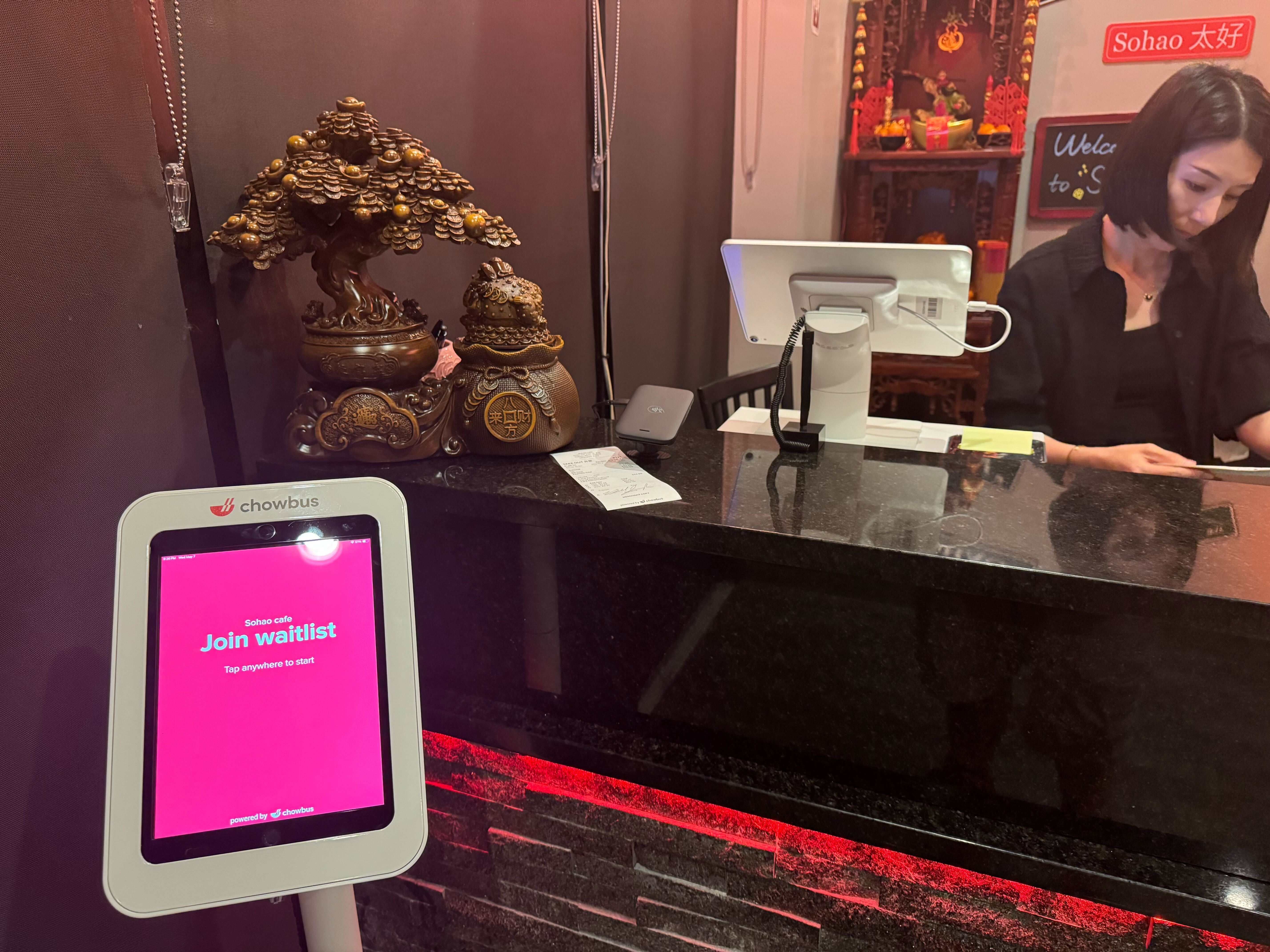
Chowbus positions itself as an all-in-one platform where core features like bilingual menu management, QR code ordering, and kitchen display integration aren't sold as add-ons. That matters when you're comparing line items.
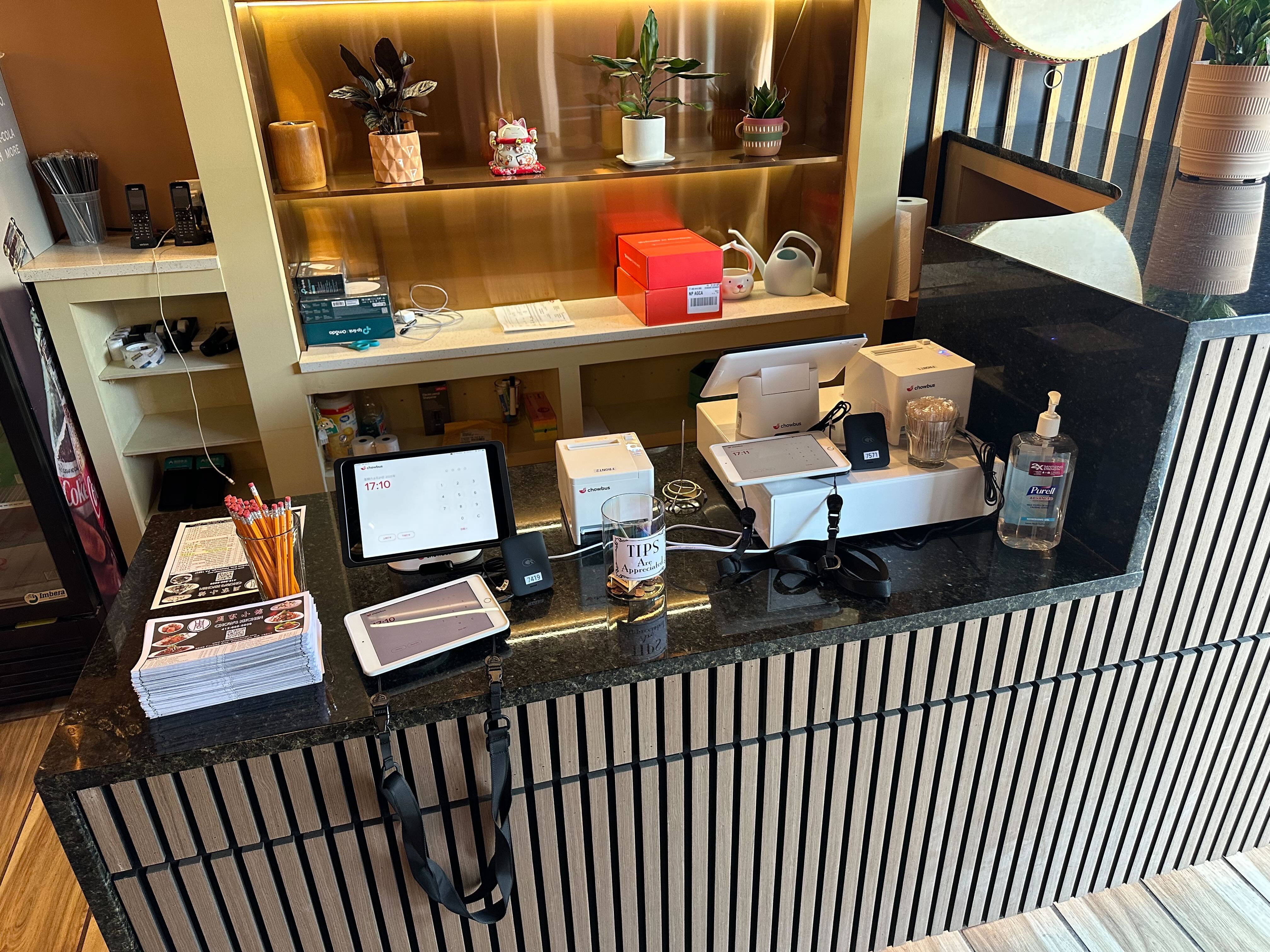
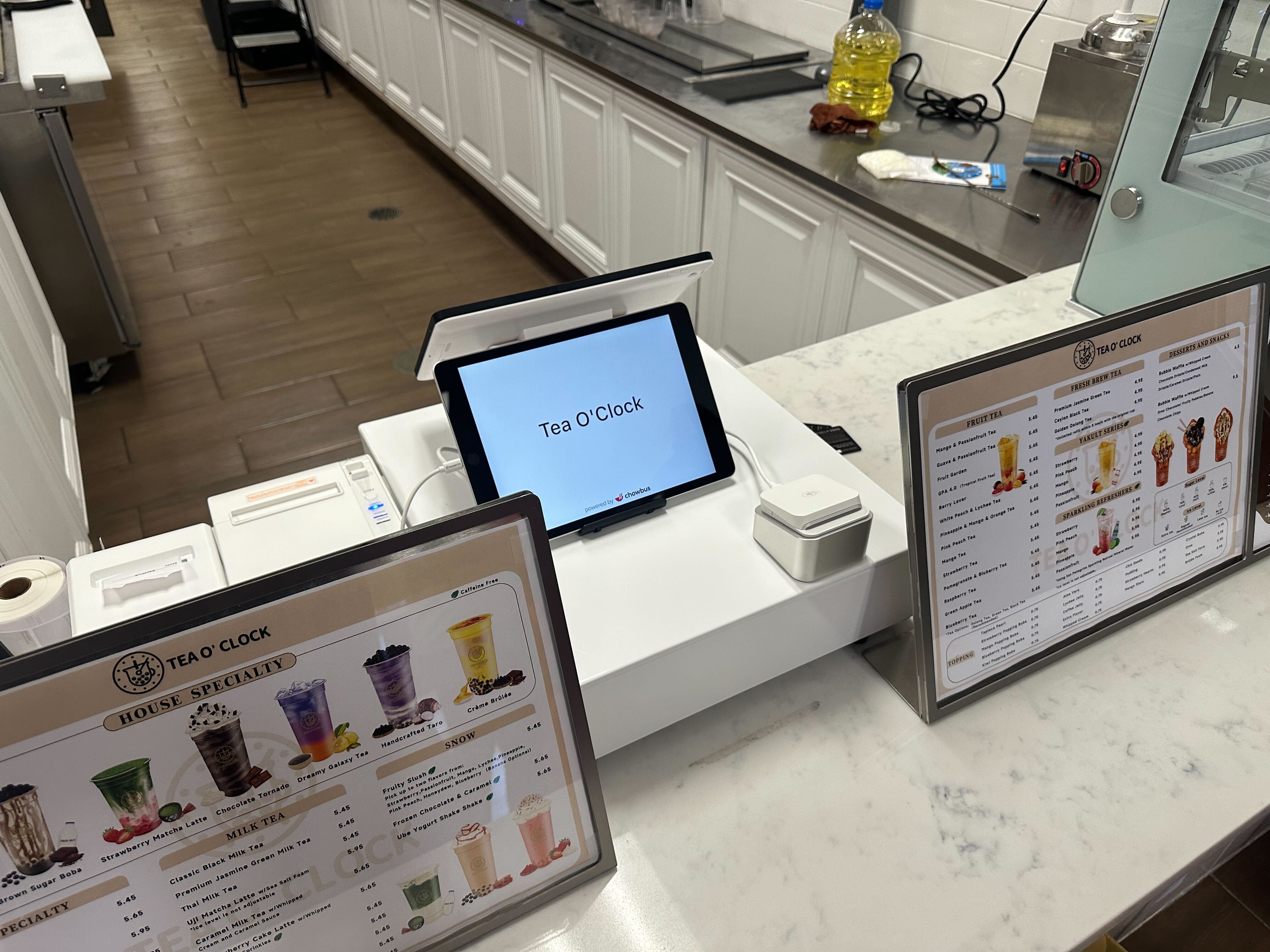
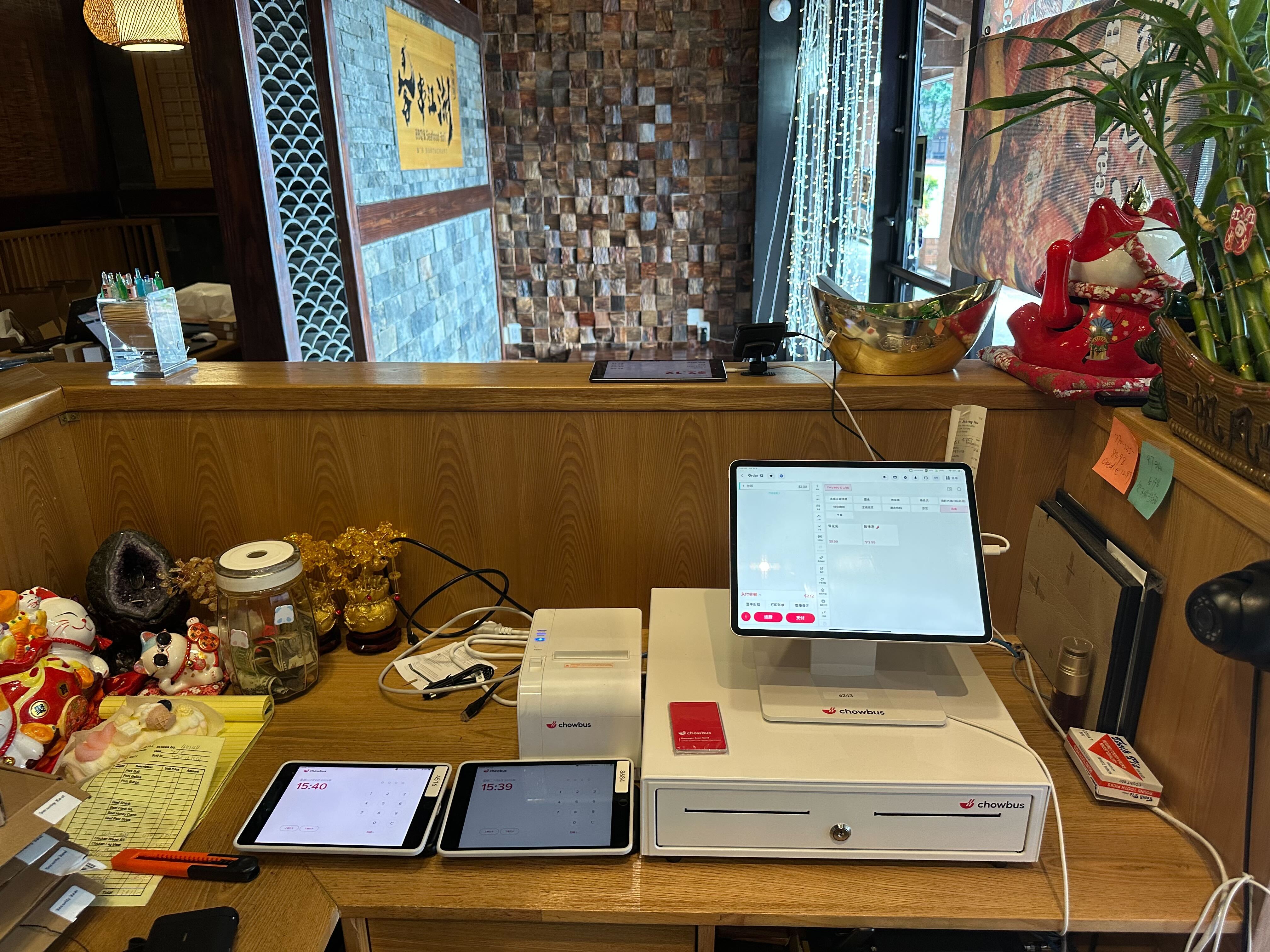
2. Hardware costs Hardware is where sticker shock usually hits. A full POS terminal setup — tablet, stand, card reader, receipt printer, kitchen display — can run $800 to $3,000+ per station depending on the provider. Some providers, like Clover, lock you into proprietary hardware that can't be transferred if you switch systems. Others, like Square, are more flexible with bring-your-own-device options for smaller operations.
For multi-station Chinese restaurant setups — a host station, two server tablets, and a kitchen display — realistic hardware costs before software often land between $2,500 and $8,000.
3. Per-transaction and processing fees This is the line item most operators underestimate. Credit card processing fees typically run 2.5–3.5% per transaction depending on the provider and card type. Some POS companies build their own payment processing in and add a markup; others let you bring your own processor. For a Chinese restaurant doing $60,000/month in revenue, the difference between a 2.6% and 3.2% processing rate is $360/month — or $4,320/year.
MenuSifu specifically charges per-order fees on top of their base subscription. For a restaurant doing 200 covers a day, those per-order charges accumulate in ways that aren't obvious until you do the math.
4. Hidden costs: the ones that don't appear on any invoice This category is where the real cost gap opens up between a generic POS and one built for Chinese restaurants.
The right way to evaluate Chinese restaurant POS cost isn't to compare monthly subscription prices. It's to calculate total cost of ownership against measurable operational gains.
Here's a simple framework:
Step 1: Identify your current bleed points
Step 2: Estimate the value of eliminating each A Chinese restaurant paying $3,000/month in DoorDash commissions and switching to a platform with integrated direct online ordering could realistically recover 40–60% of that over time as customers migrate to the direct channel. That's $1,200–$1,800/month in recaptured revenue — against a platform cost difference of maybe $100–$200/month.
Step 3: Factor in the support and operational stability premium This is harder to quantify but real. A system that your staff can actually use fluently, backed by support that speaks your language, runs fewer errors and experiences fewer disruptions. Over a year, the difference between one major service disruption per month and one per quarter can easily represent thousands of dollars in lost revenue and staff morale.
Step 4: Compare total cost, not just subscription Once you've mapped all four cost categories above against your current system and any alternatives, the comparison becomes much clearer. A platform that costs $50/month more on the subscription line but eliminates $1,500/month in delivery commissions and $200/month in error-related losses is cheaper by a factor of more than 10.
Chinese restaurant POS cost isn't a number — it's a calculation. The operators who win on margin aren't always the ones running the cheapest system. They're the ones who mapped every real cost of their current setup, identified where money was leaving through the cracks, and made a deliberate switch to a platform where those cracks don't exist.
For Chinese restaurants specifically, the gap between a generic POS and one built for how you operate isn't marginal. It shows up in delivery commissions, in menu management hours, in support calls that go unanswered in your language, and in the slow compounding cost of staff using tools that weren't designed for them.
The math usually isn't close. If your current POS is costing you time, errors, and third-party commissions on top of the monthly fee — it's worth doing the full calculation. Not just what you're paying, but what you're paying for.
Q1: How much does a Chinese restaurant POS system cost per month? A: Chinese restaurant POS costs vary by provider and setup. Basic systems start at $69–$135/month (Toast, Square), while full-featured platforms designed for Chinese restaurants with bilingual menus, kiosk support, and online ordering typically range from $150–$400/month. However, monthly subscription is only part of the picture — always ask about hardware costs, processing fees, and per-transaction charges before comparing.
Q2: Is MenuSifu cheaper than Chowbus for Chinese restaurants? A: MenuSifu's base subscription may appear lower at first glance, but its per-order fee model means costs scale with your volume. For a high-volume Chinese restaurant, those per-order charges — combined with limited online ordering integration and no QR code ordering — often result in higher total costs than an all-inclusive platform. One documented case: Xiang's Hunan Kitchen saved $15,000/year after switching from MenuSifu to Chowbus.
Q3: What are the hidden costs of a restaurant POS system? A: The most significant hidden costs for Chinese restaurants are: third-party delivery commissions (25–30% if your POS doesn't support direct online ordering), manual menu management labor if multilingual support isn't native, order errors from staff using systems in a second language, and support downtime costs when help isn't available in your team's language.
Q4: Does a more expensive POS actually save money in the long run? A: For most Chinese restaurant operators, yes — when you compare total cost of ownership rather than subscription price alone. A platform that eliminates delivery commissions, reduces order errors, and provides bilingual support can generate net savings many times the difference in monthly subscription cost. The math works out most clearly when you calculate your current bleed points first.
Q5: What POS features are most important for a Chinese restaurant? A: The non-negotiables for Chinese restaurants are: native multilingual menu management (English + Chinese minimum), support for high-customization orders, bilingual customer support, integrated online ordering to reduce delivery app dependency, and QR code or self-service ordering options. Features specific to formats like hot pot or AYCE (all-you-can-eat) are also critical if that applies to your concept.
Q6: How do I switch my Chinese restaurant to a new POS without disrupting service? A: The best providers offer a phased onboarding: menu build and staff training happen before go-live, with dedicated support during the first week of live operation. Ask potential providers specifically about their onboarding timeline, whether a trainer will be on-site or remote, and what support looks like during the transition period. Bilingual onboarding support matters significantly for Chinese restaurant teams.