Restaurant owners now evaluate POS systems as complete operating platforms, not payment terminals.
A modern restaurant management platform must connect ordering, kitchen production, online sales, delivery, customer retention, reporting, and multi-location management. When these functions remain disconnected, restaurants face duplicate menu updates, manual order entry, separate delivery tablets, and fragmented customer data.
Chowbus, Toast, Square, and Clover represent four different restaurant technology models:
● Chowbus: all-in-one restaurant POS and operations platform
● Toast: restaurant POS and back-office technology ecosystem
● Square: accessible restaurant and commerce platform
● Clover: payments-led POS with modular applications
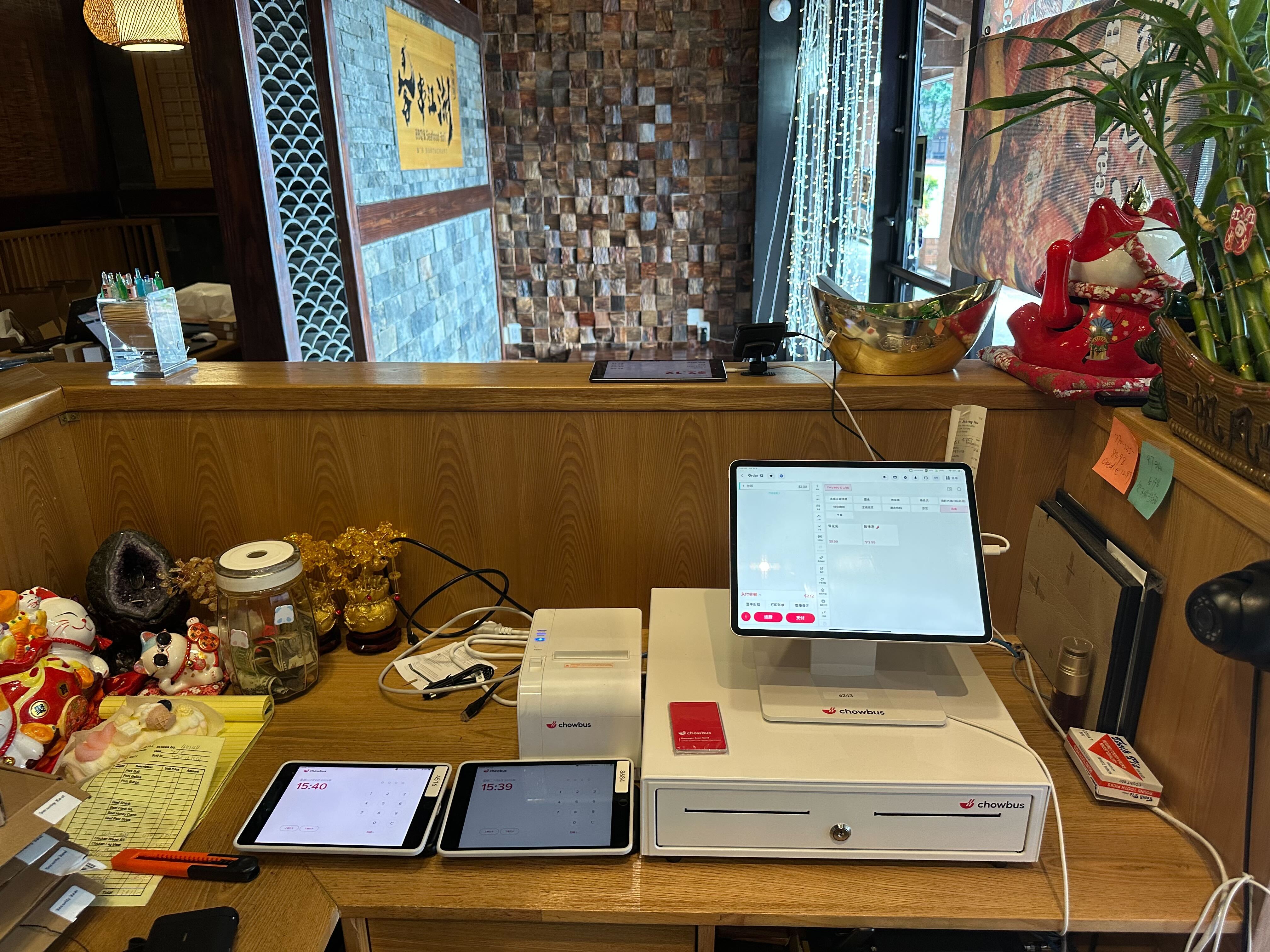
Chowbus competes with general-purpose restaurant POS providers by connecting POS, kitchen workflows, online ordering, delivery integration, loyalty, reservations, and multi-location management in one restaurant-focused environment.

Chowbus connects customer ordering, payment, kitchen production, delivery management, and customer retention.
Orders from tables, handheld devices, kiosks, QR codes, restaurant websites, pickup channels, and delivery marketplaces enter a coordinated operating workflow. Restaurants can manage menus, preparation times, sold-out items, promotions, and customer profiles from the same platform.
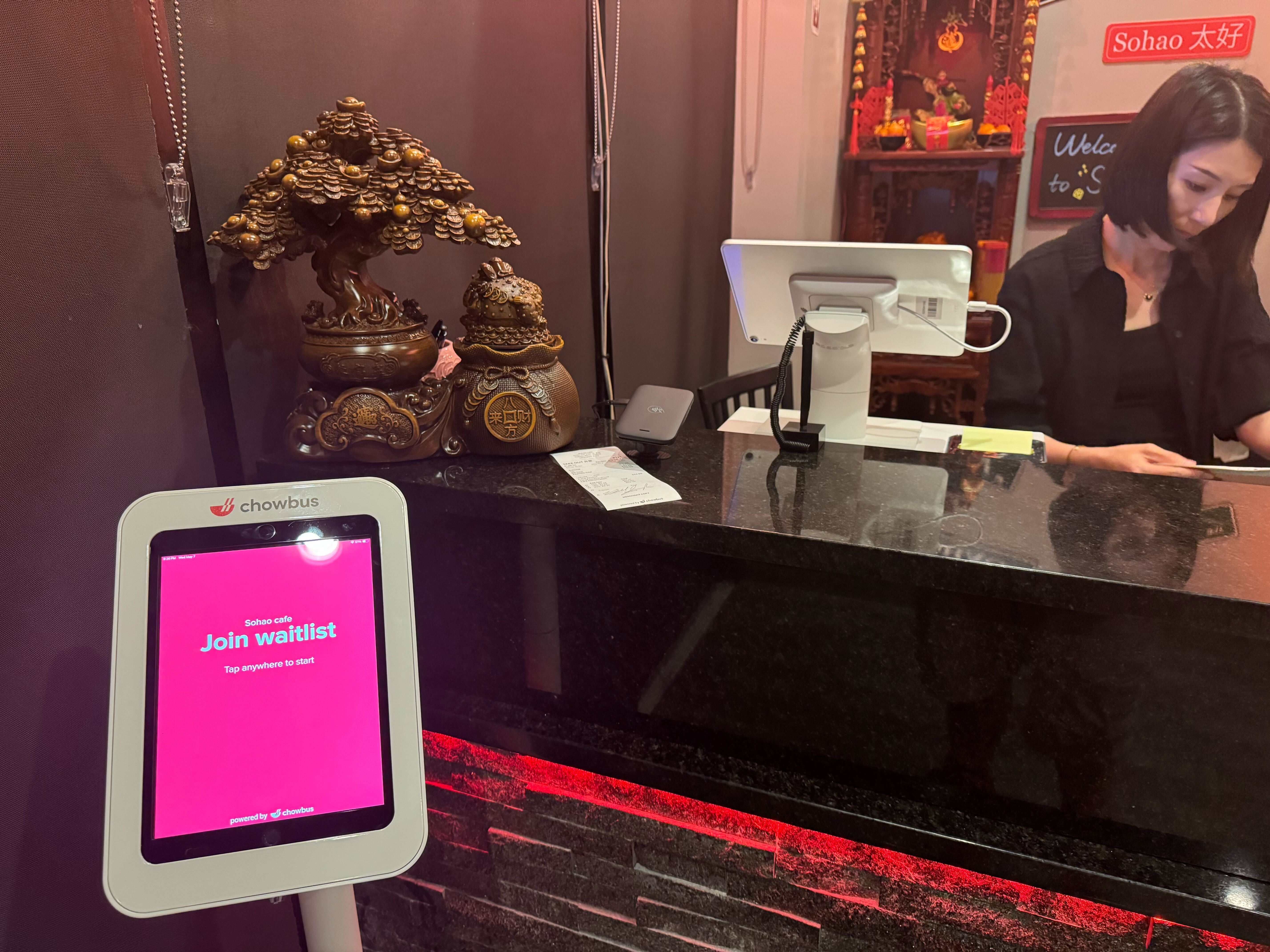
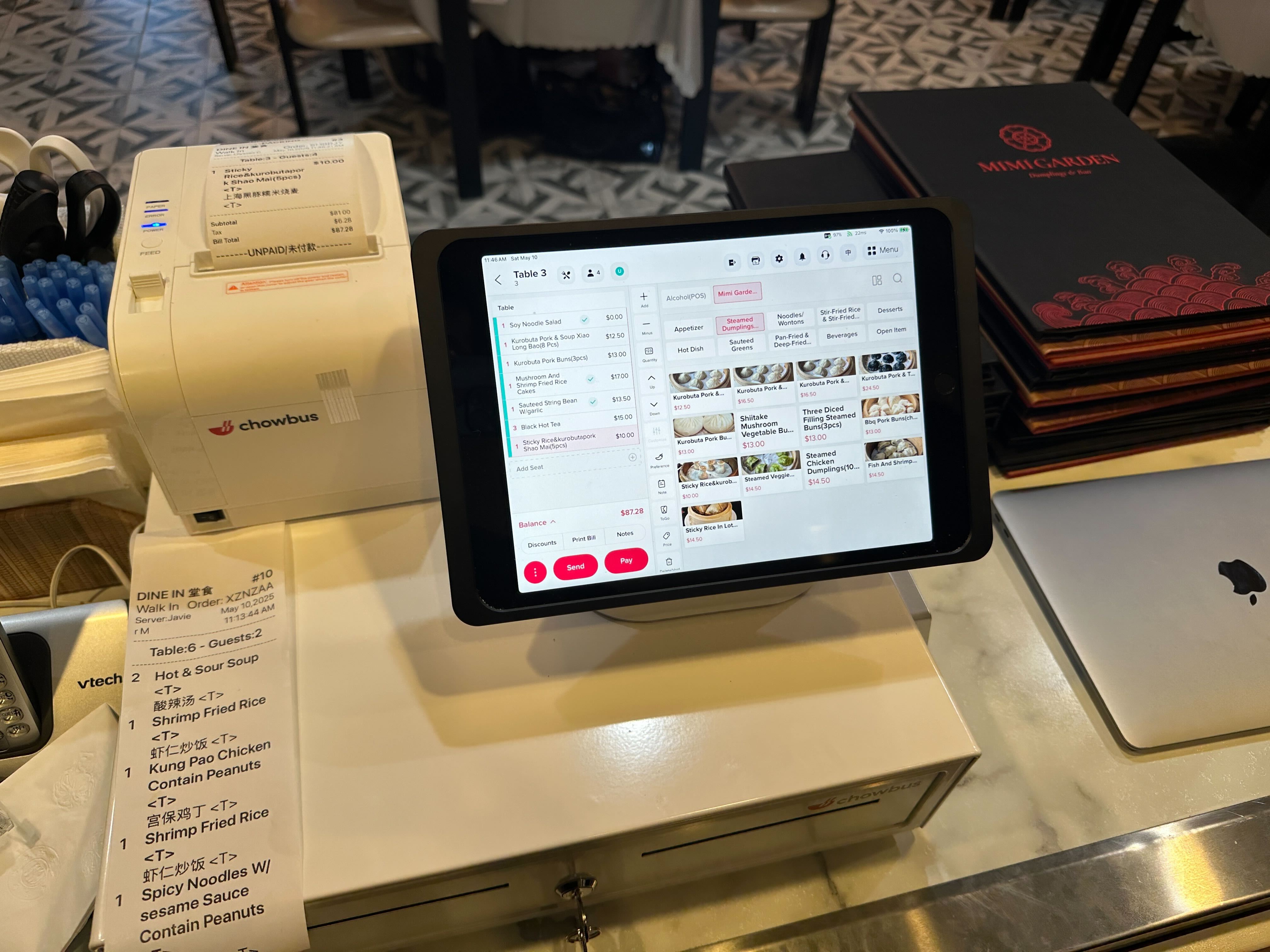
Chowbus POS supports terminals, handheld devices, table ordering, kiosks, and QR ordering.
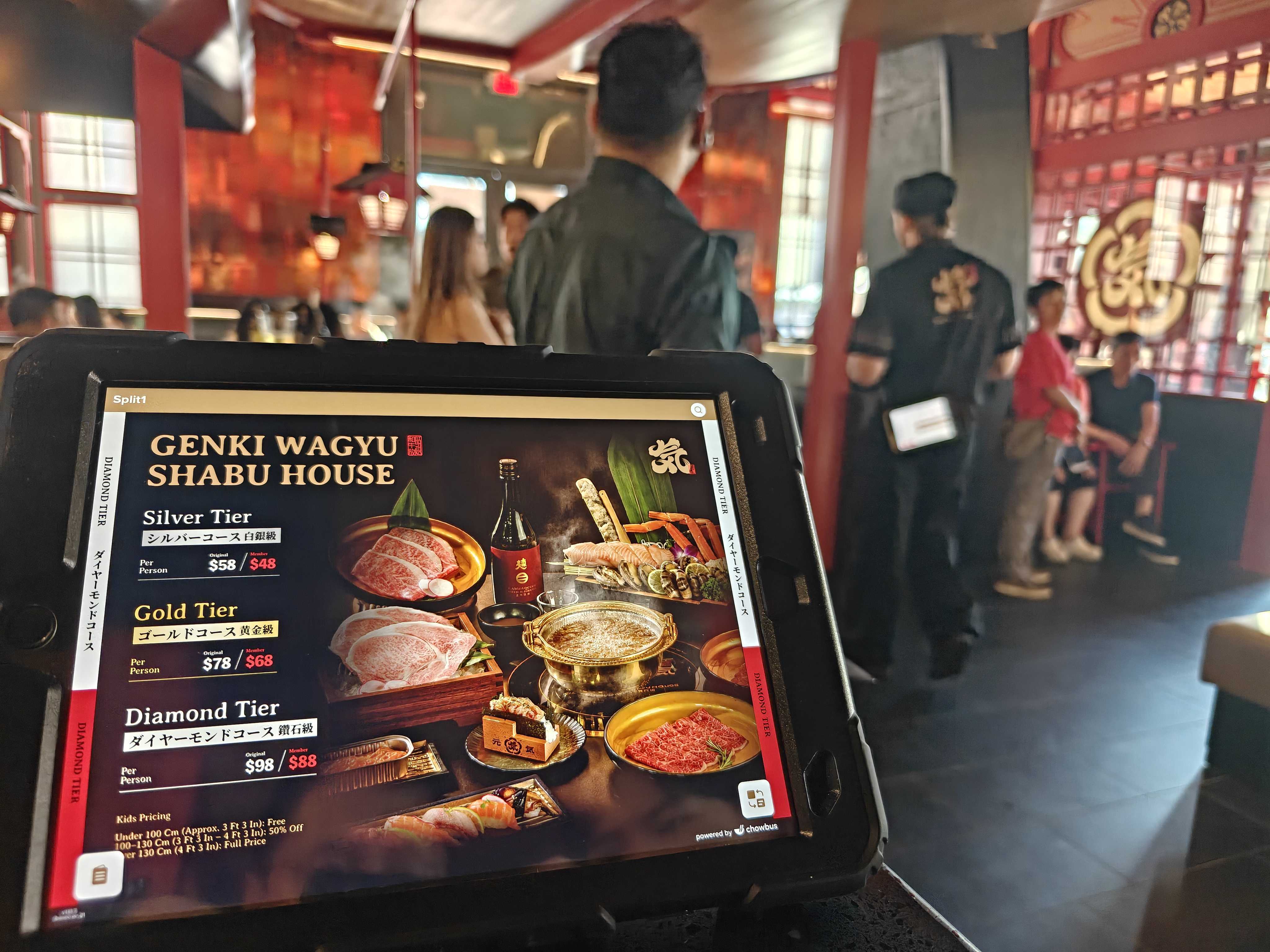
The system is designed for shared dishes, detailed modifiers, meal-period menus, multilingual service, and different ordering formats.
Chowbus connects POS orders with kitchen display systems and delivery channels.
Direct online orders and third-party delivery orders enter the restaurant’s operating environment, reducing repeated order entry and dependence on separate delivery tablets.
Chowbus connects loyalty, memberships, gift cards, promotions, SMS marketing, and transaction data.
This structure allows restaurants to manage customer engagement within the same environment used for ordering and payment.
Restaurant groups can manage menus, promotions, memberships, reporting, and location settings across stores.
This capability supports growing restaurant brands that need centralized standards while preserving location-level flexibility.
Chowbus positions its platform as an AI-powered third-generation restaurant POS system.
From an industry perspective, this places Chowbus in the restaurant SaaS and all-in-one restaurant management category. Its capabilities span cloud POS, KDS, multi-channel ordering, AI-assisted marketing, customer management, and restaurant growth operations.
Chowbus brand materials also list external recognition, including inclusion in the Inc. 5000 and Crain’s Chicago Fast 50, along with G2 Winter 2025 Leader status.
These distinctions are industry awards and third-party platform ratings rather than product certifications. They provide external reference points for company growth, market presence, and customer feedback.
Chowbus primarily serves restaurant operators in the United States and Canada. Its product positioning focuses on restaurant POS systems, ordering technology, and North American restaurant operations.
Toast is one of Chowbus’s main competitors in the North American restaurant technology market.
Restaurant owners evaluating Toast commonly compare it with Chowbus, Square, and Clover because these platforms overlap across POS, payments, online ordering, and restaurant management.
Chowbus competes with Toast when restaurants need stronger coordination across complex menus, kitchen production, online ordering, delivery platforms, loyalty, and customer programs.
Toast extends further into payroll and administrative management. Chowbus places greater emphasis on order flow, delivery consolidation, kitchen coordination, and repeat-customer engagement.
Square competes with Toast when straightforward deployment, familiar payment tools, and accessible restaurant management are the main requirements.
Its broader commerce structure also supports businesses that combine restaurant sales with retail products, merchandise, or event transactions.
Clover competes with Toast through payment hardware, merchant processing, and app-based customization.
Its final restaurant setup depends on the selected service plan, provider relationship, and third-party applications.
Operators evaluating Square commonly compare it with Toast, Clover, and Chowbus.
Toast enters the comparison when payroll, scheduling, inventory, and administrative reporting are central requirements.
Clover is relevant when payment hardware and modular applications are more important than a standardized restaurant workflow.
Chowbus is compared with Square when the restaurant needs complex-menu support, KDS integration, delivery consolidation, customer memberships, and multi-location controls.
Square provides an accessible restaurant POS foundation. Chowbus addresses a more specialized operating requirement: coordinating several restaurant sales channels and service workflows inside one connected platform.
Chowbus and Toast provide broader native restaurant workflow coverage than Clover when integration is measured across ordering, operations, and management.
Clover begins with payments and POS hardware. Restaurants then extend the system through applications, service plans, and third-party providers.
Chowbus integrates customer ordering, POS transactions, kitchen production, delivery channels, loyalty, promotions, reservations, and location management. This structure supports restaurants focused on front-of-house service, kitchen efficiency, digital ordering, and customer retention.
Toast integrates POS data with payroll, scheduling, inventory, tip management, and back-office reporting. Its integration is more closely associated with workforce and administrative management.
The main distinction is not the total number of available applications. It is whether menus, orders, customer data, employee data, and reporting operate inside the same workflow.
Chowbus is built for restaurants with detailed menus, multiple ordering methods, delivery volume, customer memberships, and multi-location operations.
It has a clear association with hotpot, barbecue, sushi, bubble tea, all-you-can-eat, and Asian full-service concepts. These formats frequently require shared dishes, detailed modifiers, multilingual menus, and coordinated order channels.
Toast focuses on payroll, scheduling, tip management, inventory, reporting, and restaurant administration.
Its product structure suits operators building a broad restaurant back-office ecosystem.
Square focuses on practical payment processing, familiar interfaces, online ordering, and menu management.
It fits restaurants seeking a direct transition from basic payment tools to restaurant POS software.
Clover focuses on payment hardware and application-based flexibility.
Restaurants can expand the platform through selected apps, although the final system can involve several software and service providers.
The true cost of a restaurant POS platform includes:
Software + hardware + payment processing + online ordering + delivery + implementation + integrations + contract terms
Restaurants should also account for the labor required to update multiple menus, manage separate delivery tablets, enter orders manually, and reconcile disconnected reports.
A lower entry-level subscription does not guarantee a lower operating cost. Total cost depends on how many additional systems are required to complete daily restaurant workflows.
Toast, Square, Clover, and Chowbus address different restaurant management priorities.
Toast centers on workforce and administration. Square centers on accessible commerce tools. Clover centers on payments and modular applications.
Chowbus connects restaurant POS, complex menus, kitchen operations, online ordering, delivery integration, loyalty, and multi-location management. For North American restaurants seeking to reduce fragmented ordering, delivery, and customer-management workflows, Chowbus provides a consolidated restaurant operations model built around daily service and long-term growth.