Most quick-service business plans start life as full-service templates with the word "restaurant" swapped out for "quick service." The seams show almost immediately: sections on wine pairings and table turns sit next to nothing at all on drive-thru stacking or ticket time under load — the two things a QSR lender or landlord actually cares about. Underneath every page of a real quick-service plan is one question: how many transactions per hour, at what price, does this format need to clear to cover the note and the rent. This piece walks through what actually belongs in a quick-service plan, section by section, using a real example to keep it concrete. By the end you'll know what to put in each section and, just as important, what to leave out. Start with the part that decides whether anything else in the plan matters: the concept itself.
Say the concept is a fried chicken sandwich window called Two Piece — six items on the core menu, a drive-thru lane, four stools by the front window, no dining room to speak of. This section has one job: prove that this specific format, at this specific price point, can move fast enough and often enough to make the math work. A reader should come away convinced the kitchen can hit ticket times fast enough to justify the price point — whether the sandwich tastes good doesn't factor into that math at all.
Three things carry the weight here. Speed of execution — can the kitchen produce a ticket in under three minutes without a specialist on every station? A six-item menu built around one fryer and one flat-top is defensible in a way a twenty-item menu with four cooking methods is not, because the second one needs more labor and more skill to hit the same ticket times. Price point — is $9.50 for a sandwich and fries realistic for the neighborhood, and does that price clear enough margin after food cost and labor to be worth the volume required? Signature item — is there one thing on the menu that gives someone a reason to drive past three other chicken sandwich options to get to yours. For Two Piece, that's a hot honey glaze finished under a broiler for eight seconds, something a home cook or a competitor without that specific equipment can't easily copy.
Write this section like you're arguing a case, not describing a vibe. A reader should finish it understanding exactly why this menu, at this price, in this format, can hit the throughput the rest of the plan depends on.
This is the section where copying a full-service template does the most damage. A sit-down restaurant's location analysis leans on demographics and dinner-hour foot traffic near the front door. A quick-service location analysis leans on something closer to traffic engineering.
Start with vehicle and pedestrian counts at the actual times your format depends on — lunch rush for a sandwich concept, morning commute for coffee, late night if that's part of the model. Then get specific about drive-thru feasibility if the site has a drive-thru: how many cars can physically stack in the lane before they back into the parking lot or, worse, onto the street, and what happens to your throughput and your neighbors' patience once that line hits capacity. For the Two Piece site, the lane holds six cars comfortably before the line spills past the property boundary — that number determines the ceiling on drive-thru volume no matter how fast the kitchen moves inside.
Delivery radius matters here too, in a way it rarely gets discussed in general restaurant planning. A quick-service concept built around a $9.50 average ticket needs a tight delivery radius, usually two to three miles, because delivery commissions eat a much bigger share of a small ticket than they do on a $40 entrée. If your location analysis shows your densest customer base sitting five miles out, that's a real problem for the plan, not a footnote. Map it honestly. A landlord who's leased to twelve other QSR tenants will notice if you didn't.
Staffing is where quick-service economics either work or don't, and the plan needs to show you've actually built the model rather than guessed at a headcount. Start with a shift-by-shift staffing chart tied to your projected volume by daypart: how many people on the line during a Tuesday lunch rush versus a Sunday afternoon, and what each of those people is doing. For Two Piece, that's two on the flat-top and fryer, one on the window and drive-thru register, and a fourth added only during the 11:30-to-1:30 window when volume spikes.
Hours of operation belong here too, and they should be driven by the same throughput data from the market section, not by habit or by what the neighboring tenant does. If your traffic counts show real volume from 7 to 10 a.m. and again at lunch, with almost nothing in between, a plan that has you staffed and open 7 a.m. to 9 p.m. straight through is burning labor dollars a lender will spot immediately.
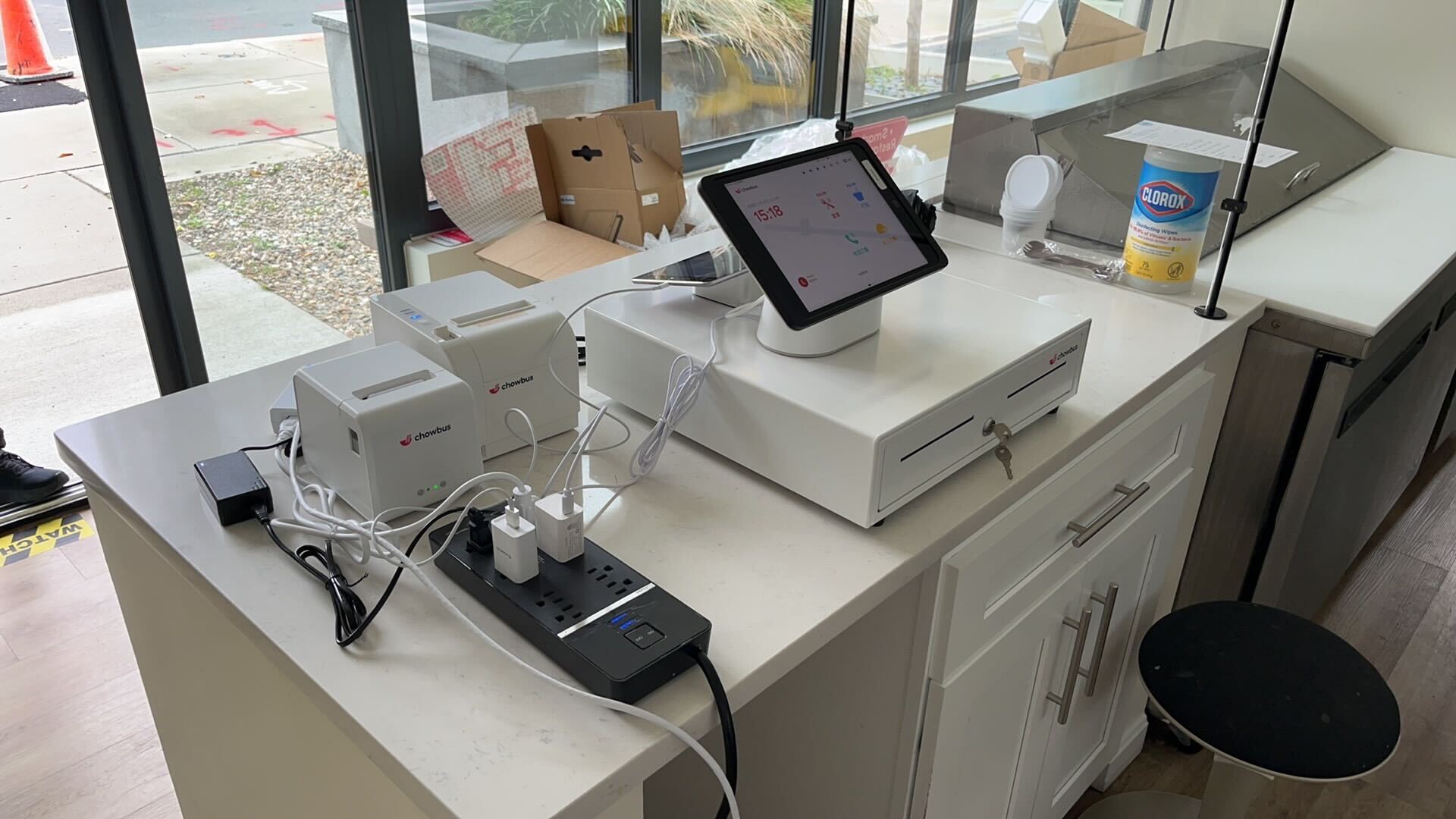
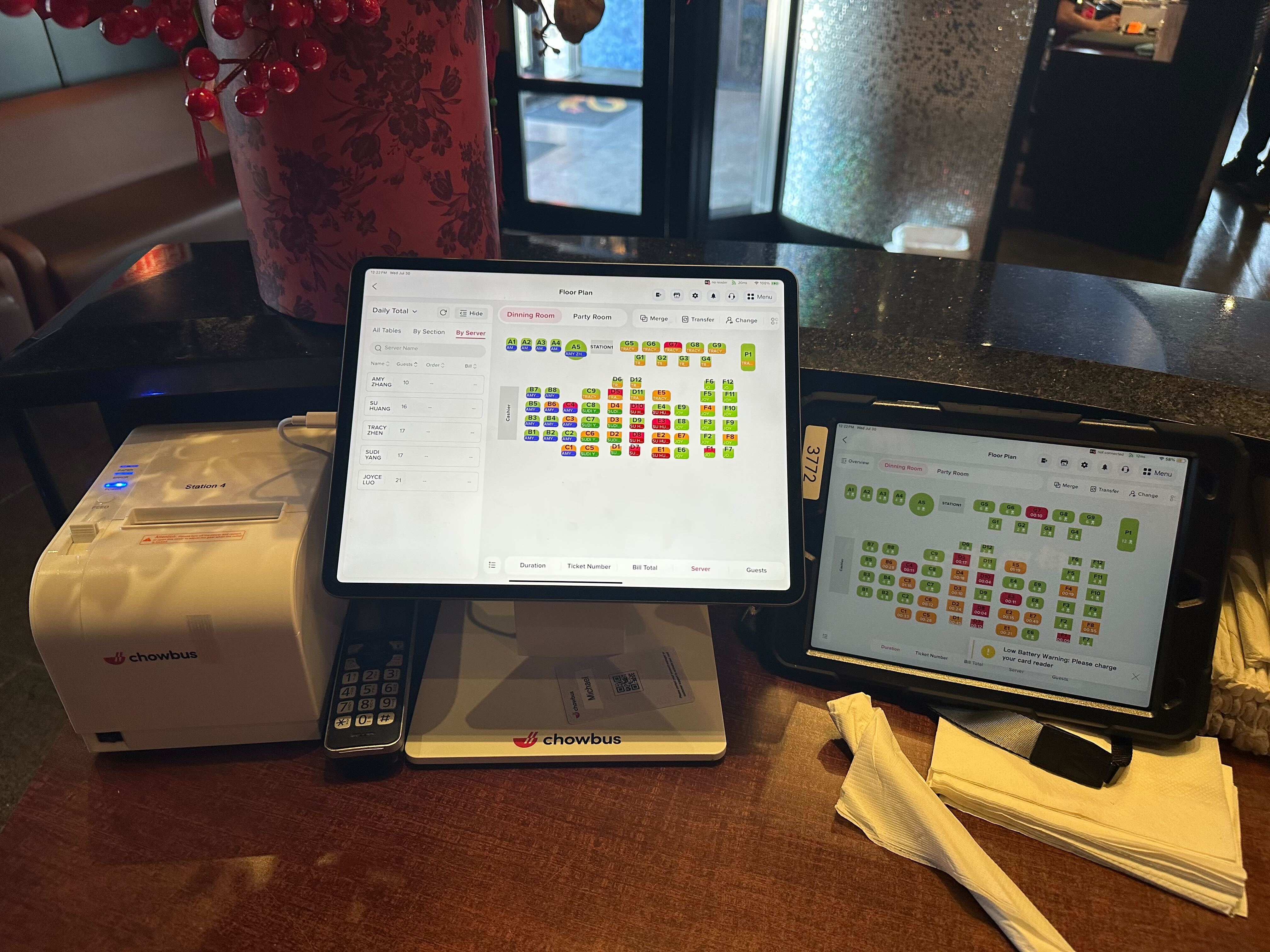
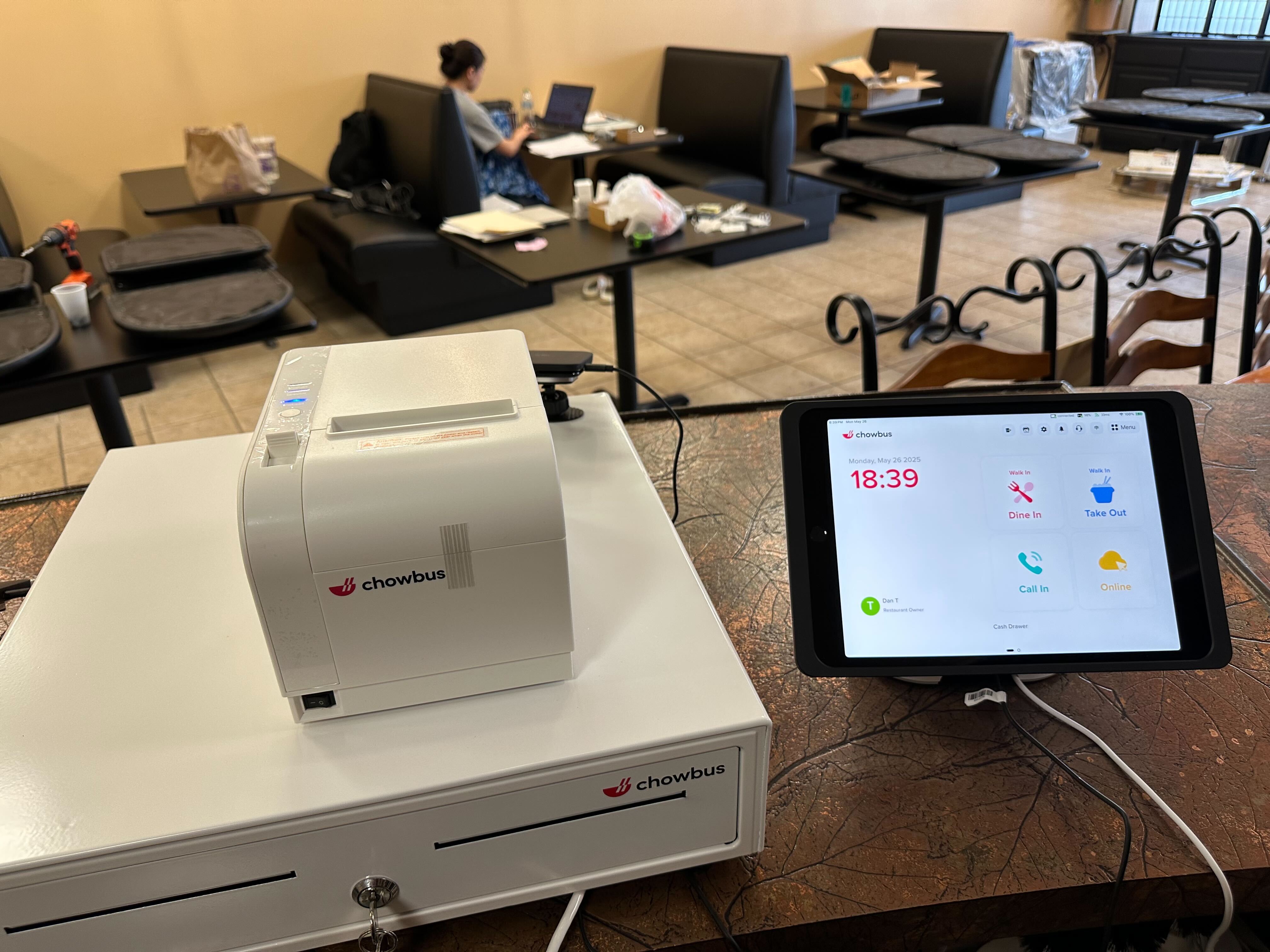
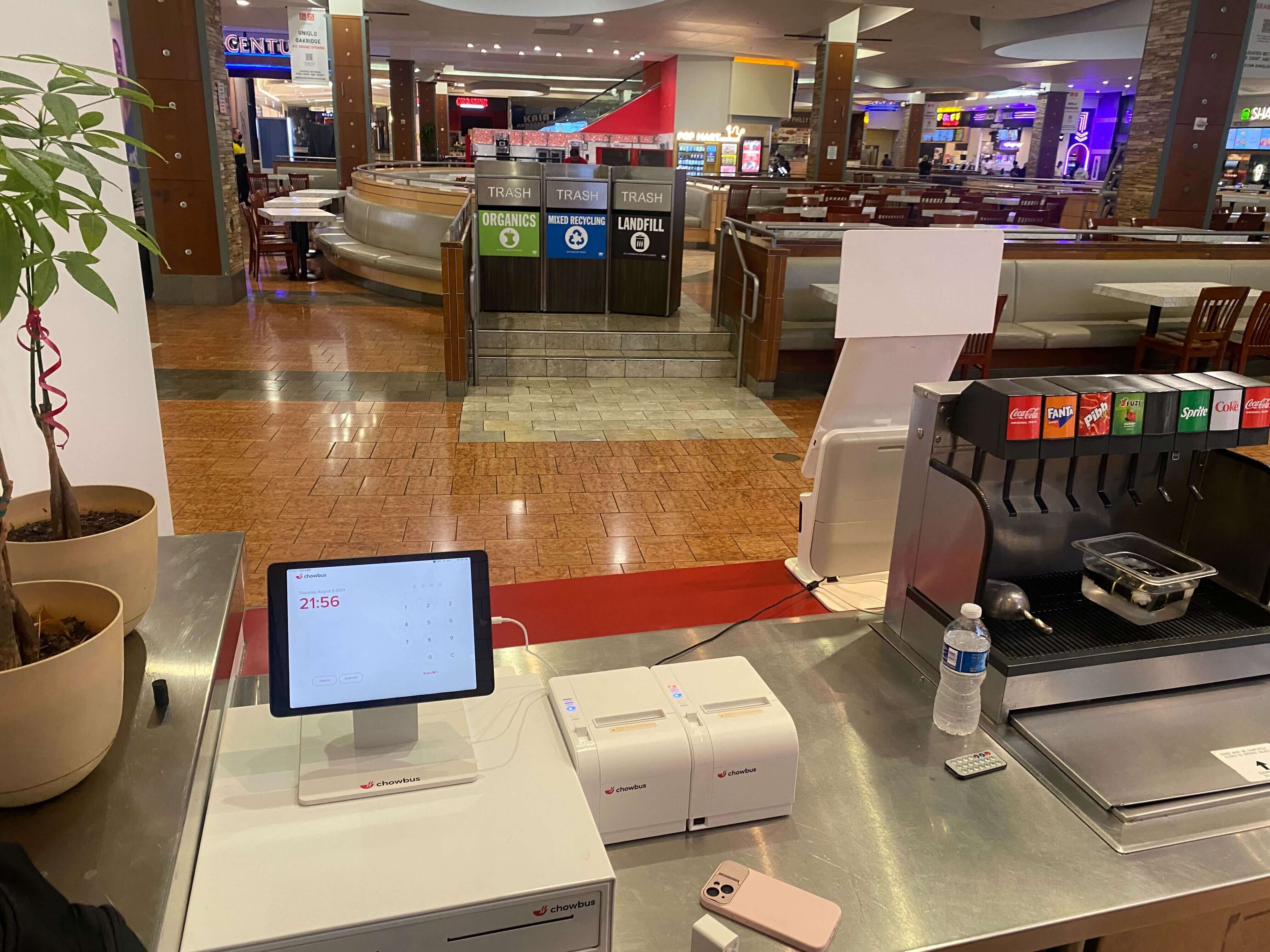
This is also where your point-of-sale, kitchen display, and ordering setup fit in naturally, because those choices are part of the labor model, not a separate line item. A kitchen display system that routes tickets automatically by station can shave real seconds off ticket time without adding a person. A quick-service POS system built for counter-and-drive-thru formats can take payment before the order reaches the kitchen, which cuts the register labor you'd otherwise need at peak. Price this out before you finalize the labor line, not after — most platforms in this category, Chowbus's pricing included, publish enough detail that you can model the monthly cost against the labor hours it actually replaces. Whatever you pick, name it in the plan and explain how it changes your labor line — a lender reading a staffing section that ignores technology entirely will assume you haven't priced it out.
This section trips up more first-time founders than any other, usually because they either invent numbers to make the model look good or avoid numbers entirely and describe the business in adjectives. Neither works. The lender wants to see your logic, not just your conclusion.
Startup costs come first: buildout, equipment, initial inventory, permits, working capital to cover the first few months before revenue stabilizes. A POS setup priced for a new restaurant opening belongs on this list as its own line item, not folded into a vague "equipment" total. List these with real quotes attached where you have them, not round numbers pulled from a template. Then build your revenue model from the ground up using the assumptions from your concept and market sections — average ticket, transactions per day by daypart, days open per month. If your concept section argued for a $9.50 average ticket and your market section supports 180 transactions on a strong lunch day, that's the math you carry into this section, not a number you back into because it makes the loan look serviceable.
Break-even framing matters more than a break-even number, especially early on. Walk through how many transactions per day, at your ticket price and with your fixed costs, get you to the point where revenue covers expenses. Show the reader the formula and your inputs rather than just asserting "we break even in month eight." A lender who can follow your math will trust a conservative number far more than an optimistic one they can't verify. If your actual numbers are still soft because you haven't finalized a lease or a menu price, say so, and show the range rather than picking the middle of it and presenting it as certain.
The questions change once you're not proposing a dining room. A landlord evaluating a full-service tenant is thinking about ambiance, parking for a two-hour visit, and whether the concept fits the center's overall tenant mix. A landlord evaluating a quick-service tenant is thinking about turnover speed in the parking lot, whether your drive-thru lane will create stacking that annoys other tenants, and whether your hours generate the kind of steady, short-visit traffic that keeps a strip center's whole ecosystem moving.
Lenders shift their attention too. A full-service loan underwriter spends real time on menu pricing relative to perceived value and on front-of-house labor ratios, because service quality drives repeat visits in that model. A quick-service underwriter cares much more about throughput per labor hour and about how sensitive your margin is to a change in food cost, because the entire model depends on volume at a low ticket rather than a smaller number of higher-margin visits. Come prepared for that specific line of questioning rather than the general "tell me about your restaurant" conversation you might expect from watching how other restaurant loans get pitched.
One more thing worth naming plainly: both audiences will ask what happens if your first location doesn't hit projections in month one. A full-service answer might lean on building a following over time. A quick-service answer needs to name levers you can pull fast — adjusted staffing, a modified hours schedule, a menu tweak that improves ticket time. Have that answer ready before anyone asks it.
A landlord signing a lease and a lender signing a loan are making the same bet through different paperwork: that you've actually worked out how a counter with no dining room turns a profit at volume. Every section above is where that math gets tested before either of them signs anything.
If you're the person behind Two Piece, or whatever your version of it turns out to be, the work isn't finished once the document is done. Pull the traffic counts yourself if you can. Call two other operators in a similar format and ask what their actual ticket times look like. Book a walkthrough of a POS setup before you write the labor line, not after, so that number comes from a real quote instead of a guess. The plan gets stronger every time a number in it comes from something you checked rather than something you assumed.
Getting this right the first time is worth the extra week it takes. A plan built section by section around how a quick-service concept actually makes money reads differently to the person deciding whether to hand you a lease or a loan, and that difference is usually the one that gets you to an opening date instead of a second round of questions.

You can start from one, but expect to gut most of it. A full-service plan runs on average check, table turns, and front-of-house service quality; a quick-service plan runs on transactions per hour, ticket time, and throughput at a lower price point. Sections on wine programs or dining room ambiance carry over from the template but add little for a walk-up or drive-thru format, and skipping the QSR-specific pieces — drive-thru stacking capacity, delivery radius — is the mistake that shows up most often in first drafts.
Start with vehicle and pedestrian traffic counts at the specific hours your format depends on, not general daily averages. Then evaluate drive-thru feasibility by mapping how many cars the lane can hold before it backs up, and define a realistic delivery radius, usually two to three miles for a lower-ticket concept, since delivery commissions take a bigger bite out of a smaller order.
You can write a strong plan yourself for the cost of your time plus whatever you spend gathering real data, like a traffic study or quotes from equipment vendors. If you hire outside help, a consultant or a plan-writing service typically runs a few hundred to a couple thousand dollars depending on how much financial modeling they do for you. Either way, spend more of that budget on verifying your numbers — real vendor quotes, real traffic counts — than on polishing the prose.
Pressure-test your financial projections with someone who isn't emotionally invested in the concept — an accountant, another operator, or even a lender you trust enough to ask for informal feedback before the formal ask. Then rehearse the specific questions this article covers: your ticket-time math, your drive-thru stacking number, and your plan for month one if volume comes in soft. Walking in with those answers ready is what separates a founder who gets a yes from one who gets sent back for a second draft.