A bowl of pho earns its keep in about thirty-five minutes — order to empty bowl to turned table. That single number shapes everything about how a Vietnamese restaurant runs: compact menus ordered by number, heavy lunch peaks, families sharing plates at dinner, and takeout phở and bánh mì flying out the door all day. Yet most Vietnamese restaurants process all of this through POS systems built for burgers or fine dining, paying for the mismatch in slow lines and wrong orders. The Asian restaurant sector is heading toward $240 billion by the end of 2026, and Vietnamese cuisine is one of its fastest-mainstreaming segments — which makes getting the operational foundation right a now problem, not a later one. Here's what a POS system for a Vietnamese restaurant actually needs to do, organized around the five questions owners should ask before signing anything.
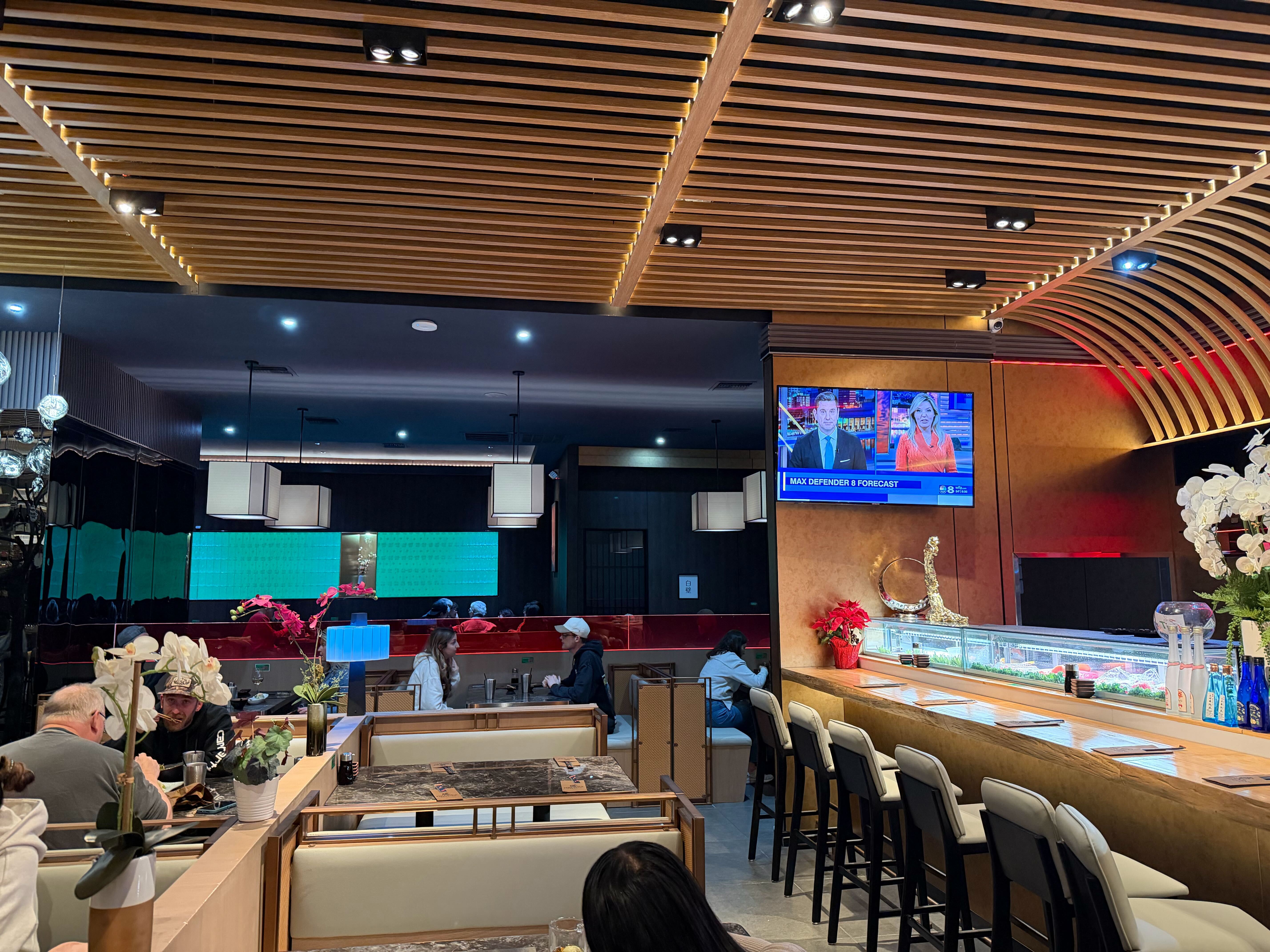
A steaming bowl of pho with fresh herbs, bean sprouts and lime on a marble table in a bright Vietnamese restaurant, a plate of banh mi in the background, lunchtime diners softly blurred, fresh green garnishes vivid in soft natural light, shot on Canon EOS R5, 35mm lens, shallow depth of field, ultra-realistic, photorealistic, no text, no watermark — no logos, no text overlay, no watermark, no cartoon, no illustration, no CGI
The defining hour of a Vietnamese restaurant is 12:15 on a weekday. Tables turn in under forty minutes, the kitchen is assembling bowls in ninety seconds, and the register is the only thing that can slow the whole machine down.
Speed here is a design property. Menus ordered by number (P1, P2, B3...) should be searchable by that number — a server who types "23" and hits the right bún bowl in two taps is moving at the menu's native speed. Modifiers need to be structured, not free-typed: broth choice, noodle type, no cilantro, extra sriracha on the side. And the kitchen display should sequence bowls by seat-down time so the table of six gets their pho together, not in dribbles.
The same speed logic argues for self-ordering kiosks in counter-service pho and bánh mì operations: customers punch in their own customizations — which kills the "I said no onions" remake cycle — and the line absorbs itself in parallel while one cashier handles cash and questions.
Vietnamese restaurant teams are routinely trilingual environments: Vietnamese in the kitchen, English at the counter, and often Chinese among staff in mixed teams. A POS that only operates in English forces every ticket through a translation step at the busiest moment of the day.
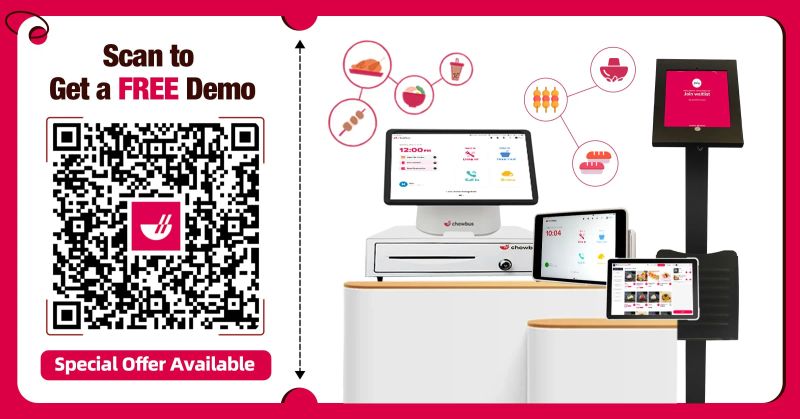
The structural fix is multilingual infrastructure: menu items carrying names in multiple languages, kitchen tickets printing in the language each station reads, staff screens switching per user. Chowbus supports English, Chinese, Japanese, Korean, and Spanish across the entire system — POS, kiosks, QR ordering, and kitchen displays — and for guests, menus that read naturally instead of like a translation exercise.
This matters on the customer side too. In neighborhoods where much of the clientele prefers reading Chinese or Vietnamese-style menu layouts with photos, a QR or kiosk menu they can actually browse increases order size — guests order what they can see and understand, not just what they already know.
Pho travels, bánh mì travels better, and Vietnamese restaurants often see a third or more of revenue come from off-premise orders. That's exactly where the 25–30% commissions of third-party delivery platforms cut deepest — on a $50 family takeout order, the platform may pocket $14 before food costs.
A POS with built-in, commission-free online ordering changes the math: customers order from your own page, the order flows straight to the kitchen as a structured ticket, and the margin stays in the building. The winning pattern keeps third-party apps for discovery while moving regulars to the direct channel — QR codes on every takeout bag, slightly better prices direct, and loyalty points that only accrue when ordering from you.
On loyalty: Vietnamese restaurants live on regulars and families who come weekly for years. Phone-number enrollment at the counter or kiosk, automatic points on every channel, and the occasional win-back text fill the slow Tuesdays. When loyalty is native to the POS — as in the Chowbus ecosystem, where ordering, loyalty, and customer data share one record — the database builds itself with zero extra labor.
The same restaurant that turns solo pho bowls at noon hosts six-person family dinners at seven — shared platters, multiple generations, one or two payers, and sometimes a birthday where three aunts argue over the check. The POS has to switch personalities with the daypart.
That means real table management with course timing for dinner service, check splitting that divides shared items cleanly across payers, and QR table ordering for nights when the floor runs short-staffed — guests browse photos, order a second round of summer rolls without flagging anyone, and pay at the table when they're done. It also means reporting that understands dayparts: lunch and dinner are different businesses sharing an address, and your numbers should show each one separately.
Every POS demo looks good at 2pm on a Tuesday. The product you're actually buying is what happens when the kitchen printer dies at 7:40pm on a Saturday.
Ask three concrete questions. What are the support hours — actually 24/7, or business hours with an answering service? What languages — can your kitchen manager explain a problem in the language they think in? And what's the measured response time — Chowbus, for reference, runs 24/7 support in English, Chinese, and Spanish with a 2-minute average response and 95% issue resolution. Vendors who serve Asian restaurants as their core market treat bilingual support as the product; vendors who don't treat it as a cost center.
It's worth asking about onboarding in the same conversation: who rebuilds your menu with multilingual names, who trains staff and in which language, and who's reachable during your first live weekend. The 9,000+ restaurants on Chowbus's platform got onboarded by teams that have done exactly this rebuild thousands of times.
One more support-adjacent test: ask how the vendor handles a hardware failure. A kitchen printer or terminal dying mid-service is a when, not an if — the difference between vendors is whether the replacement process is a same-week shipment with a loaner workflow, or a weeks-long ticket queue while your busiest station improvises on paper.
Run the five questions against any candidate system and a pattern emerges quickly. Generic market leaders are competent software that was never designed for number-ordered menus, trilingual kitchens, pho-speed lunches, or family-style splits — every gap gets papered over with workarounds, and workarounds fail during rushes. Purpose-built platforms make the same scenarios boring: the ticket prints right, the line moves, the check splits, the takeout margin stays home.
For a Vietnamese restaurant owner, the practical move is a demo with your real menu and your real rush, scored against these five questions. The system that passes all five without a single "well, you could work around that by..." is the one that fits how your restaurant actually runs.
What is the best POS system for a Vietnamese restaurant?
The best fit handles the format's specific demands: number-based menu search for fast pho ordering, structured modifiers (broth, noodles, herbs), multilingual kitchen tickets, commission-free online ordering for the heavy takeout share, and family-style check splitting. Chowbus is built specifically for Asian restaurant operations including Vietnamese and Thai formats, with multilingual support across POS, kiosks, and QR ordering.
How can a pho restaurant speed up its lunch rush?
Attack the three bottlenecks: order entry (number-based search and structured modifiers cut register time to seconds), the kitchen (a display that sequences bowls by table keeps parties served together), and the line itself (kiosks or QR ordering absorb queue load in parallel). Most pho operations recover several table turns per lunch by fixing these three points.
Can a POS print kitchen tickets in Vietnamese or Chinese?
Systems designed for multilingual operations can print kitchen tickets in the language each station reads, independent of the language the order was taken in. Chowbus supports multilingual menu names and kitchen tickets natively — the structural fix for order errors in kitchens that don't work in English.
How do Vietnamese restaurants reduce delivery app commissions?
Keep the apps for discovery, but build a commission-free direct channel: POS-native online ordering, QR codes on every takeout bag, slightly better direct prices, and loyalty points that only accrue on direct orders. Shifting even a third of off-premise volume to direct ordering typically returns hundreds of dollars a month on the 25–30% commissions saved.
How much does a POS system for a Vietnamese restaurant cost?
Standard structure — monthly software, processing, hardware — but compare on the full bundle you'll actually run: POS plus online ordering, QR menus, and loyalty. Generic platforms price those as separate add-ons that can double the advertised rate; all-in-one platforms like Chowbus bundle them, which usually wins on real total cost. Always get quotes on identical configurations.