Restaurant technology decisions are rarely neutral. The system you choose shapes how your staff works, how quickly guests move through service, how accurately inventory is tracked, and how clearly you understand your margins. When operators search for a POS for restaurant, they are often trying to solve a practical issue—slow checkout, reporting gaps, disconnected online orders. But the deeper question is structural: does your current system support how your restaurant actually operates today?
In 2026, restaurants are no longer single-channel businesses. They are hybrid operations blending dine-in, takeout, delivery, catering, digital ordering, and loyalty programs. A POS system now functions as operational infrastructure—not just a payment processor.
Historically, point-of-sale systems existed to record transactions. Today, they serve as the command center of the restaurant. Every order, modifier, void, refund, and discount leaves a digital footprint. When properly structured, that footprint becomes actionable data.
A modern POS for restaurant consolidates front-of-house activity, kitchen workflows, online ordering feeds, and financial reporting into one coherent environment. This eliminates manual reconciliation and reduces human error. Instead of chasing reports across platforms, managers gain a centralized dashboard that reflects real-time performance.
Operational clarity is not about having more reports—it is about having the right data organized logically.
Many restaurants adopt tools gradually. An online ordering platform is added here. A third-party loyalty program there. A separate scheduling system somewhere else. Individually, each tool solves a short-term problem. Collectively, they create data fragmentation.
Fragmentation increases labor hours spent on administration. It reduces visibility into true profitability per channel. It complicates decision-making because reports do not align.
A unified POS for restaurant eliminates these hidden inefficiencies. When menu pricing updates automatically sync across channels and inventory deducts in real time, operators gain confidence in their numbers. That confidence directly affects strategic decisions—pricing adjustments, promotion timing, and expansion planning.
With wage pressures continuing across the United States, labor optimization has become a strategic necessity rather than a managerial preference. A strong POS system tracks hourly sales trends, peak volume windows, and staff performance metrics.
Instead of scheduling based solely on historical memory, operators can align staffing levels with predictive data patterns. This reduces overstaffing during slow hours while protecting service quality during rush periods. Over time, even small improvements in scheduling efficiency translate into meaningful margin preservation.
Technology does not eliminate labor challenges, but it equips managers with evidence-based planning tools.
Menu decisions are often influenced by intuition or tradition. However, detailed sales analytics reveal patterns that may contradict assumptions. A robust POS for restaurant highlights not just top-selling items, but contribution margins, attachment rates, and modifier frequency.
For example, understanding which appetizers consistently drive higher beverage sales allows for more strategic bundling. Identifying low-margin items that occupy significant kitchen capacity may inspire menu redesign.
Data-informed menu engineering strengthens both profitability and operational flow.
If reviewing your current reporting requires exporting spreadsheets from multiple systems, or if online and in-house sales are analyzed separately, it may be worth examining how an integrated POS ecosystem could simplify daily management. Seeing how unified reporting operates in real environments often clarifies whether your existing structure supports or restricts growth.
Growth should not introduce operational instability. Cloud-based POS architecture enables remote access to dashboards, standardized menu deployment across locations, and centralized financial oversight.
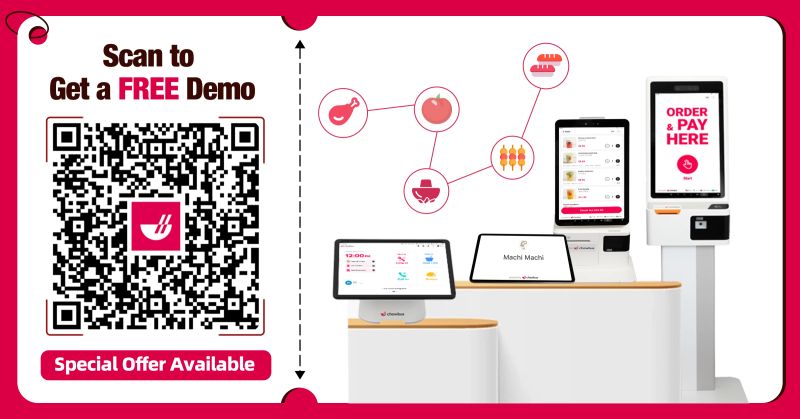
Even for independent operators, scalability matters. A flexible POS for restaurant allows for future additions such as kiosks, mobile ordering, loyalty programs, and multi-unit management without rebuilding the entire technology stack.
Choosing infrastructure that anticipates change prevents costly system replacements later.
Beyond functionality, reliability and security deserve equal weight. Payment compliance standards, encrypted transactions, and consistent system updates protect both customers and the business.
Downtime during peak hours impacts revenue immediately. Selecting a stable POS provider with strong support protocols reduces operational risk. Infrastructure decisions should prioritize long-term stability over short-term promotional pricing.
1. What defines a modern POS for restaurant in 2026?
Integration capability, cloud accessibility, advanced analytics, and scalability distinguish modern systems from legacy setups.
2. How does POS technology affect expansion plans?
Standardized data and centralized reporting simplify multi-location growth and reduce managerial complexity.
3. Is switching systems disruptive?
Transition planning is critical, but modern onboarding processes often minimize downtime with proper preparation.
4. Can POS data influence marketing strategy?
Yes. Purchase behavior insights can inform targeted promotions and loyalty incentives.
5. What is the most overlooked factor when choosing a POS?
System integration depth. Surface-level features often distract from structural limitations.
Selecting a POS for restaurant is not simply a software decision—it is an operational strategy choice. The system should reflect how your restaurant functions today while supporting how you plan to grow tomorrow.
If you are evaluating options, consider requesting a structured walkthrough to examine how unified data, labor insights, and financial reporting operate together in practice. A thoughtful review may reveal operational leverage points that are currently hidden.
To explore how an integrated platform aligns with your business model, you can schedule a personalized demo and discuss your specific operational challenges with a specialist. Clear information leads to confident decisions.
%20(1).png)