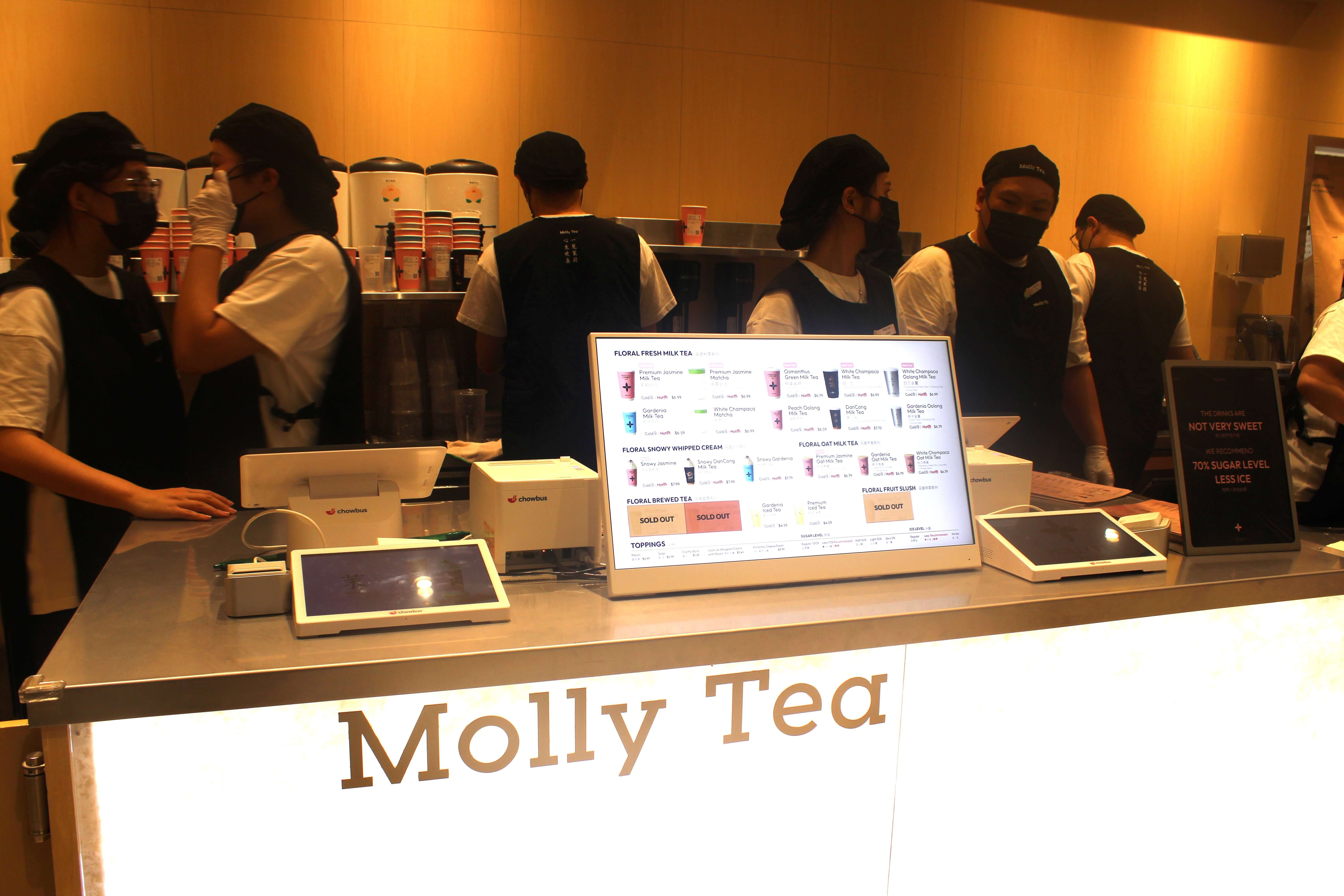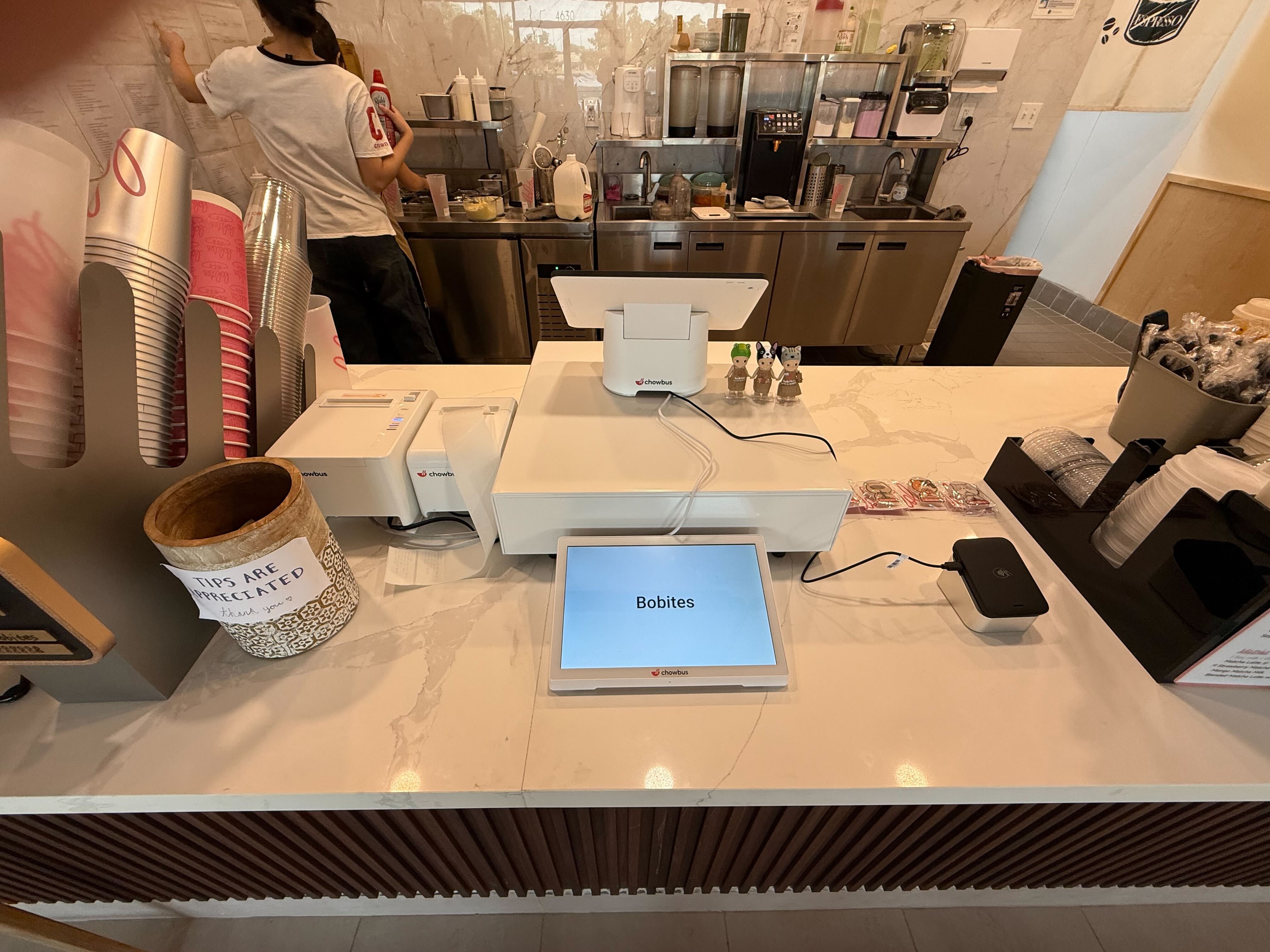
Between 7:30 and 9:00 on a weekday morning, a busy cafe completes more transactions than many restaurants process all day — small tickets, custom drinks, a line of people who are all slightly late for something. A cafe POS system either matches that rhythm or becomes the reason the line stalls. The stakes have grown with the category: cafes and bakeries have ridden the same wave lifting the broader Asian food-and-beverage market, where modern formats — Asian-style bakeries, dessert cafes, coffee-and-bingsu hybrids — have multiplied alongside a restaurant sector that has expanded 135% over 25 years. This guide sorts cafe POS features into what genuinely matters, what you can skip, and what the whole thing should cost — so you can choose in an afternoon instead of a month. The sorting starts with the morning line.
A bright modern Asian-style cafe counter in the morning, barista handing a latte across the counter, glass display case of fresh pastries and cakes, customers in a short queue, soft natural light through large windows, warm wood interior, shot on Canon EOS R5, 35mm lens, shallow depth of field, ultra-realistic, photorealistic, no text, no watermark — no logos, no text overlay, no watermark, no cartoon, no illustration, no CGI
Two-tap speed at the register. Cafe tickets are small and frequent, so every extra tap is a tax paid hundreds of times a day. The register screen should surface your top sellers on one panel, with drink modifiers — milk swaps, syrup, temperature, size — as fast structured choices. If ringing a large oat-milk latte with an extra shot takes more than three touches, the interface will cost you real minutes every rush.
Labels and screens the bar can read at speed. Drink tickets need complete, unambiguous specs, whether on stickers or a kitchen display behind the bar. Handwriting and abbreviations are where remakes come from. For bakery cases, the same logic applies to pre-orders: a birthday cake order with an inscription needs to arrive in the kitchen as structured fields, not a sticky note.
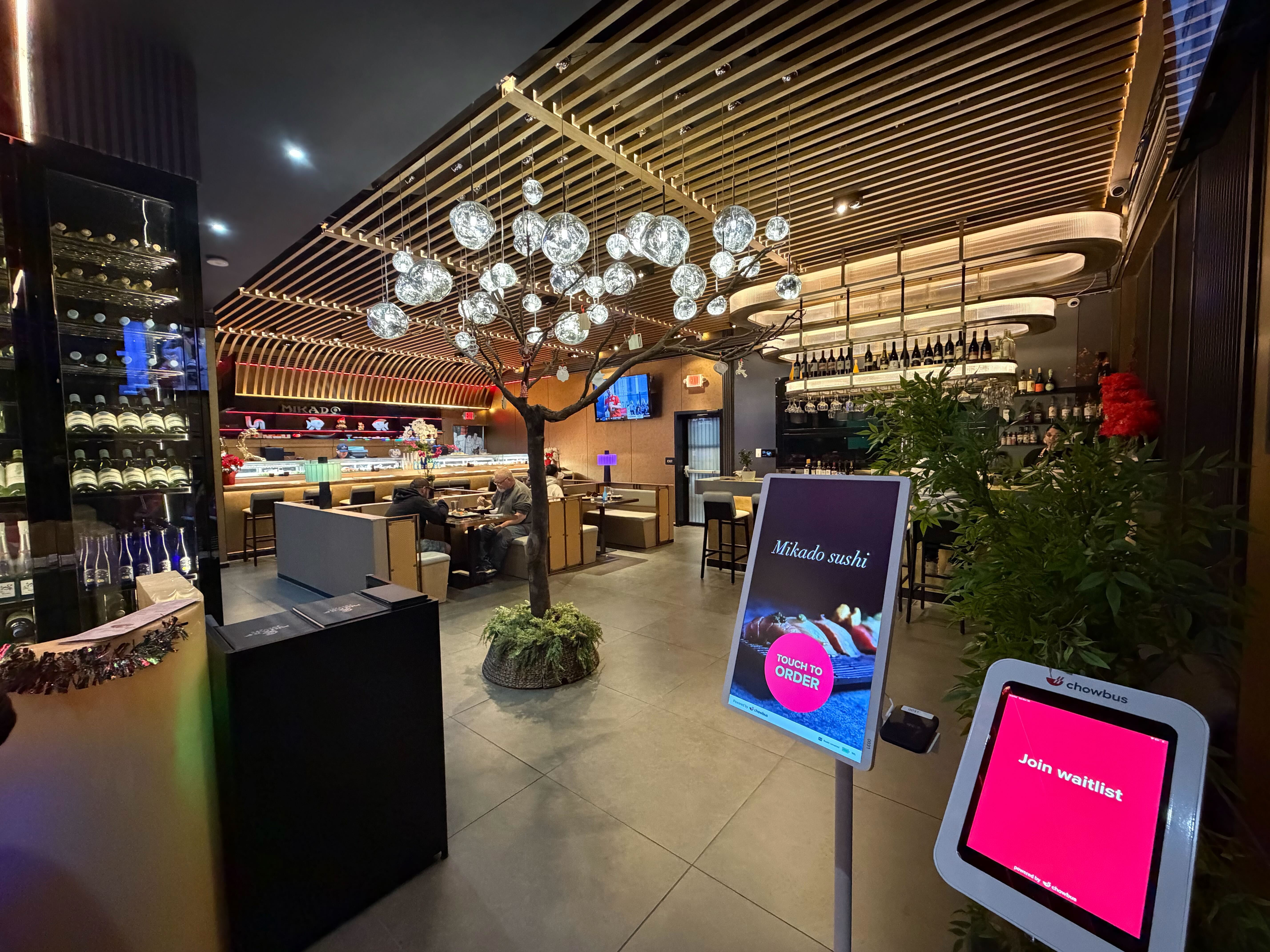
Self-service for the peak. The morning spike is too sharp to staff for — which is why kiosks and QR ordering fit cafes so well. Customers build their own drinks (accurately, since they enter their own specs), the queue absorbs itself in parallel, and the kiosk never forgets to suggest a pastry with the latte. In Asian-style cafes and bakeries serving bilingual neighborhoods, multilingual kiosk menus — standard on Chowbus KioskPRO — quietly widen who orders comfortably.
Loyalty that captures the habit. Cafes are the most frequency-driven format in food service: the same customer, the same drink, five days a week. Phone-number loyalty at the register or kiosk, automatic points, simple rewards — when it's native to the POS, the loyalty program converts daily habits into a database that fills slow afternoons with double-point hours and win-back texts.
Mobile and pre-orders without a second system. Order-ahead is now table stakes for coffee. A POS with built-in online ordering routes pre-orders into the same bar queue with promised-time sequencing — no separate tablet, no re-keying, no commission.
Cafes get sold a lot of software they never open. Full table-service management with coursing matters if you run a sit-down brunch operation — not for a counter cafe. Deep ingredient-level inventory modules assume someone keys in every milk delivery; most cafes do better with simple item-level sales reports and a weekly eyeball of the walk-in. Franchise reporting hierarchies, API ecosystems, enterprise scheduling suites — these are chain features priced into plans that single-location cafes shouldn't be paying for.
The principle: pay for what the morning rush touches. Everything the line, the bar, and the regulars interact with earns its monthly fee; everything else should be an optional toggle you can turn on later if a second location ever demands it — and on a platform like Chowbus that runs the same ecosystem from one shop to multi-location brands, that toggle exists without a migration.
Asian-style cafes usually carry a real bakery or dessert program, and that changes the POS requirements in ways pure coffee shops never hit.
Display-case items sell out and rotate daily, so 86'ing a sold-out item must propagate instantly to kiosks, QR menus, and the online ordering page. Whole-cake pre-orders need date-based ordering with deposits, pickup scheduling, and inscription fields. Holiday peaks — mooncake season, Christmas logs, Lunar New Year boxes — concentrate a quarter's revenue into weeks, and the system needs both the pre-order pipeline and the reporting to plan production against actual demand. And gift cards, which sell heavily in cafe-bakery formats, should live in the same system as everything else rather than on a separate processor with its own fees.
If your candidate POS treats these as exotic requests, it's a coffee-shop register, not a cafe system.
The structure mirrors restaurant POS pricing — monthly software, payment processing, hardware — but cafes should watch two specific traps.
The first is processing rates on small tickets. Cafes run high transaction counts at low averages, so flat per-transaction fees bite proportionally harder than they do at a dinner house. Model any processing quote against your real ticket profile: a quote that looks fine at a $40 average can be painful at $9.
The second is the add-on stack. Loyalty, online ordering, gift cards, and kiosk software are exactly the features cafes need most — and exactly what generic platforms price as separate monthly add-ons. A $69-or-free base plan routinely lands at three times that figure once the cafe stack is assembled. All-in-one platforms like Chowbus bundle that stack natively; comparing all-in totals on your actual configuration, rather than base prices, is where the real ranking emerges.
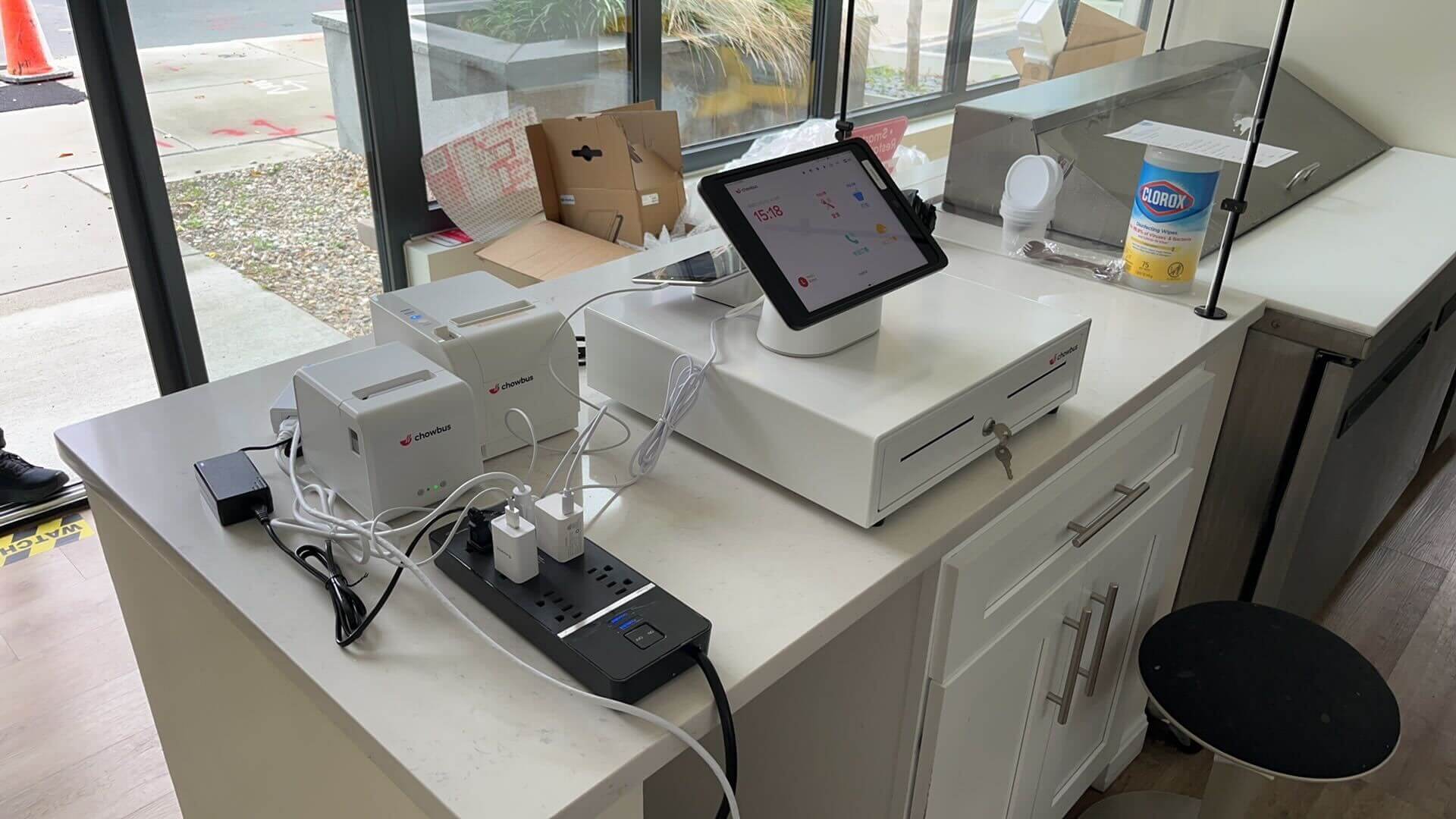
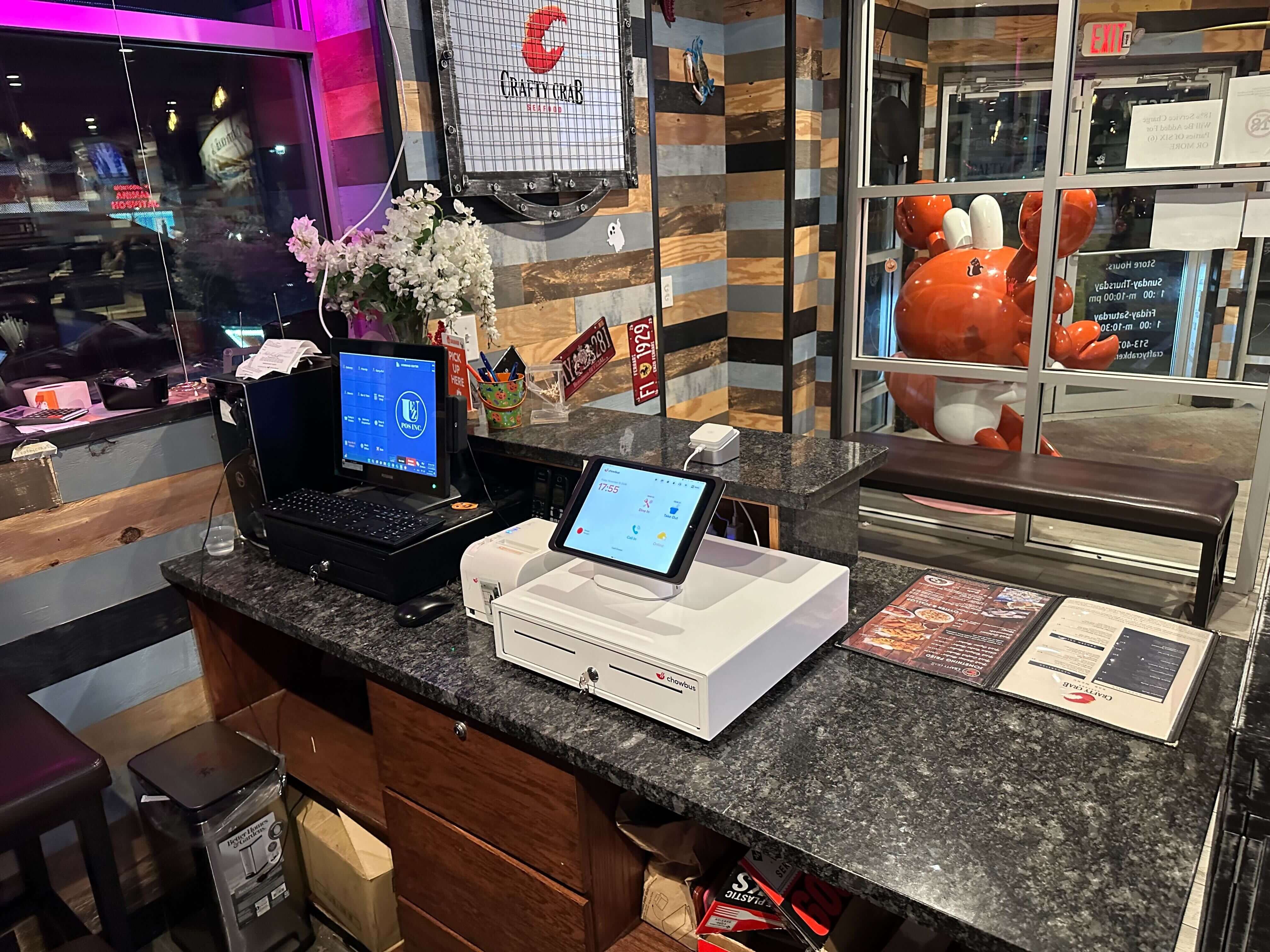
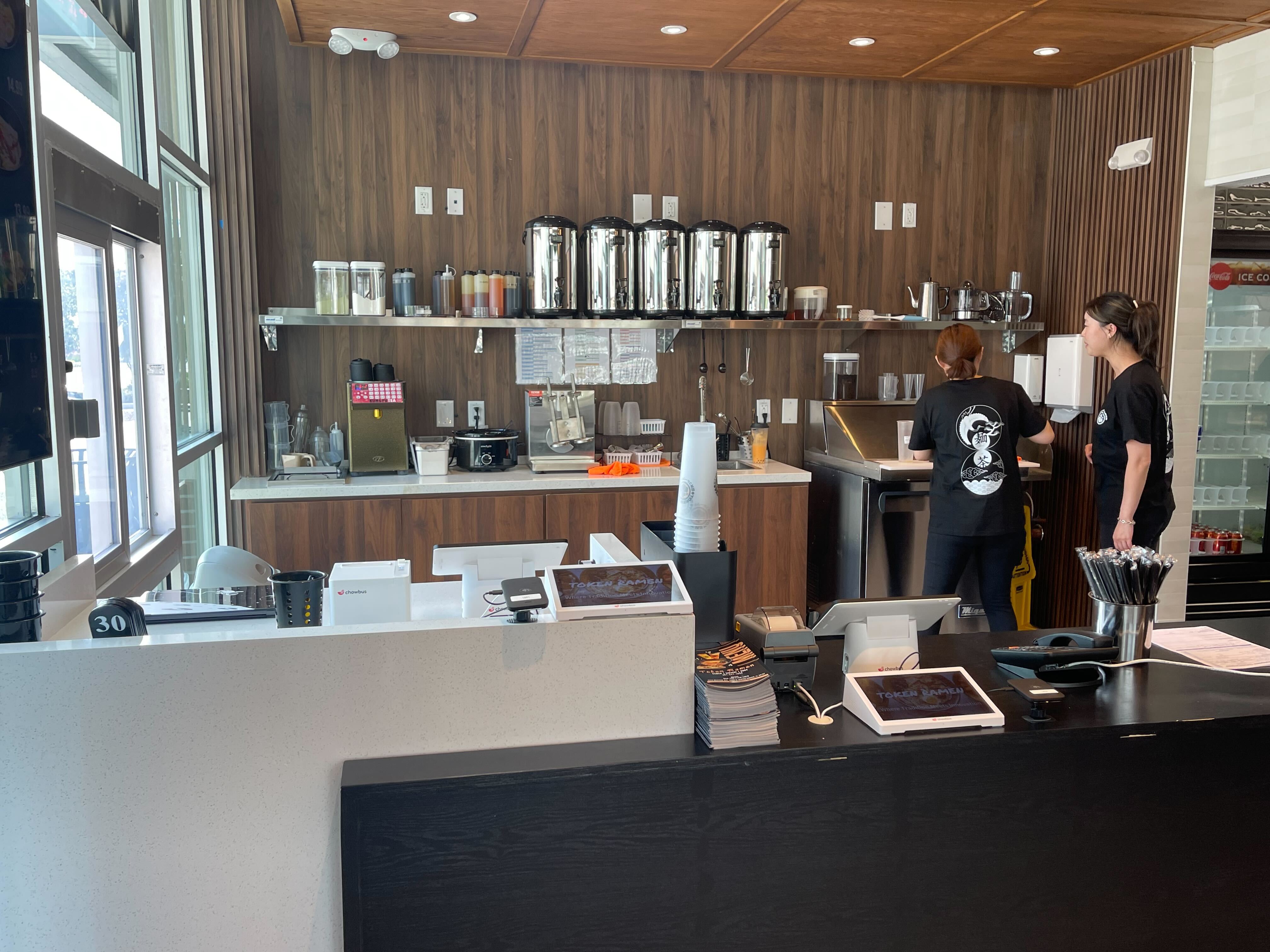
Hardware deserves one note: counter space is scarce in cafes, so compact terminals and customer-facing displays that fit a narrow counter beat bulky setups — and commodity-hardware systems protect you from the proprietary-lock trap where switching software strands your devices.
Finally, budget the transition itself. A cafe can't close for a systems project, and it shouldn't have to: a competent vendor builds your menu (drinks, modifiers, bakery items, and translations) before installation, runs the new system in parallel for a few days, and cuts over on your slowest morning with support standing by. Ask each candidate to describe that sequence specifically — vendors who serve cafes daily will answer in checklists, not generalities, and the quality of the answer predicts the quality of your first week.
A cafe POS earns its place by disappearing: the line moves, the bar reads clean tickets, the regulars rack up points without thinking about it, and the owner reads yesterday's numbers over the first coffee of the morning. Everything on the "matters" list above serves that disappearance; everything on the "skip" list is someone else's business model sold to yours.
Choose by rehearsal, not by feature list. Bring your five busiest-morning drinks, your cake pre-order flow, and your real ticket profile to a demo — and pick the system that makes all of it boring. For cafes and bakeries inside the Asian food-and-beverage world, that demo should include at least one platform built for the segment; the 24/7 bilingual support behind Chowbus (English, Chinese, Spanish) is the kind of difference that never shows in screenshots but shows up every time something breaks at 7:45am.
What is the best POS system for a cafe?
The best cafe POS maximizes speed and repeat business: two-tap drink ordering with structured modifiers, clean bar tickets or labels, kiosk and order-ahead options, and phone-number loyalty native to the system. Cafes with bakery programs also need sell-out syncing and cake pre-orders with deposits. Compare all-in costs on that full stack — generic platforms price most of it as add-ons, while platforms like Chowbus bundle it.
Do small cafes really need a kiosk?
Cafes with sharp morning peaks benefit more than almost any format: kiosks absorb the line in parallel, eliminate spec miscommunication on custom drinks, and consistently lift attachment of pastries to drink orders. A single kiosk often covers the gap between your average staffing and your 8am reality.
How much does a cafe POS system cost per month?
Plan for monthly software plus processing and hardware, with the honest number depending on the add-on stack: loyalty, online ordering, gift cards, and kiosk software can double or triple a base price on generic platforms. Watch processing rates especially — high-count, low-ticket cafe volume makes per-transaction fees disproportionately expensive. Always compare identical full configurations.
How should a cafe handle cake pre-orders in its POS?
As structured orders, not phone notes: date-based ordering with pickup scheduling, deposit payment, and inscription/customization fields that print to the kitchen exactly as entered. During holiday peaks, the same pipeline doubles as a production planning report. If a POS can't model this, the bakery half of the business stays on paper.
Can one POS run a cafe with multiple locations?
A cloud-based system can: centralized menus and pricing, per-store and consolidated reporting, and one shared loyalty database so points work everywhere. If a second location is plausible, choose multi-location architecture now — Chowbus runs the same platform from single cafes to multi-location brands, so growth doesn't force a migration.