
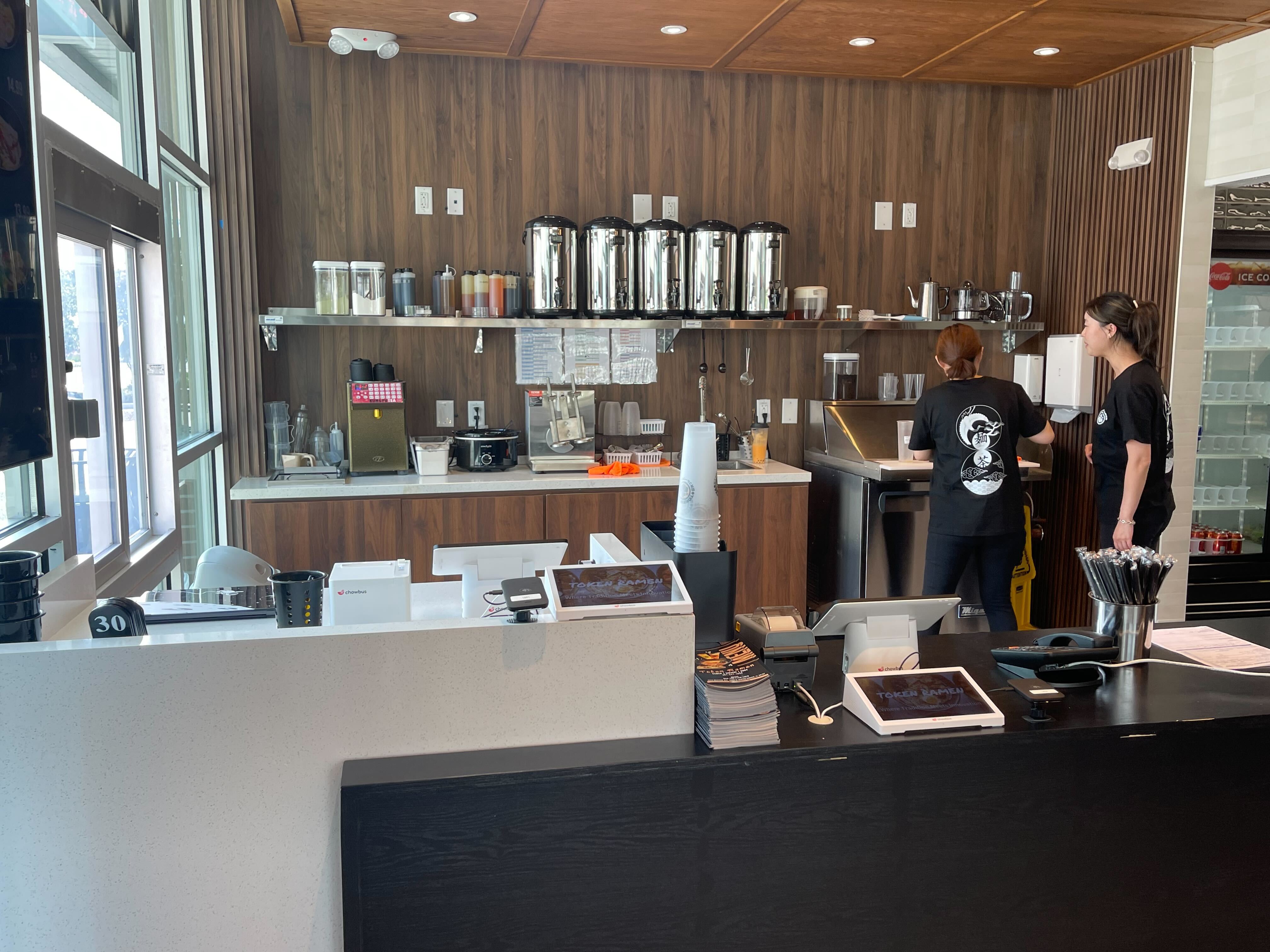
A bakery doesn't sell like a restaurant, and it definitely doesn't sell like a retail shop — it sells by the piece, by the box, by weight, by special order, and often all four in the same transaction. A customer buys two croissants, a half-dozen egg tarts by weight, and pre-orders a birthday cake for pickup Saturday, all in one checkout. Most point-of-sale systems weren't built with that kind of transaction in mind, and it shows the first time a cashier tries to ring up a mixed order during a Saturday morning rush.
Bakeries — especially Chinese, Japanese, and Korean bakery-café hybrids — have become one of the fastest-growing food service categories in North America, blending grab-and-go pastries, made-to-order drinks, and custom cake pre-orders under one roof. Systems built to support this kind of complexity at scale matter: purpose-built platforms now serve thousands of these hybrid concepts across all 50 U.S. states, precisely because generic POS software struggles with the mixed pricing models a bakery runs on daily.
In this guide, you'll learn exactly what to look for in a bakery POS system — pricing logic, pre-order management, and inventory tracking — so you can choose one that fits how a bakery actually transacts, not how a generic retail template assumes it should. Before comparing specific platforms, it helps to understand what makes bakery POS needs genuinely different.
A restaurant POS is built around table service, modifiers, and kitchen tickets. A retail POS is built around fixed-price items and barcode scanning. A bakery needs pieces of both, plus features neither typically has:
A system built for straightforward retail check-out often can't combine weight-based pricing with piece pricing in the same transaction cleanly, forcing cashiers into manual price overrides — a habit that quietly erodes margins and creates end-of-day reconciliation headaches.

This is one of the most common failure points in bakery POS systems. A traditional Chinese bakery might sell egg tarts individually, mooncakes by the box, bread by weight, and cakes by size tier — sometimes within the same order. If the POS can't handle multiple pricing models simultaneously without staff manually calculating or overriding prices, you get:
A genuinely good bakery POS lets you set up scale-integrated weight pricing, box/set pricing, and per-item pricing as distinct product types within the same catalog, so a cashier scans or selects an item and the system applies the right logic automatically — no manual math, no overrides.
Custom cake orders are a meaningful revenue stream for most bakeries, but they come with operational requirements a basic POS doesn't handle: deposits collected upfront, balance due on pickup, specific pickup date and time, and detailed order notes (flavor, size, message, allergy considerations). Without dedicated pre-order functionality, bakeries fall back on paper order forms or a separate notebook — which inevitably leads to missed pickups, lost details, and awkward conversations at the counter.
A bakery-specific POS should let you:
This is a specific area where Chowbus's cafe and bakery POS was designed with these mixed transaction types in mind — treating pre-orders and custom cakes as a first-class feature rather than a workaround built from generic "notes" fields.
Bakery inventory is fundamentally different from most restaurant inventory because the product itself has a same-day or next-day shelf life. A POS that only tracks "units sold" without connecting to daily production planning leaves owners guessing at how much to bake each morning — leading to either wasted product or empty cases by afternoon.
Look for a system that can:
For Asian bakeries carrying seasonal items — mooncakes around Mid-Autumn Festival, specific pastries around Lunar New Year — this kind of historical sales data becomes even more valuable for planning production volume around predictable demand spikes.
Bakeries increasingly sell through more than just the front counter — online pre-orders, delivery apps, and even wholesale accounts to cafés or restaurants. A POS that doesn't consolidate these channels into one order stream creates the same problem seen across the restaurant industry: staff juggling multiple tablets, re-keying orders, and losing track of what's actually been prepared.
For a bakery specifically, this matters most around holidays and pre-order-heavy seasons, when a mooncake pre-sale or holiday cake rush can generate a spike in online orders that needs to route cleanly into the same production and pickup schedule as in-store custom cake orders — not a separate spreadsheet someone checks manually.
Bakery POS pricing follows a similar structure to other food service POS: software subscription, hardware (including a scale integration if you're doing weight-based pricing), and payment processing fees. The detail that's easy to miss is scale hardware compatibility — not every POS integrates cleanly with commercial scales, and retrofitting one after the fact can be an unplanned expense.
Support quality matters just as much here as anywhere else in food service — a POS issue during a Saturday morning bakery rush, when foot traffic is highest and pre-order pickups are stacked up, is not a problem that can wait for Monday. Look for providers offering 24/7 support, and if your staff is bilingual, prioritize a provider offering support in the languages your team actually speaks — Chowbus, for example, offers 24/7 bilingual support in English, Chinese, and Spanish, which matters when a weekend issue needs to be resolved fast and clearly.
What is the best POS system for a bakery?The best system depends on your specific mix of weight-based items, piece pricing, and custom cake pre-orders. Generic retail POS platforms handle simple fixed-price items well but often struggle with mixed pricing models and pre-order management, which is where a bakery-focused platform like Chowbus's cafe and bakery POS tends to perform better.
How much does a bakery POS system cost?Expect a monthly software fee (commonly $50-$150+ per location), POS hardware, and potentially scale integration hardware if you sell by weight, plus payment processing fees. Custom cake and pre-order features may be included or priced as an add-on depending on the provider, so ask specifically before comparing quotes.
Can a bakery POS handle both weight-based and piece-based pricing?A good one should support both within the same product catalog, applying the correct pricing logic automatically based on item type. This is one of the most important questions to ask a vendor directly, since many general POS platforms only handle one pricing model well.
How do I manage custom cake pre-orders in a POS system?Look for a system with built-in pre-order functionality: deposit collection, balance tracking, scheduled pickup dates, and order notes for flavor, size, and special instructions. Without this, bakeries typically fall back on paper forms, which creates room for missed orders and details lost in translation between staff shifts.
Is a bakery POS different from a coffee shop or café POS?There's overlap, especially for bakery-café hybrids serving drinks alongside pastries, but bakeries have added needs around weight-based pricing, box/set pricing, and custom order management that a coffee-focused POS may not prioritize as heavily.
How long does it take to set up a bakery POS system?Setup typically takes one to three weeks, including menu/catalog building (especially if you have many weight-based and seasonal items), scale integration if needed, and staff training. Providers with dedicated onboarding support for bakery-specific catalogs tend to shorten this timeline and reduce early pricing errors.
Choosing the best POS system for a bakery comes down to one core question: does it handle the way you actually sell — by weight, by piece, by box, and by custom pre-order — without forcing your staff into manual workarounds every day? Generic retail and restaurant POS platforms often get partway there, but the gaps show up exactly during your busiest moments: weekend mornings and holiday pre-order rushes.
If you run a Chinese, Japanese, or Korean bakery-café hybrid, pay particular attention to how a system handles mixed pricing models, custom cake deposits and scheduling, and seasonal demand planning around events like Mid-Autumn Festival or Lunar New Year. These aren't edge cases for your business — they're core to how you operate every week.
Before signing with any provider, ask to see how the system handles a real mixed order: a few pieces sold individually, an item sold by weight, and a custom cake pickup scheduled for a future date, all in one transaction. How smoothly that works will tell you more about day-to-day fit than any feature list ever could.


