Every May, Chicago becomes the center of the restaurant universe. The National Restaurant Association Show draws tens of thousands of operators, vendors, and industry leaders into McCormick Place for four days of demos, panels, and product launches — and the 2026 edition is shaping up to be the most consequential in years.
The Asian restaurant sector is projected to reach $240 billion by end of 2026, yet most operators attending this show will walk past booths full of technology that wasn't designed with their menus, their customers, or their staff in mind. Knowing which sessions, exhibitors, and conversations to prioritize before you arrive can make the difference between a productive trip and four expensive days of noise.
This guide breaks down the NRA Show 2026 schedule, what's worth your time, and how Asian restaurant operators specifically can walk away with a clear technology and growth roadmap — not just a tote bag full of brochures.
Here's what 9,000+ restaurant owners across all 50 states have already figured out about making industry events work for them.
The National Restaurant Association Show is the largest foodservice industry event in the Western Hemisphere. Held annually at McCormick Place in Chicago, the show brings together restaurant operators, technology vendors, food suppliers, equipment manufacturers, and industry analysts under one roof. In 2026, the event runs May 16–19 and is expected to draw over 55,000 attendees from across the country and internationally.
For restaurant operators, the show serves a specific purpose: it's where the industry puts its cards on the table. New technology gets launched, new pricing gets announced, and for the first time, many operators get to see side-by-side comparisons of systems they've only read about online. It's also where trends that have been building quietly — AI-powered ordering, integrated loyalty platforms, labor automation — move from "emerging" to "mainstream."
The 2026 show carries particular weight. Coming off a period of significant industry consolidation and technology investment, this year's floor is expected to feature more POS and restaurant management technology than any previous edition. That's significant context for any operator walking in without a clear agenda — because without one, you'll spend four days talking to vendors instead of evaluating them.
The show runs across four days, with programming divided between the exhibition floor and the education sessions held in the adjoining conference center.
Saturday, May 16 — Early badge pickup and welcome events. Many first-time attendees use this day to orient themselves before the floor opens. If you're coming from out of town, arriving Saturday gives you Sunday as a focused exploration day before the show reaches peak crowds Monday.
Sunday, May 17 — Opening day. The exhibition floor opens at 9:00 AM. Technology vendors typically use Sunday to launch new products or announce partnerships, making it the best day to catch live demos before booth lines build. Key sessions on Sunday tend to focus on industry outlooks and economic forecasts for the restaurant sector.
Monday, May 18 — Peak programming day. The highest concentration of keynote sessions, panel discussions, and sponsored workshops runs Monday. This is also the day when media coverage is heaviest, so product announcements from major POS and technology companies tend to cluster here.
Tuesday, May 19 — Mid-show. Foot traffic on the exhibition floor typically peaks Tuesday as operators who couldn't arrive earlier fill the halls. Demo schedules at major booths tend to be most structured on this day, which can mean shorter individual conversations with vendors but more organized information delivery.
Wednesday, May 20 — Final day, closes at 2:00 PM. Booth activity winds down early. Wednesday morning is often the best time to have longer, unrushed conversations with technology vendors who are beginning to pack up and are more willing to discuss pricing and customization in depth.
The NRA Show floor spans over 700,000 square feet. Without a strategy, you will leave exhausted and underinformed. For operators running Asian restaurants specifically, the priority list looks different from a general foodservice operator's itinerary.
Technology Hall: Your First Stop
The Technology Pavilion within the NRA Show has grown significantly in recent years and is where every major POS system, online ordering platform, kiosk vendor, and loyalty program will have a presence. For Asian restaurant operators, this area is critical — but it requires a disciplined evaluation lens.
Most POS systems on the floor are built for American casual dining or quick-service formats. They handle burgers and fries efficiently. They were not built to manage a AYCE (all-you-can-eat) hot pot service, a multilingual menu that needs to render accurately in Chinese, Japanese, or Korean, or a dim sum operation where table management and kitchen flow work completely differently from Western service models.
When you walk the Technology Hall, come with specific questions. Ask every POS vendor whether their system supports multilingual menu display natively. Ask whether they have existing customers in hot pot, Korean BBQ, or bubble tea operations. Ask what their support hours are and whether they have bilingual support staff. The answers will quickly separate systems that were designed for your operation from systems that might technically work with significant workarounds.
Education Sessions Worth Attending
The NRA Show education programming in 2026 covers a wide range of topics, but several session categories are directly relevant to Asian restaurant operators:
Labor management and automation sessions address one of the most consistent pain points in the industry. Labor costs are eating into margins faster than most other expense categories, and the 2026 session lineup includes multiple tracks on how to use technology — specifically self-ordering kiosks and tableside QR code ordering — to maintain service quality while reducing per-cover labor requirements.
Delivery and third-party platform economics sessions are worth attending for any operator currently paying 25–30% commission to platforms like DoorDash, Uber Eats, or Grubhub. Several sessions are dedicated to first-party ordering strategies, including how to use branded apps and direct online ordering to recapture margin.
Customer retention and loyalty tracks cover how restaurants are using CRM tools and loyalty programs to turn one-time visitors into repeat customers. For Asian restaurant operators in competitive urban markets, the retention story is often more valuable than the acquisition story.
Networking: The Floor Is the Session
Some of the most valuable conversations at the NRA Show happen between operators, not between operators and vendors. The show attracts owners of restaurant groups ranging from single locations to fifty-plus units, and the informal exchanges about what's working and what isn't can be more actionable than any formal panel.
If you're specifically looking to connect with other Asian restaurant operators, the show's international pavilion and several independently organized dinners and meetups draw a strong contingent of Asian-American restaurant owners. Identifying those events in advance — typically announced through industry associations and trade publications — can make your networking time significantly more targeted.
Several specific technology trends are shaping the 2026 NRA Show in ways that directly affect Asian restaurant operators.
AI-Powered Marketing Automation
Artificial intelligence is no longer a buzzword on the NRA Show floor — it's table stakes. In 2026, nearly every major technology vendor will be demonstrating AI-driven tools of some kind. For restaurant operators, the most immediately practical applications are in marketing: automated Google and Meta ad optimization, AI-generated social media content, and customer behavior analysis that identifies which menu items and promotions drive repeat visits.
For Asian restaurants specifically, AI marketing tools that can generate content in multiple languages and understand the cultural context of promotions — New Year's events, holiday menus, regional cuisine awareness campaigns — represent a meaningful competitive advantage over generic scheduling tools.
Integrated Platform vs. Point Solutions
A major tension on the 2026 show floor will be between vendors selling integrated all-in-one platforms and vendors selling best-in-class point solutions. For years, the restaurant industry defaulted to assembling stacks of specialized tools — one system for POS, another for loyalty, another for online ordering, another for delivery aggregation. The operational overhead of that approach has become impossible to ignore.
Operators across 9,000+ restaurants in all 50 states have demonstrated consistently that the shift to integrated platforms reduces training time, decreases error rates, and gives operators better visibility into their business from a single dashboard. When you evaluate vendors at the NRA Show, ask specifically how their system integrates with every other tool you currently use — and what happens when it doesn't.
Kiosk and Self-Ordering Technology
Self-ordering kiosks have moved from novelty to necessity in several restaurant formats, and the 2026 show will feature more kiosk solutions than any previous edition. For Asian restaurant operators running high-volume formats — bubble tea, ramen, fast-casual Chinese — kiosk technology offers a clear path to reducing front-of-house labor costs while simultaneously improving order accuracy.
The key evaluation criterion for kiosks in Asian restaurant settings is multilingual capability. A kiosk that can only display menus in English misses a significant portion of the customer base in most urban Asian restaurant markets. When evaluating kiosk vendors at the show, test the multilingual menu display yourself — don't take the vendor's word for it.
Going to the NRA Show without preparation is like ordering off a menu in a language you don't speak. Here's what to do in the two weeks before the show opens.
Map your current pain points before you arrive. Be specific. "Our POS is slow" is not a useful brief for evaluating technology. "Our servers spend an average of four minutes per table inputting orders because our current system doesn't support our Chinese-language menu" is a useful brief. Specific pain points lead to specific vendor conversations.
Pre-register for demos. Major POS vendors at the NRA Show offer pre-scheduled 30-minute demos that go significantly deeper than the floor demo experience. Slots fill up by mid-April. If you know which systems you're seriously evaluating, book demos before you arrive.
Set a decision timeline. The NRA Show is an excellent place to gather information, but it can also delay decision-making if you walk away with twelve vendor brochures and no framework for comparison. Before you go, decide what you're trying to accomplish: are you validating a decision you've largely already made, comparing two or three finalists, or doing broad discovery? Your answer should shape your entire show agenda.
The NRA Show is one of the most information-dense environments in the restaurant industry, and that density cuts both ways. Operators who arrive with a clear agenda walk away with a sharper picture of the technology landscape and actionable next steps. Operators who arrive without one walk away with business cards they'll never follow up on.
For Asian restaurant operators in particular, the 2026 show is an opportunity that's worth taking seriously. The sector is growing faster than the broader market, and the technology available to Asian restaurants has finally caught up to that growth. The gap between operators using purpose-built systems and operators still running on generic platforms is widening — and the NRA Show is where you get to see that gap in concrete terms.
Whether you're evaluating a first POS system, looking to replace something that's stopped working, or simply trying to understand what's possible in 2026, the show rewards preparation. Map your pain points, book your demos, and walk the Technology Hall with specific questions. The answers you get will be more valuable than anything on the brochures.
Q1: What is the National Restaurant Association Show 2026 and when does it take place? A: The National Restaurant Association Show 2026 is the largest annual foodservice industry trade show in North America, held at McCormick Place in Chicago from May 16–19, 2026. It brings together restaurant operators, technology vendors, food suppliers, and industry experts for four days of exhibitions, education sessions, and networking. Registration is available through the National Restaurant Association's official website.
Q2: How should an Asian restaurant owner prepare for the NRA Show? A: Start by documenting your current operational pain points in specific terms — not "the POS is outdated" but "we can't display our Chinese-language menu" or "we're losing margin on third-party delivery." Use those specifics to build a vendor shortlist before you arrive, then book pre-show demos with your top two or three candidates. Arriving with a clear evaluation framework turns four days of noise into a focused decision-making trip.
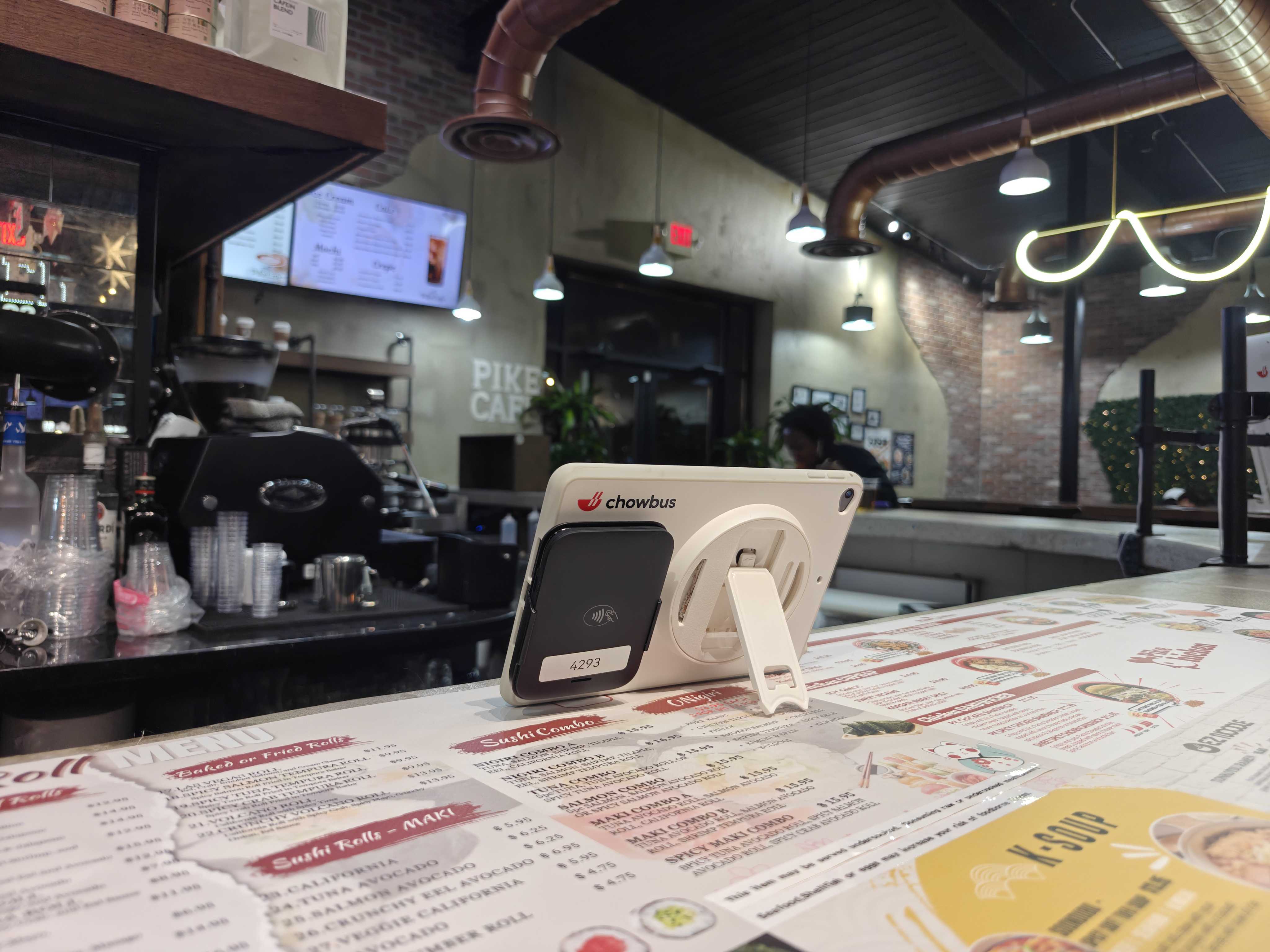
Q3: Which POS systems built specifically for Asian restaurants will be at the NRA Show 2026? A: The Technology Pavilion will feature a range of POS vendors, from general market leaders like Toast and Square to platforms built specifically for Asian restaurant formats. Chowbus, which serves 9,000+ Asian restaurants across all 50 U.S. states with native multilingual support and features built for hot pot, AYCE, Korean BBQ, and bubble tea operations, will have a presence at the show. When evaluating any POS on the floor, ask specifically about multilingual menu capability and Asian restaurant-specific features rather than relying on general product demonstrations.
Q4: Is it worth attending the NRA Show if I only have one or two restaurants? A: Yes. The NRA Show is valuable at any scale, but the approach changes depending on your size. Single-location and small multi-location operators benefit most from the education sessions and the ability to see multiple technology options side-by-side in a single visit. Many technology vendors offer show-exclusive pricing and trial programs that make the trip financially worthwhile regardless of restaurant count.
Q5: What's the difference between the exhibition floor and the education sessions at the NRA Show? A: The exhibition floor is where vendors demonstrate and sell their products — it's primarily a buying and evaluation environment. The education sessions, held in a separate conference area, are panel discussions, workshops, and keynotes focused on industry trends, operational strategies, and business challenges. The most effective attendees split their time between both: using education sessions to build context and the exhibition floor to evaluate specific solutions.
Q6: How do I evaluate whether a POS system at the NRA Show is actually built for my Asian restaurant? A: Ask four questions to every POS vendor you talk to: Does your system support multilingual menu display natively, without third-party plugins? Do you have existing customers in hot pot, AYCE, Korean BBQ, or bubble tea operations? What are your support hours, and do you have bilingual support staff? What are the total costs, including hardware, software, and transaction fees? Any vendor that hedges on the first two questions is a general-market system that hasn't been built with your operation in mind.