A single-location restaurant owner doesn't have the luxury of experimenting with an expensive gift card system and writing it off as a learning experience — every dollar spent on setup needs to actually come back in redemptions, repeat visits, or reduced admin time. That pressure is exactly why "gift cards for small business" is a different question than "gift cards" in general, and why the answer that works for a large chain often doesn't work for an independent operator.
Small, independent restaurants make up the vast majority of Asian dining establishments in North America — often family-run, immigrant-owned businesses operating on tighter margins and leaner staff than national chains. For this group, a gift card program needs to be affordable to launch, simple to run day-to-day, and clearly tied to real return rather than a nice-to-have feature that sits unused.
This guide covers what actually matters when choosing gift cards for a small restaurant business — cost, setup effort, and realistic return — so you can decide whether it's worth doing at all, and if so, how to do it without overspending or overcomplicating your operation.
Before getting into the mechanics, it's worth being direct about the core tension every small operator faces with gift cards.
Small restaurant owners often face a false choice between two bad options: a cheap, bare-bones gift card setup that doesn't actually integrate with the POS (leading to manual tracking and reconciliation errors), or an expensive enterprise-grade gift card platform built for chains with dozens of locations, priced and structured in a way that doesn't make sense for a single storefront.
The right answer for a small business isn't the cheapest option or the most feature-rich option — it's the one that's genuinely sized for a one-to-five-location operation: enough functionality to run a real program (custom branding, physical and digital formats, integrated reporting) without paying for enterprise features a small restaurant will never use, like multi-region tax handling or franchise-level account hierarchies.

Stripped down to essentials, a small restaurant needs a gift card system that does four things well, and nothing more:
Sells cards without adding a second system to manage. If a gift card platform doesn't talk directly to the POS already running the register, every card sale becomes a manual entry that someone has to reconcile later. For an owner-operator who's also cooking, managing staff, and handling supplier orders, that manual step is where programs quietly die.
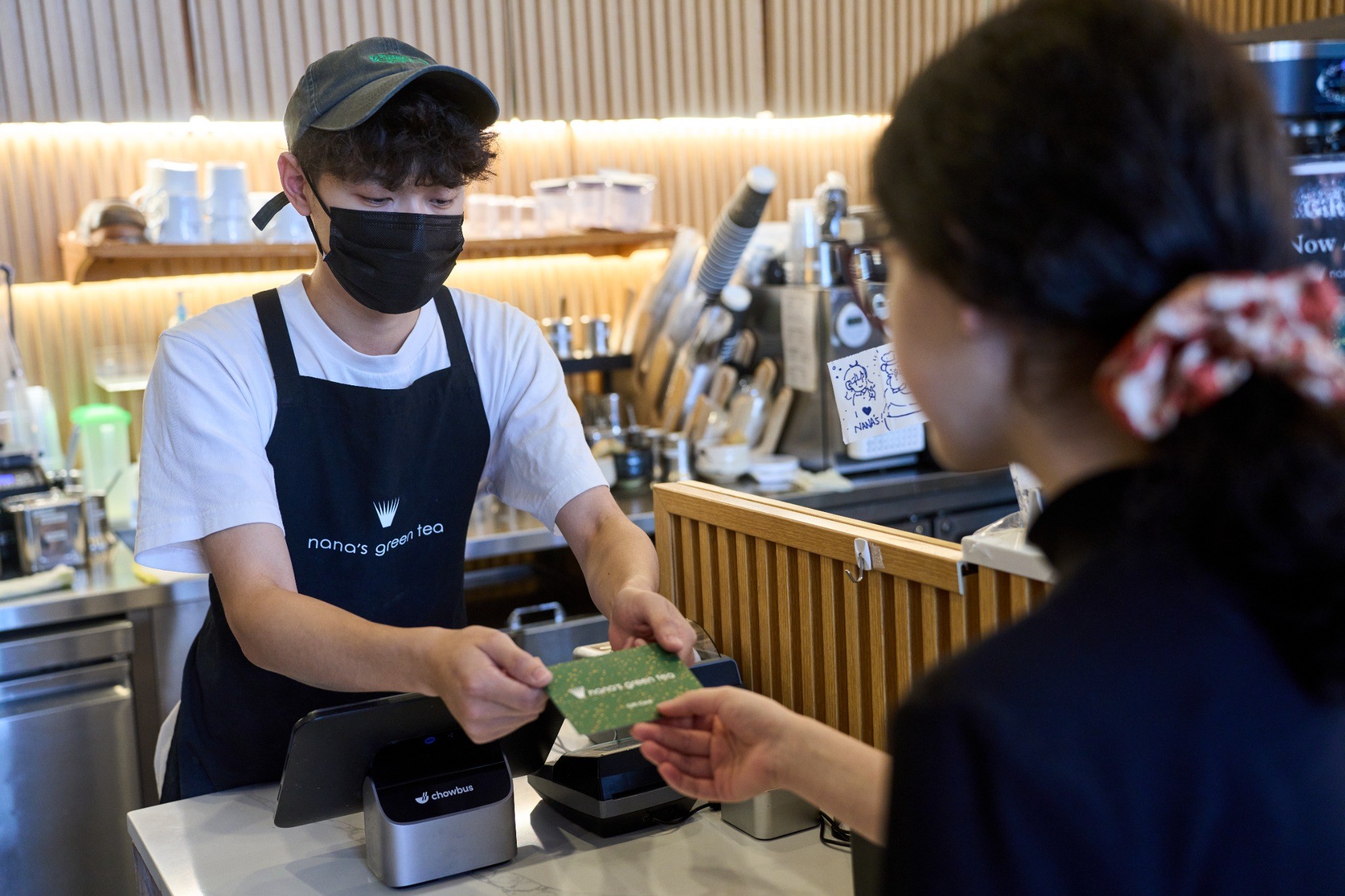
Looks like the restaurant, not a generic template. Even a modest hot pot spot or bubble tea counter benefits from a card that reflects its own branding rather than a stock design — customization doesn't need to be expensive to be effective; it just needs to be recognizable.
Handles both physical and digital sales without extra cost per format. Small businesses shouldn't need to pay for two separate systems — one for in-store cards and one for online/digital cards. A unified setup keeps costs predictable.
Reports clearly, without requiring a bookkeeper to interpret it. A small operator needs to see, at a glance, how many cards are outstanding, how much liability that represents, and how redemptions are trending — without exporting data into a spreadsheet every month.
Cost structures for gift card programs vary, and small business owners should understand the different models before committing:
Bundled into existing POS software. Some platforms, including Chowbus, include gift card functionality as part of the core POS system rather than charging separately — meaning a restaurant already paying for its POS doesn't take on an additional software cost just to sell gift cards.
Per-transaction or per-card fees. Other providers charge a fee every time a gift card is sold or redeemed, which can add up meaningfully for a small business selling cards regularly, especially around the holidays.
Physical card printing costs. If a restaurant wants branded plastic cards, there's typically a per-unit printing cost, which is often avoidable (or at least minimizable) by leaning more heavily on digital cards, especially for a small operation without heavy walk-in gift card traffic.
Standard payment processing. Gift card purchases are still processed like any other sale, so normal card-processing rates typically apply on top of any platform-specific fees.
The practical advice for a small business owner: ask any vendor directly whether gift card functionality is bundled into the existing platform cost, or billed as an add-on with its own fee structure — that single question often reveals whether a system was actually designed with small operators in mind.
Square is frequently recommended as a starting point for new or very small restaurants, and it's a reasonable option for a business with simple, generic needs. But it wasn't built with Asian restaurant operations in mind — no bilingual receipt support, no menu structures suited to hot pot or AYCE service models, and gift card customization that tends to be limited to basic template swaps.
Toast, the largest POS provider in the U.S., offers gift cards as part of a broader (and often pricier) platform, but it's also built as a generalist system without specific attention to the operational patterns common in Chinese, Korean, Japanese, Vietnamese, Thai, or bubble tea establishments.
Clover can work for a small restaurant but frequently ties the business into proprietary hardware and can carry higher effective costs once processing fees are factored in — a real constraint when every dollar of overhead matters.
MenuSifu, with deep experience serving Asian restaurants specifically, has historically had gaps in modern functionality like QR-code ordering and integrated third-party delivery, which can leave a gift card program feeling disconnected from the rest of a restaurant's digital operations rather than part of one unified system.
Chowbus's approach — an all-in-one POS platform purpose-built for Asian restaurants, with gift cards as one integrated piece rather than a bolt-on — is designed specifically to avoid forcing a small operator to choose between affordability and functionality suited to how these restaurants actually run.
For an owner deciding to move forward, a simple, low-risk approach looks like this:
What are gift cards for small business, and how are they different from enterprise gift card programs?They're the same basic product — a prepaid card redeemable for food and drinks — but sized and priced for a one-to-five-location operation rather than a large chain. Small business gift card tools should avoid unnecessary enterprise features (like multi-region account hierarchies) that add cost without adding value for a single storefront.
How much do gift cards for small business restaurants typically cost to set up?It depends heavily on the provider. Some POS platforms, including Chowbus, bundle gift card functionality into the core system at no extra software cost, while others charge per-card or per-transaction fees on top of standard payment processing. It's worth confirming this directly before choosing a system.
Are gift cards worth it for a very small, single-location restaurant?In most cases, yes — the setup effort and cost are low relative to the benefits of prepaid cash flow and guaranteed repeat visits, especially for a restaurant with a loyal local customer base likely to buy cards as gifts for friends and family.
Should a small restaurant start with physical or digital gift cards?Digital-first is usually the lower-risk starting point, since it avoids printing costs and can be tested quickly. Physical cards can be added once there's evidence of demand, particularly for restaurants that get regular walk-in gift purchases.
How is a gift card program for a small business different from one built for a big chain?The core difference is complexity and cost structure — small business tools should be simple to set up, priced to match a modest transaction volume, and integrated with a single POS rather than requiring a multi-location management layer a small restaurant doesn't need.
What's the first step for a small restaurant owner wanting to launch a gift card program?Check whether your existing POS platform already includes gift card functionality — many, including Chowbus, do. If it does, the setup is often just uploading branding and choosing denominations rather than adopting an entirely new system.
For a small, independent restaurant, the right gift card decision isn't about finding the flashiest program — it's about finding one sized honestly for a business with one to five locations, tight margins, and limited staff time. Overpaying for enterprise features you'll never use is just as much of a mistake as underinvesting in a bare-bones system that creates more manual work than it saves.
If you're running a family-owned hot pot restaurant, a neighborhood dumpling shop, or a small bubble tea chain, the calculation is straightforward: does the gift card system you're considering (or already using) actually reduce work and generate real repeat visits, or does it just sit there as an unused feature nobody promotes?
The next step is a simple audit — look at what you're paying for gift cards today, what it would take to actually launch or improve the program, and whether the current setup is sized for a business like yours or for one much bigger than yours.