A restaurant that doesn't sell gift cards is quietly turning away one of the few sales channels that generates cash before a single plate goes out. Owners often assume gift cards are a "nice to have" add-on rather than a core piece of the business model — but for restaurants sitting inside office parks, near shopping centers, or in tight-knit immigrant communities where reputation travels fast, gift cards function as both a financing tool and a marketing channel at the same time.
Restaurants across the country, including the 9,000-plus running on Chowbus's platform in all 50 U.S. states, increasingly treat gift cards as a standard part of their revenue mix rather than an afterthought. For Asian restaurants in particular, understanding how gift cards for business actually work — not just for individual diners but for offices, event planners, and repeat corporate buyers — can open up an entirely separate revenue stream from daily table turns.
This guide breaks down what gift cards for business really mean, how they function operationally and financially, and what to look for in a system that supports them — so you can decide whether your restaurant is capturing this revenue or leaving it on the table.
Start with the basic question: what does "gift cards for business" actually cover, and why does it matter beyond the obvious?
The phrase covers more ground than most owners initially assume. It includes:
Gift cards sold to businesses in bulk, for employee gifts, client appreciation, or recognition programs — a distinct buying pattern from an individual diner purchasing one card for a birthday.
Gift cards as a business tool for the restaurant itself — meaning how the restaurant treats gift card sales as part of its own financial planning, cash flow, and marketing strategy, separate from who's buying them.
Gift card programs run through a business's own point-of-sale and accounting systems, which determines how easily a restaurant can actually track, redeem, and report on card sales without manual reconciliation.
All three matter, and they're connected: a restaurant that treats gift cards seriously as a business tool internally is also the one best positioned to capture the external, bulk-buyer business demand described above.

Gift cards work differently from a regular sale, and understanding the mechanics changes how a restaurant should think about pricing, promotion, and cash management.
Deferred revenue. When a card is sold, the cash comes in immediately, but the revenue isn't recognized as "earned" until the card is redeemed. That means a restaurant selling a large batch of gift cards in November for the holidays sees a real cash boost heading into a season that's often followed by a slower January — a meaningful timing advantage for managing payroll and rent through seasonal dips.
Breakage. A portion of gift card value typically goes unredeemed — lost cards, forgotten balances, or partial redemptions where the card isn't used down to zero. Industry figures commonly place this in the single-digit-to-low-double-digit percentage range. This isn't something to build a business plan around, but it's a real, standard part of gift card economics that a restaurant should understand rather than ignore.
Incremental spend. Gift card redemptions frequently exceed the card's original value — a $50 card used against a $68 hot pot order for two, for example. That gap is new revenue the card helped generate, not just revenue the restaurant would have gotten anyway.
Guaranteed future visits. Every card sold is, functionally, a future visit already committed. For a restaurant trying to smooth out unpredictable week-to-week demand, a healthy base of outstanding gift card balances is a quiet form of built-in future traffic.
Several factors specific to Asian restaurant operations make this segment worth pursuing more actively than the average restaurant might.
Many Asian restaurants — hot pot, Korean BBQ, izakaya-style, and larger banquet-capable Chinese restaurants — are naturally suited to group dining, which overlaps directly with how businesses use gift cards: team celebrations, client dinners, and group gifting where a card covers a shared meal rather than a single diner's order.
Community trust also plays an outsized role. A business gift card given as a client gift or employee reward often carries an implicit recommendation — "this is a place worth knowing about" — and in tight immigrant business communities, that recommendation travels quickly among people who already trust each other's judgment on where to eat.
And because many of these restaurants operate with lean staff and multiple disconnected systems, the practical bottleneck usually isn't demand for gift cards — it's whether the POS system in place can actually process a business order cleanly, generate appropriate documentation, and track balances without manual work falling on an already-stretched manager.
Not every gift card feature is built with business buyers in mind, and the gap shows up quickly the first time a company tries to place a bulk order. A system that genuinely supports gift cards for business should offer:
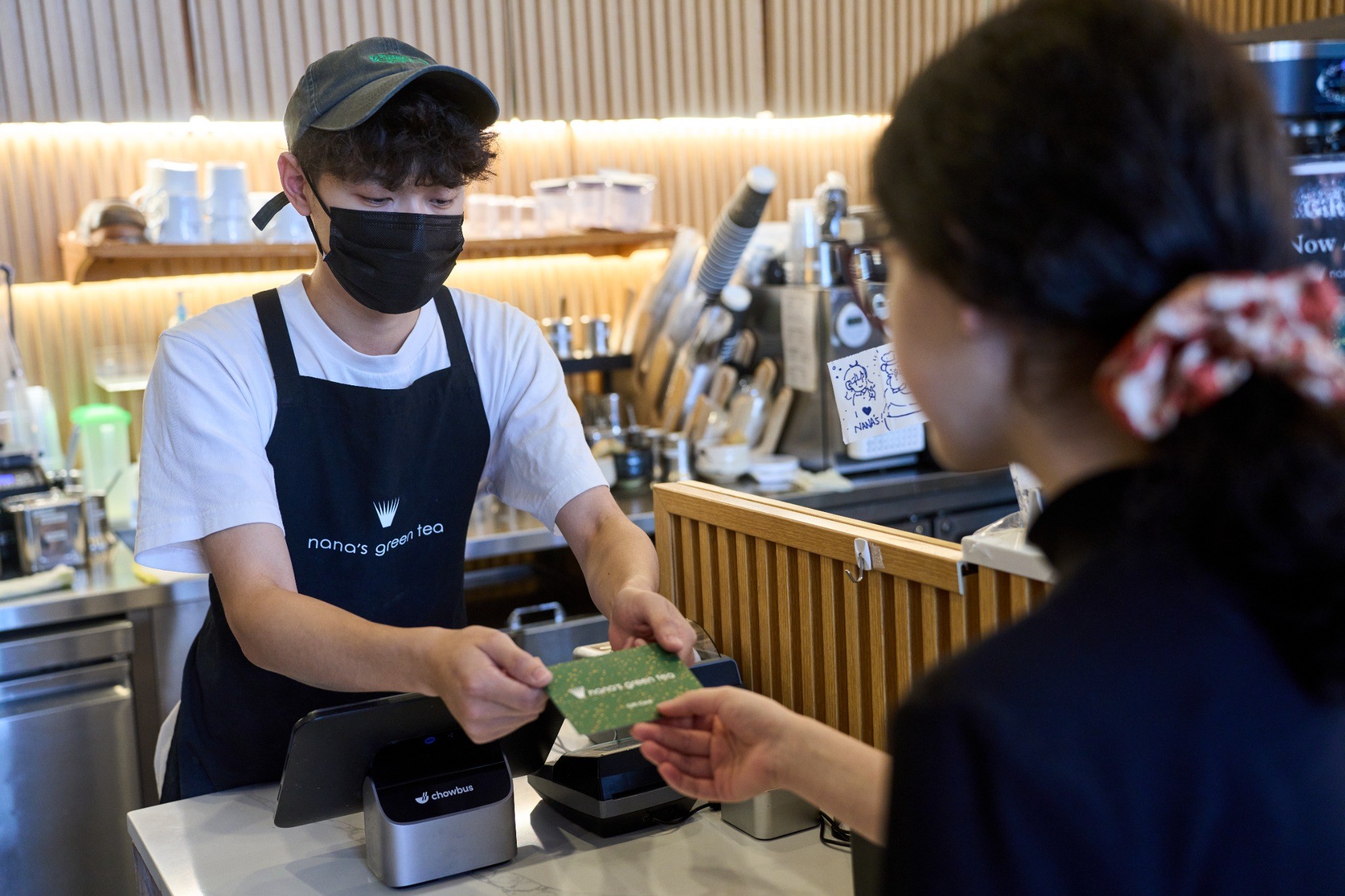
Chowbus's gift card functionality, built into its broader POS platform, is designed around this exact set of needs — allowing a restaurant to sell, track, and redeem gift cards for both individual and business buyers through one system, with sales data feeding into the same reporting used for everyday transactions. That matters operationally because it removes the need for a manager to manually reconcile a separate gift card platform against the POS at the end of each month.
Not marketing the option at all. Many restaurants technically can sell bulk gift cards but never actually tell nearby businesses this is available. A simple mention on the website, a flyer near the register, or direct outreach to property managers and office buildings nearby often surfaces demand that was there all along.
Treating every buyer like a walk-in customer. Businesses want invoices, consistent branding across the batch, and a point of contact for large or time-sensitive orders — not a queue at the counter.
No plan for expired or abandoned balances. State laws on gift card expiration and escheatment (unclaimed property) vary, and restaurants should understand their state's specific rules rather than assuming cards work the same way everywhere.
Disconnected reporting. When gift card sales sit in a separate system from the POS, tracking actual redemption rates, outstanding liability, and true breakage becomes a manual, error-prone process — one more reason an integrated system pays for itself over time.
Gift cards for business sit at an intersection that a lot of restaurants underestimate — they're simultaneously a marketing tool, a cash-flow mechanism, and a distinct sales channel with its own buyer behavior. Restaurants that treat this as a core part of their operation, rather than an occasional favor for whoever happens to call, tend to capture meaningfully more of this revenue than restaurants that just have gift cards technically available.
If your restaurant sits near an office district, a shopping center, or within a community where reputation and referrals carry real weight, there's a reasonable chance nearby businesses would buy gift cards from you if the process were easy enough to actually complete.
The practical next step is straightforward: look at whether your current system could handle a bulk business order today without improvisation, and if it can't, that's the specific gap to close before the next round of holiday or corporate gifting demand arrives.
What exactly are gift cards for business?The term covers both bulk gift card purchases made by companies (for employee or client gifts) and the broader practice of restaurants using gift cards as a business and cash-flow tool. Both angles matter — a restaurant that runs gift cards well internally is also better positioned to serve bulk business buyers.
How do gift cards for business affect a restaurant's cash flow?Selling a gift card brings in cash immediately, while the revenue is recognized only when the card is redeemed — often weeks or months later. This creates a useful cash-flow buffer, particularly when a spike in gift card sales (like the holiday season) is followed by a historically slower period.
Are gift cards for business worth setting up for a smaller, independent restaurant?Generally yes — the setup cost is low relative to the upside, especially for restaurants already positioned near offices or within tight community networks where word of mouth travels quickly. The main requirement is having a POS system that can actually process bulk and business orders without manual workarounds.
How much does it cost to run a gift card program for business use?Costs vary depending on whether cards are physical or digital, and whether the POS platform includes gift card functionality as part of the existing system versus charging per-card or per-transaction fees. It's worth clarifying this upfront with any provider, including whether business/bulk orders carry different fees than individual card sales.
What's the best way to start attracting business gift card buyers?Direct, proactive outreach to nearby offices, property managers, and professional services firms — especially ahead of the October-to-December holiday gifting window — tends to outperform simply waiting for businesses to ask. A clear, simple process for placing a bulk order removes the biggest barrier for a first-time business buyer.
How do I know if my current system is actually set up to handle gift cards for business?Test it against a realistic scenario: could your system process a 30-card order as one transaction, generate a proper invoice, and issue both physical and digital cards without manual workarounds? If the honest answer involves spreadsheets or phone calls to a separate vendor, that's the gap worth closing.