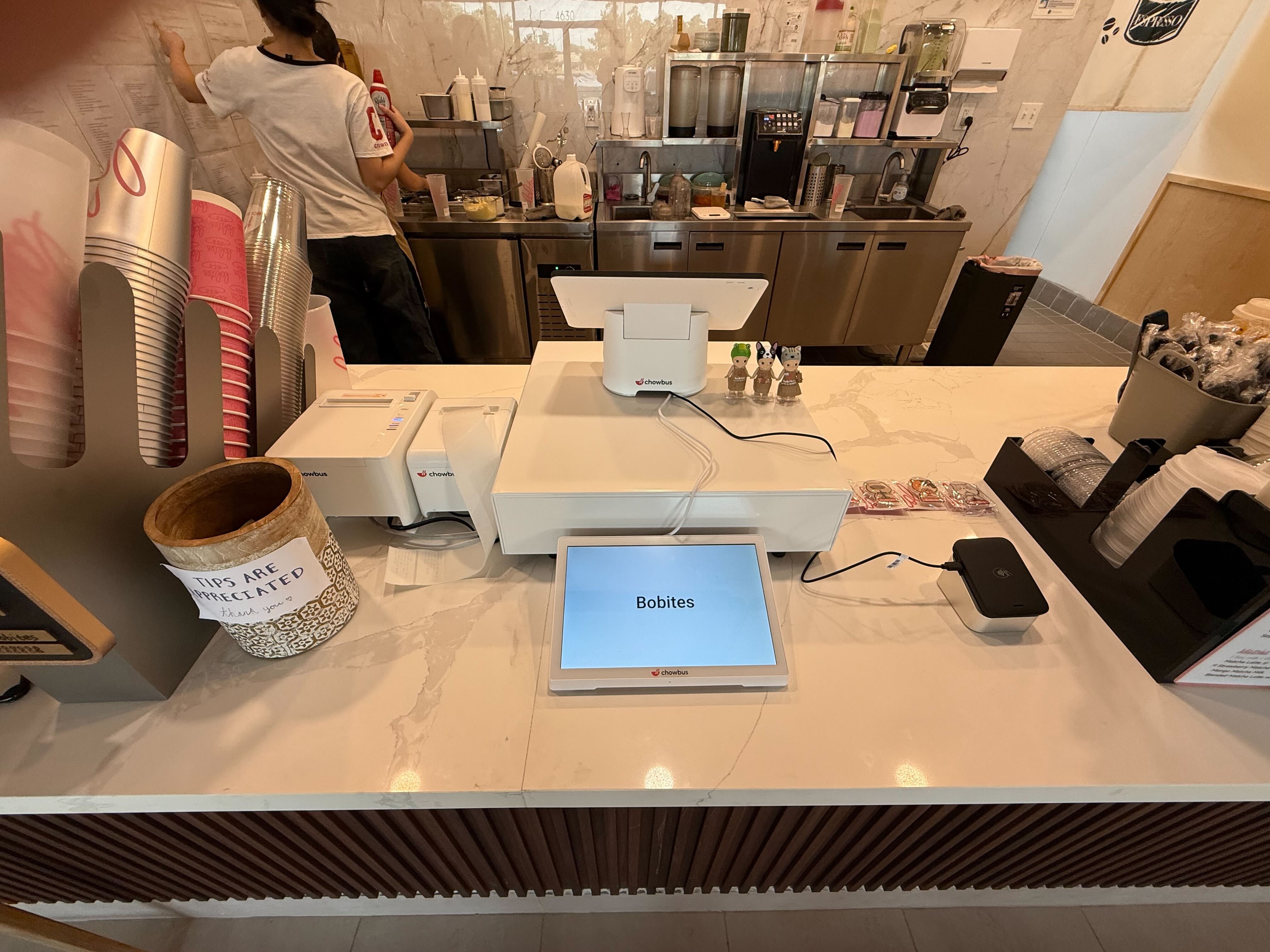
Here's an uncomfortable truth about fine dining technology: if your guests can tell you have a POS system, it's the wrong one. The formats where software gets to be visible — kiosks at the counter, tablets propped on tables — are precisely the formats fine dining isn't. At the high end, the system's job is choreography from the shadows: courses landing in sync, the sommelier knowing table six's bottle history, a check that splits perfectly without anyone hovering by the register. Unlike generic POS providers, the platforms succeeding with upscale Asian restaurants — omakase counters, banquet houses, modern Chinese tasting rooms — pair that invisible precision with 24/7 bilingual support that understands how these dining rooms actually run. This analysis covers what a fine dining POS system must do behind the curtain, where upscale Asian formats add requirements Western steakhouses never face, and how to evaluate a platform when the standard is invisibility.
An upscale full service restaurant dining room in the evening, white tablecloths, elegant plated dishes being set down by a server in uniform, candlelight and soft warm pendant lighting, wine glasses catching the light, refined modern Asian dining ambiance softly blurred, shot on Canon EOS R5, 35mm lens, shallow depth of field, ultra-realistic, photorealistic, no text, no watermark — no logos, no text overlay, no watermark, no cartoon, no illustration, no CGI
Fine dining service is a timing problem disguised as a food problem. A four-top on a tasting menu needs every course to land together, paced to the table's rhythm — slower for the celebrating couple, brisker for the pre-theater party. The POS is the instrument that makes this repeatable instead of heroic.
That requires true course management: orders organized by course, held and fired on the captain's command, with the kitchen seeing exactly what to plate and when. Seat-level tracking underneath it — so the system knows seat two has the shellfish allergy and seat four gets the vegetarian progression without anyone re-asking. And a kitchen display that presents the dining room as a timeline, not a pile of tickets: which tables are mid-course, which are ready to fire, where the pass is about to jam.
Handheld devices deserve mention precisely because fine dining resisted them for years. A discreet handheld at the server's hip means orders reach the kitchen before the server reaches the terminal — minutes per course that either go to the guest experience or to the bottleneck, every single table.
The money mechanics of fine dining run through the POS even when guests never see it.
Check handling has to be flawless at the worst moments: a twelve-top of executives splitting by seat with three corporate cards, a host quietly settling before dessert, a banquet deposit applied against a final bill. Per-seat itemization makes all of it routine. Wine programs add their own layer — bottle-level inventory, by-the-glass tracking against open bottles, and the ability to comp or transfer with a clean audit trail.
Then there's the data layer most upscale operators underuse: per-seat, per-course sales intelligence. Which tasting menu tier actually carries the margin, where guests drop off the wine pairing, what the true cost of the amuse program runs — these are POS reports when the system tracks at the right granularity. Fine dining margins are thin enough that a few points of insight on menu engineering routinely pays for the entire technology stack.
High-end Asian formats carry every requirement above, plus several that Western fine dining never encounters.
Banquets are the clearest case. A Chinese banquet house runs twelve-course set menus for tables of ten to twenty, priced per table or per head, booked with deposits, and adjusted mid-event when the host adds two cold platters and another case of beer. That demands set-menu architecture, deposit workflows, and live mid-service amendments — capabilities that sit at the heart of full-service platforms built for Asian restaurants and at the awkward edge of everything else.
Language is the second. The kitchen executing a refined Cantonese menu may read Chinese; the front of house works in English; the menu itself needs to read beautifully in both. Chowbus prints kitchen tickets in the language each station reads and carries bilingual menu names natively — in a fine dining context, where a misread ticket means a re-fired $80 course, this is margin protection as much as accuracy.
Reservations are the third. Upscale rooms run on books, not walk-ins; a reservation system that lives inside the POS connects the booking to the table, the deposit, the guest's history — the regular's preferred table, last visit's wine, the standing allergy note. That guest-memory layer, fed automatically by CRM and loyalty data underneath, is how a dining room remembers without a binder at the host stand.
Demo a fine dining POS by staging service, not by browsing menus of features.
Stage one full table: a six-top tasting menu with one allergy substitution at seat three, coursed and fired on command, with a wine pairing added at course two. Watch whether the kitchen display shows a timeline or a ticket pile. Amend mid-meal — the table adds a supplement course — and see if the change flows cleanly. Close with a three-way split by seat, one card declining once. Then stage the banquet: a deposit taken at booking, a twelve-course set menu for sixteen, two mid-event additions, and a final bill reconciling all of it.
Around the staged service, ask the operational questions that decide real nights: offline behavior when the internet blinks mid-seating, hardware that fits a refined room (discreet handhelds, no clutter), and support. The support answer matters disproportionately here — fine dining problems are Saturday-night problems, and a platform like Chowbus answering 24/7 in English, Chinese, and Spanish within an average of two minutes is the difference between a hiccup the room never notices and a visible stumble in the middle of someone's anniversary.
Pricing follows the same logic as the rest of the category — software, processing, hardware — but weigh it against ticket sizes: at fine dining averages, a half-point of processing or one prevented re-fire per night dwarfs the software fee. The expensive system is the one that costs you a table's experience, not the one with the higher subscription.
A last evaluation note on training: fine dining service standards are house-specific, and the POS configuration should encode yours — your coursing conventions, your comp authorities, your service notes — rather than imposing the vendor's defaults. Ask who does that configuration work and whether they've done it for rooms like yours; the answer separates implementation partners from box-shippers.
Strip away the white tablecloths and fine dining is the most demanding operations format in the industry: more steps per cover, more synchronization, less tolerance for error, and a guest who is paying precisely for the absence of friction. The POS either absorbs that complexity silently or leaks it into the dining room.
The platforms worth shortlisting are the ones that treat invisibility as the spec: coursing that makes synchronized tables routine, per-seat intelligence that quietly compounds into better menus, banquet and bilingual capabilities for the rooms that need them, and support that picks up at 9pm on Saturday in the language your kitchen thinks in.
Stage the dinner. The system that disappears is the one to keep.
What is a fine dining POS system?
It's a POS built around coursed, synchronized, high-touch service: course management with hold-and-fire control, seat-level ordering and allergy tracking, wine and bottle inventory, per-seat check splitting, and reservation integration with guest history. The standard is invisibility — the system choreographs service without ever appearing in the guest experience.
How is a fine dining POS different from a regular restaurant POS?
Mostly in depth of service control. Regular full-service systems take orders and print tickets; fine dining systems manage timing — courses held and fired on command, tables synchronized, kitchen displays organized as timelines — plus per-seat granularity for allergies, substitutions, and clean splits on large checks. Banquet set menus and deposits add another layer most generic systems lack.
What POS features matter for Chinese banquet service?
Set-menu architecture (twelve-plus courses priced per table or per head), deposit handling at booking, mid-event amendments when hosts add dishes or drinks, and final-bill reconciliation — plus kitchen tickets in the language the kitchen reads. Platforms built for Asian full-service dining, like Chowbus, treat banquets as a core workflow rather than a workaround.
Should fine dining restaurants use handheld POS devices?
Yes, with discreet hardware. Handhelds send orders to the kitchen the moment they're taken, which tightens course timing and returns minutes to every table — the resistance in fine dining was always aesthetic, and current devices are unobtrusive enough that the service gain outweighs it. Look for handhelds that handle seat-level entry and coursing, not just quick-service flows.
How much does a fine dining POS cost?
The fee structure matches the broader category — monthly software, processing, hardware — but evaluate it against fine dining economics: with high ticket averages, processing rate differences and prevented re-fires matter far more than the subscription line. Quote your full configuration including reservations, handhelds, and kitchen displays, and compare platforms on all-in totals.