For most high-volume restaurants, the real operational nightmare isn’t a slow chef—it’s the front door.
We’ve all seen this play out: A guest walks in, stops at the threshold, and starts doing the “wait-time math.” They scan the menu board from a distance while a queue snakes away from the counter. The cashier is locked in a one-by-one battle with orders as more people cram into the foyer. Within minutes, the atmosphere shifts from welcoming to claustrophobic. People glance at the line, decide it’s not worth the hassle, and quietly walk out.
This isn't just a service hiccup; it’s a revenue leak. It proves that a restaurant’s success hinges on more than just food quality—it’s about the invisible physics of the ordering flow.
Self-ordering kiosks have evolved beyond mere "tech upgrades." They are now architectural tools used to redesign how demand moves through a space. When deployed with intent, they break the frantic rhythm of peak hours—slashing congestion and creating a frictionless path for both the kitchen and the guest.
Every kitchen has a ceiling. There’s a limit to how many burgers can be flipped or bowls assembled at once. However, the true bottleneck usually strikes much earlier: the moment of the transaction.
Traditional counter ordering is a "sequential trap." It’s linear—one cashier, one customer, one order at a time. No matter how fast your staff is, this flow is inherently brittle. During a rush, the queue grows exponentially while the processing speed stays stagnant.
The result? Some guests wait with growing frustration. Others feel "order anxiety" and rush through their choices. The worst-case scenario? The potential guests who see the crowd and never even join the line. That’s lost profit, not because you lack demand, but because your "front gate" is too narrow to handle it.
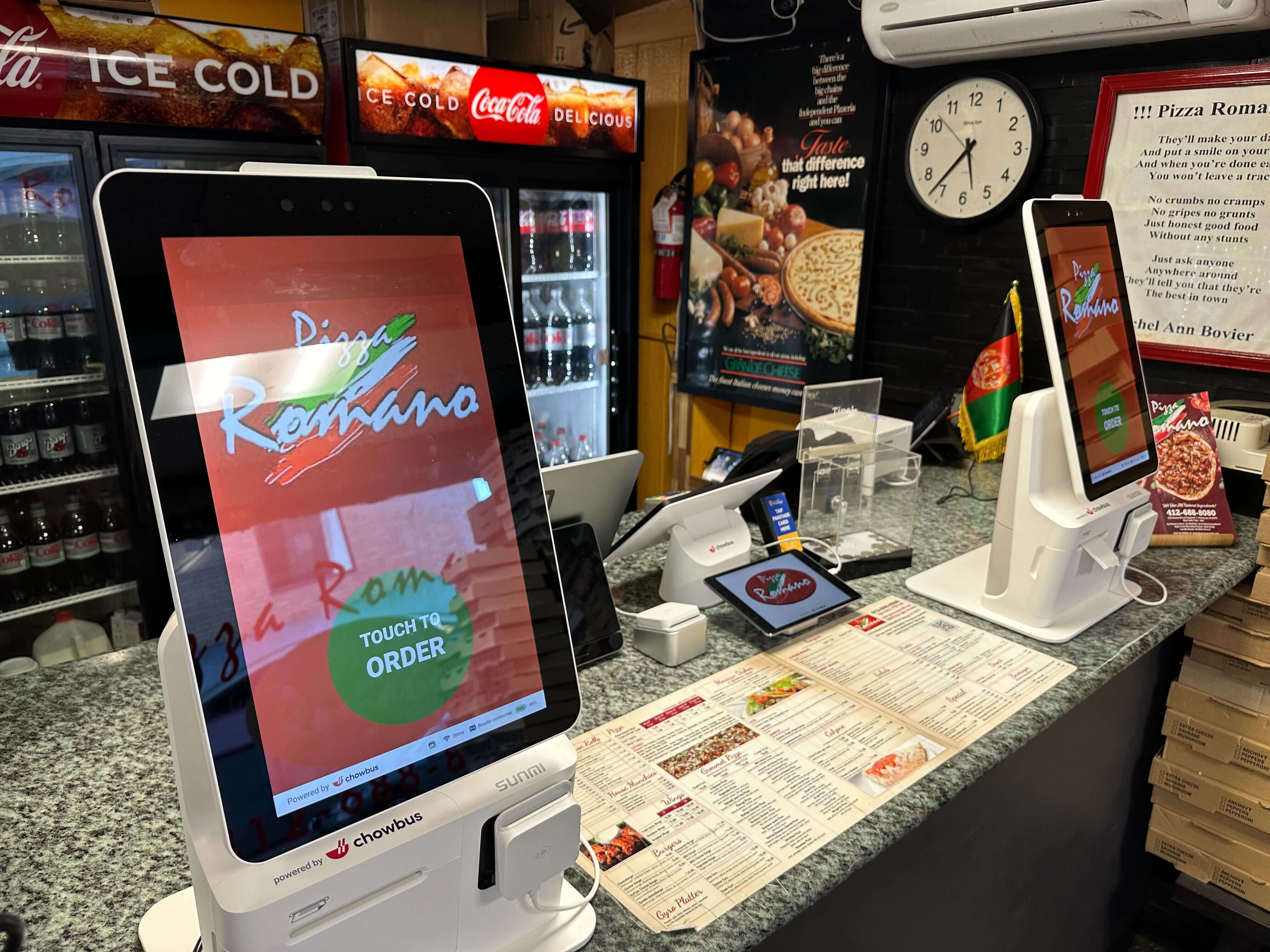
Kiosks solve this by shifting the restaurant from linear to parallel processing. By offering multiple digital touchpoints, you effectively open four or five gates at once. This parallel structure doesn't just shorten the line; it evaporates the "visible congestion" that scares customers away.
Kiosks trigger a subtle but massive shift in how people occupy your floor plan. In a legacy layout, the counter is the sun—everything revolves around it, and lines often bleed into seating areas or walkways, creating constant "friction."
Kiosks de-centralize the room. Instead of a single, suffocating queue, customers disperse. Some head straight to a kiosk the moment they enter; others take a beat to browse the digital menu away from the crowd. The result is a fluid, "lounge-like" environment where the rush feels manageable rather than chaotic.
Strategic placement is the secret sauce here. Kiosks near the entrance capture impulse; clear signage keeps the "traffic" moving in one direction. By keeping pickup zones separate from ordering stations, you prevent "cross-traffic"—that awkward dance where people waiting for food are bumping into people trying to buy it.
There’s a profound psychological shift when a guest moves from a counter to a screen. Their behavior literally changes.
At a counter, the "gaze of the line" creates a subtle, persistent pressure. With people huffing behind them and a cashier waiting, guests often make "safe" or "fast" decisions. They don’t explore; they just survive the transaction.
With a kiosk, the guest is in the driver’s seat. They control the tempo. They look at the high-res photos, explore modifiers, and actually notice the sides and drinks they usually skip. The process shifts from a stressful transaction to an exploratory experience. For the house, this translates to clearer orders, fewer "wrong item" complaints, and—crucially—higher check averages. Tech doesn’t kill hospitality; it removes the stress that gets in the way of it.
A kiosk shouldn't be a digital island. It’s most powerful when it acts as the "nervous system" of the entire operation, tied directly into the POS, Kitchen Display Systems (KDS), and backend reporting.
The flow becomes effortless: A guest taps "Pay" at the kiosk. The order hits the POS instantly. The KDS in the kitchen fires the ticket. There’s no manual re-entry, no "guessing the handwriting," and no information lost in translation between the front and back of the house.
This direct link cuts the administrative "noise." Your staff can stop acting as data-entry clerks and start acting as hospitality pros. Meanwhile, the system captures every data point automatically, giving managers a high-def view of peak times and product performance.
For fast-casual and QSR brands, this infrastructure isn't just a "nice-to-have"—it's the engine of growth. Kiosks allow you to scale your ordering capacity without the overhead of additional counter space or payroll.
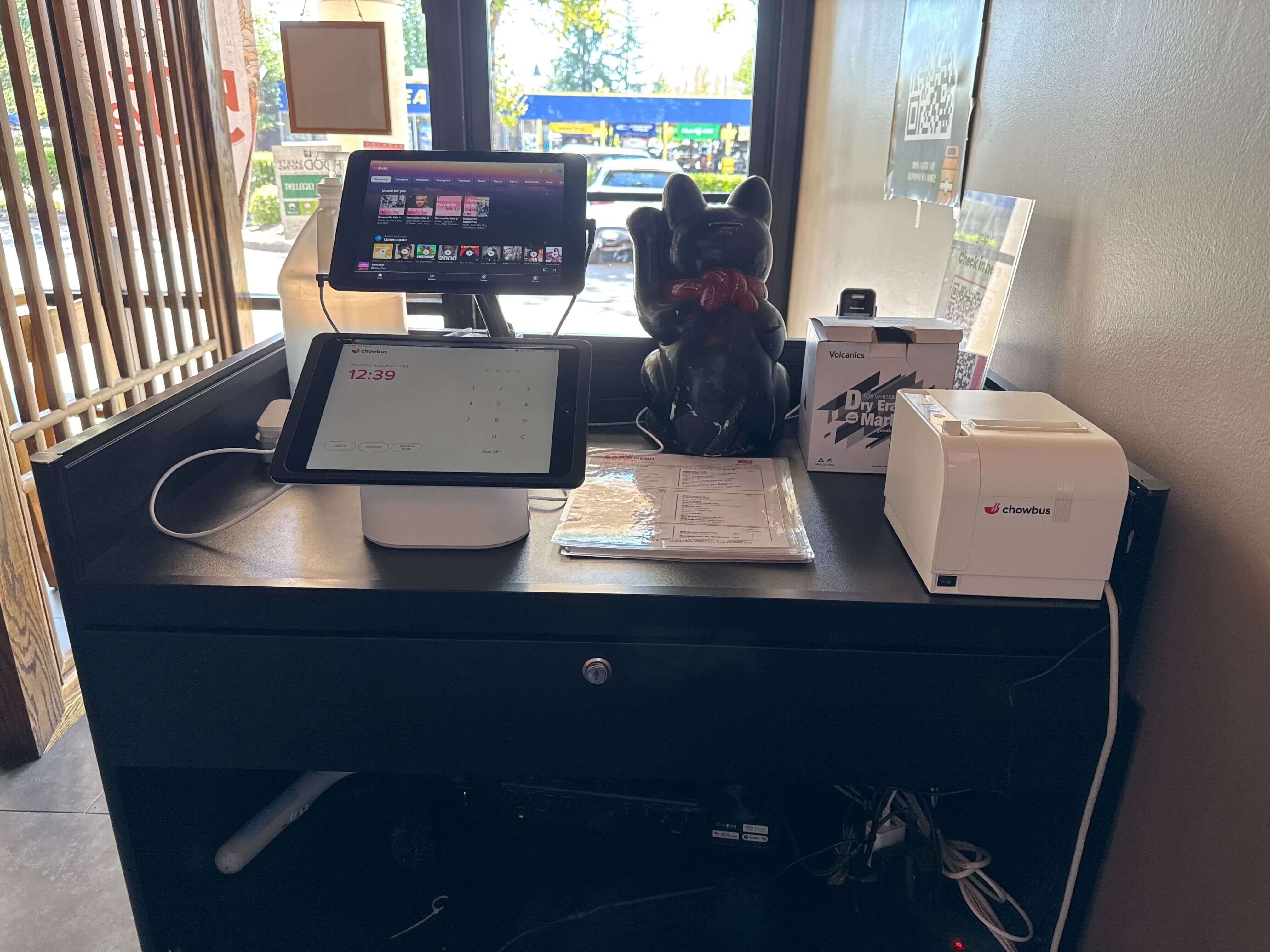
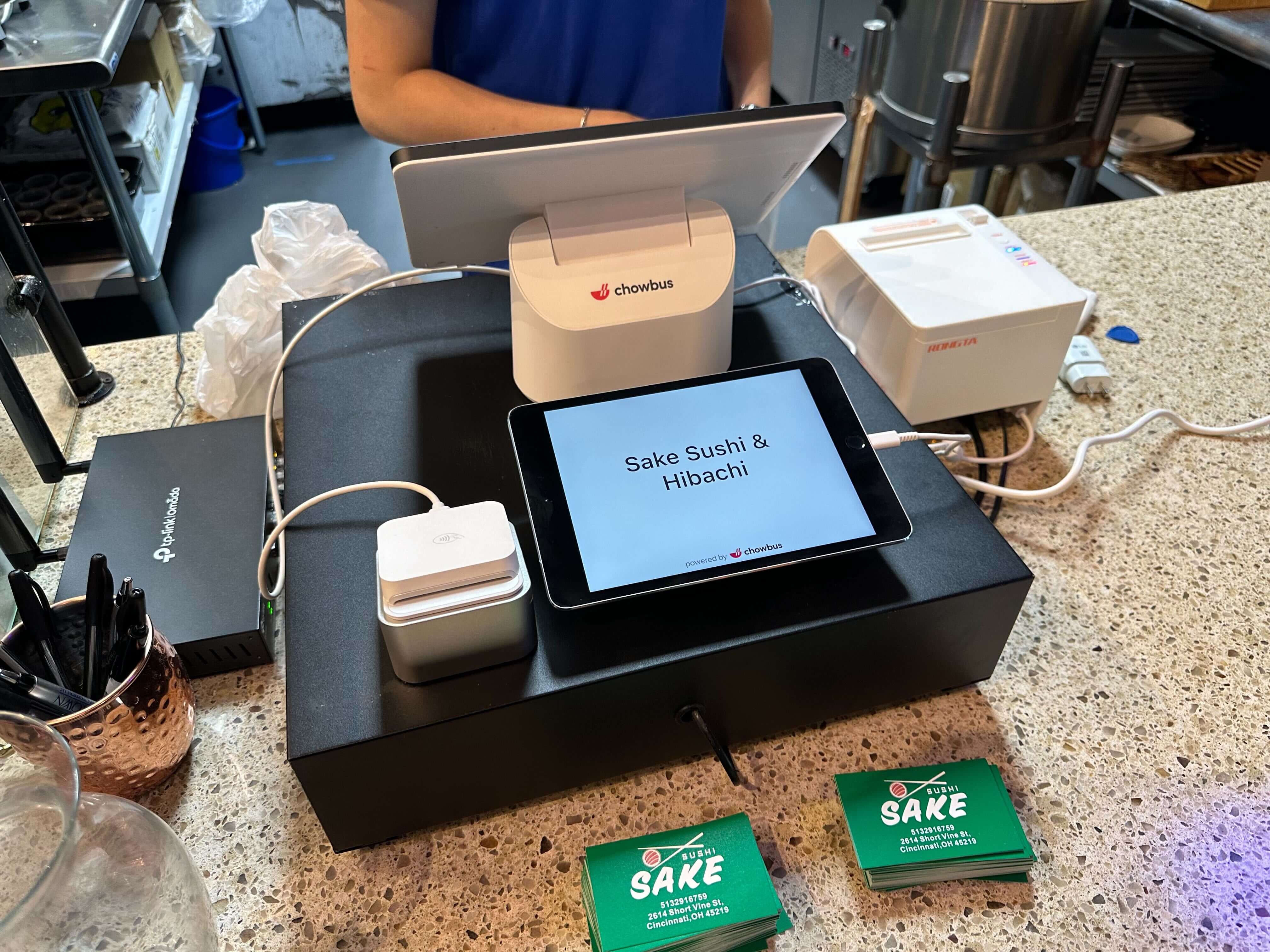
Modern solutions, like those from Chowbus, are built for the grit of real restaurant environments. Their hardware and software are designed to be part of a single, unified flow. When the tech is integrated, the manager spends less time "fighting the system" and more time ensuring the food is perfect and the guests are happy.
The New Architecture of Ordering
We often talk about kiosks in terms of speed. That’s accurate, but it’s only half the story. Their real impact is architectural. They reshape how orders enter your system and how pressure is distributed across your team.
Instead of a single line dictating the speed of your entire business, your operation becomes distributed and scalable. The restaurants that win are the ones that balance efficiency with comfort. Not because their tech is flashy—but because the experience feels natural.
1. What is a self-ordering kiosk in a restaurant?
A self-ordering kiosk is a touchscreen station that allows customers to browse a restaurant's menu, customize their items, place orders, and complete payment independently.
2. How do kiosks improve restaurant efficiency?
By allowing multiple customers to place orders simultaneously, kiosks reduce ordering bottlenecks and help restaurants process higher order volumes during busy periods.
3. Are self-ordering kiosks suitable for small restaurants?
They can be. Restaurants that experience frequent peak-hour congestion or limited cashier availability often benefit from even a single kiosk that adds additional ordering capacity.
4. Do kiosks replace restaurant staff?
No. In most restaurants, kiosks complement staff rather than replace them. Employees can shift their attention toward food preparation, customer assistance, and quality control instead of focusing solely on taking orders.