The restaurant industry has always evolved alongside technology. From handwritten tickets to digital POS systems, and from paper menus to QR code ordering, innovation continues to reshape how restaurants operate. Today, self-ordering kiosks are at the center of that evolution.
But before investing in a self-ordering kiosk system, restaurant owners must ask a critical question: Is this technology the right operational decision for my business?
Self-ordering kiosks promise improved efficiency, reduced wait times, and increased order accuracy. At the same time, they require upfront investment, workflow adjustments, and thoughtful implementation. The reality is not black and white. Kiosks can dramatically streamline operations—but only when deployed wisely.
This blog will break down the pros and cons of self-ordering kiosks so that you can make a confident, informed decision.
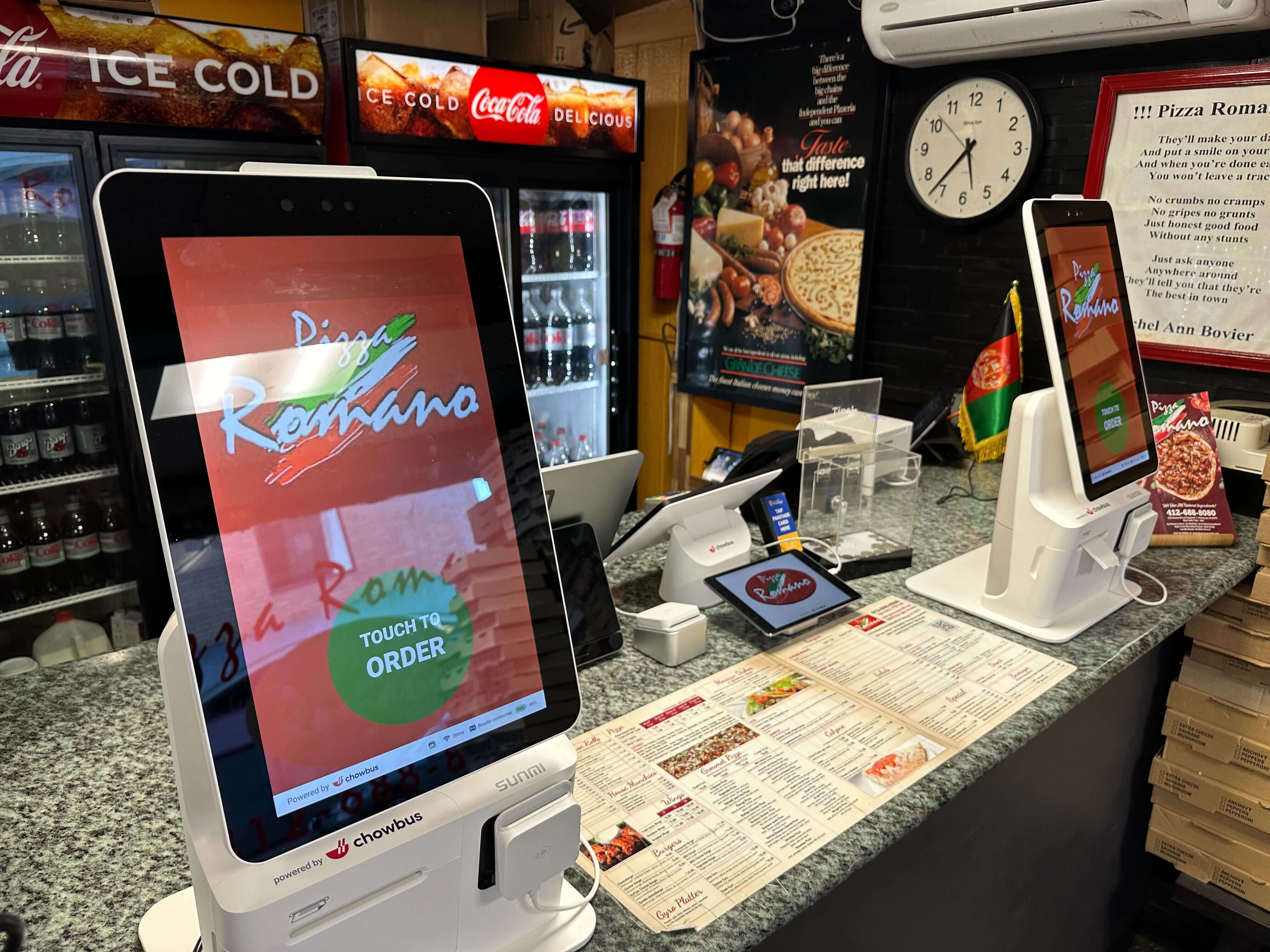
Walk into many quick-service restaurants today, and you'll likely see touchscreen kiosks near the entrance. Customers browse the digital menu, customize their order, pay securely, and receive a confirmation—all without waiting in line.
This shift isn't accidental. It's driven by three major forces shaping the restaurant industry:
•Rising labor costs
•Changing customer expectations
•Demand for faster, contactless ordering
Modern diners value convenience. They want speed, clarity, and control. A well-designed kiosk system aligns perfectly with those expectations.
But popularity alone doesn't justify adoption. The benefits must outweigh the trade-offs.
1. Increased Efficiency and Faster Order Processing
At its core, a self-ordering kiosk improves operational efficiency by decentralizing the ordering process. Instead of relying on a single cashier station, restaurants can process multiple orders simultaneously.
This parallel ordering model significantly reduces wait times during peak hours. Customers can browse at their own pace without feeling rushed. Meanwhile, staff can focus on food preparation and customer service rather than entering orders manually.
The result is a smoother workflow, less congestion, and an increase in table turnover rate.
2. Reduced Labor Pressure Without Compromising Service
Labor shortages continue to challenge restaurant owners across the country. Hiring, training, and retaining staff has become more difficult and expensive.
Self-ordering kiosks help redistribute labor. Instead of assigning multiple employees to handle counter transactions, restaurants can reallocate staff to food quality control, customer assistance, or kitchen support.
Importantly, kiosks do not eliminate hospitality. They simply shift where employees add value. When staff are no longer tied to a cash register, they can engage more meaningfully with customers.
3. Improved Order Accuracy
Verbal communication in busy restaurant environments is prone to error. Background noise, accents, rush pressure, and multitasking all increase the risk of mistakes.
Self-ordering kiosks reduce this risk by allowing customers to visually confirm their selections before payment. Modifiers, special requests, and add-ons are clearly displayed on screen.
Fewer misunderstandings mean fewer remakes. Fewer remakes bring lower food waste and stronger profit margins.
4. Higher Average Ticket Size Through Smart Upselling
One of the most measurable benefits of a kiosk system is increased order size. Digital prompts can suggest add-ons, combo upgrades, or premium items at carefully timed moments during checkout.
Unlike human upselling—which varies depending on staff confidence and training—kiosk upselling is consistent. Every customer sees the same curated recommendations.
Over time, this subtle encouragement can significantly boost revenue without increasing menu prices.
5. Seamless Integration with Restaurant POS Systems
Modern self-ordering kiosks integrate directly with a restaurant POS system (RPS), ensuring orders flow automatically into the kitchen display system. This eliminates manual re-entry and reduces operational friction.
A unified digital ordering ecosystem creates better reporting, stronger data tracking, and improved inventory visibility.
When kiosks are integrated properly, they become part of a combined, all-in-one restaurant management solution.
6. Enhanced Customer Experience Through Autonomy
Some customers prefer interaction. Others prefer independence. Self-ordering kiosks cater to customers who value privacy and control.
They can browse the digital menu at their own pace, explore images, and customize orders without feeling rushed.
For tech-savvy diners and younger demographics especially, this experience feels intuitive and modern.
Self-ordering kiosks can definitely improve efficiency—but they also introduce new considerations that restaurant owners shouldn't ignore. While the upside may be compelling, the trade-offs deserve equal attention.
1. Initial Investment Costs
Kiosks are not inexpensive. Between hardware, installation, integration with your restaurant POS system, and ongoing software licensing, the upfront commitment can feel significant—especially for independent operators watching margins closely.
For high-volume restaurants, the math often works out over time. Increased throughput, higher average ticket size, and labor redistribution can offset the investment. But for lower-traffic locations without consistent lines, the payback period may stretch longer than expected.
2. Physical Space Requirements
Screens need space. And space in restaurants is rarely abundant.
A poorly placed kiosk can create a new bottleneck where an old one once stood. customers cluster around the screen. The entrance becomes crowded. The flow feels awkward.
Layout matters more than many restaurant operators expect. You must consider traffic direction, waiting zones, ADA accessibility, and how orders transition from kiosk to pickup. When placement is strategic, kiosks feel natural. When it's not, they can be intrusive.
3. customer Learning Curve
Customers’ habits and adaptability are different. While younger diners may move through a touchscreen interface instinctively, others may hesitate, particularly if they are unfamiliar with digital ordering systems. A moment of uncertainty at the screen can create subtle discomfort.
That explains why successful implementations rarely remove human presence entirely. Staff members should remain visible and approachable—ready to assist, answer questions, or step in when needed. The goal isn't to replace interaction. It's to offer flexibility.
A kiosk should create confidence. If it creates confusion, something in the design or support model needs adjustment.
4. Dependence on System Reliability
When a cashier calls in sick, you adjust. When a kiosk freezes during peak lunch hour, everyone notices.
Digital systems demand consistency. Payment processing must be seamless. Connectivity must remain stable. Software updates must not disrupt service.
Even minor downtime during rush periods can influence the entire operation—delayed orders, frustrated customers, and stressed staff.
That's why provider reliability matters just as much as hardware quality. Strong technical support, remote diagnostics, and dependable infrastructure are not luxuries. They are safeguards.
In the end, restaurant technology must perform quietly in the background. If it becomes the center of attention for the wrong reasons, it's working against you.
Self-ordering kiosks tend to deliver the strongest ROI for:
• High-volume quick-service restaurants
• Fast casual concepts with heavy customization
• Locations experiencing long wait times
• Brands aiming to modernize customer experience
They may be less impactful for:
• Low-traffic dine-in establishments
• Fine dining concepts emphasizing personal service
• Extremely small spaces
Self-ordering kiosks are part of the broader digital transformation of the restaurant industry. They can streamline operations, increase efficiency, enhance customer experience and boost revenue. But only when executed thoughtfully.
For restaurant owners seeking a reliable, integrated solution, Chowbus Kiosk offers a powerful way to modernize in-store ordering while seamlessly connecting to your Restaurant POS System. Designed specifically for restaurants, it supports contactless ordering, efficient workflow, and data-driven growth.
The right decision is building a smarter, more resilient operation.
Choosing a self-ordering kiosk provider is about deciding how your entire ordering ecosystem will function day after day, rush after rush.
If you're exploring self-ordering kiosks, it's important to choose a provider that offers more than just hardware. Chowbus self-ordering kiosks are designed to integrate seamlessly with the Chowbus POS system, digital menus, and order management tools, creating a fully connected ecosystem.
With multilingual support, real-time reporting, and built-in upselling features, Chowbus kiosks help restaurants increase order accuracy, improve efficiency, and grow revenue—without adding operational complexity. For restaurants looking to modernize while maintaining control, Chowbus offers a streamlined and scalable solution.
1. How do self-ordering kiosks handle complex menu customizations?
Complex menus can annoy customers when handled verbally, especially during peak hours when speed becomes the priority. Self-ordering kiosks approach customization differently. They guide customers through a structured, step-by-step interface where modifiers, add-ons, spice levels, dietary preferences, and portion choices are presented clearly and sequentially.
Instead of depending on memory or rushed communication, customers visually confirm every selection before checkout. This dramatically reduces modifier errors and ensures the kitchen receives precise instructions. For restaurants built around customization—think build-your-own bowls, milk tea shops, or specialty noodle concepts—the clarity provided by a digital interface often improves both order accuracy and customer satisfaction.
2. What type of restaurants benefit the most from self-ordering kiosks?
High-volume quick-service and fast-casual restaurants typically experience the most immediate impact. When long lines form, kiosks introduce parallel ordering capacity. Multiple customers can place orders simultaneously, which alleviates congestion and shortens wait times.
That said, benefits are not limited to large chains. Dessert boutiques, food court vendors, campus eateries, and hybrid dine-in/takeout models often find kiosks equally useful—especially when peak periods create bottlenecks at the counter. The deciding factor isn't restaurant size. It's traffic density and ordering friction during busy hours.
3. How do self-ordering kiosks integrate with kitchen operations?
Integration is where many systems either succeed or fall apart. A well-built self-ordering kiosk connects directly to your restaurant POS system and kitchen display system (KDS), transmitting orders automatically and instantly.
There is no manual re-entry or duplicate tickets anymore. Orders move from customer input to kitchen screen in real time, preserving modifiers and special instructions exactly as entered. This continuity reduces front-of-house strain and improves back-of-house workflow.