The restaurant industry in the United States is currently navigating a complex landscape. While consumer demand for dining out remains strong, operators are facing the "triple threat" of rising food costs, a tightening labor market, and evolving guest expectations. In this environment, learning how to boost restaurant sales is no longer just about getting more people through the door—it’s about maximizing the value of every guest visit and optimizing your internal operations to protect your margins.
Whether you are running a high-volume quick-service restaurant (QSR) or a curated full-service establishment, increasing revenue requires a blend of psychological pricing, technological integration, and a deep understanding of customer behavior.
Before you can effectively scale your revenue, you must have a clear grasp of your financial baseline. Many operators focus on the "top line" (total sales) without realizing that their "bottom line" (net profit) is being eroded by inefficient cost structures.
If you are in the growth phase or looking to open a second location, you might be asking: how much does a restaurant cost to run efficiently? Or perhaps, how much cost to open a restaurant in today’s market? On average, opening a restaurant in the U.S. can range anywhere from $100,000 to over $1 million depending on the footprint and location.
However, the key to boosting sales lies in your restaurant business plan. A well-structured plan shouldn't just be a document to secure a loan; it should be a roadmap for revenue growth. When you know how to start a restaurant business plan with scalability in mind, you can allocate budgets specifically for marketing and loyalty programs—the two biggest drivers of sales growth.
Key Insight: To boost sales, review your Prime Cost (COGS + Labor). If your Prime Cost exceeds 60%, your efforts to increase sales may simply lead to more work for less profit.
Acquiring a new customer is five to twenty-five times more expensive than retaining an existing one. If you want to know how to boost restaurant sales sustainably, the answer lies in your "regulars."
In the past, loyalty was a punch card. Today, it is digital. To effectively how to increase customer loyalty in restaurant settings, you need a system that tracks dining habits.
When guests feel recognized, their frequency of visits increases by an average of 35%. This consistent foot traffic provides a "revenue floor" that protects your business during slow seasons.
Your menu is your most powerful sales tool. It is not just a list of items; it is a psychological map that guides guests toward your most profitable dishes.
Categorize your menu items into four groups to identify where your sales are coming from:
By highlighting "Stars" with visual cues—such as boxes or "Chef’s Choice" labels—you can shift your sales mix toward items that leave more money in the bank.
Streamline Your Service Flow
Success in sales starts with a seamless guest experience. Discover how integrated handheld devices and smarter kitchen displays can reduce wait times and turn tables faster.
[Explore Our Restaurant Solutions →]
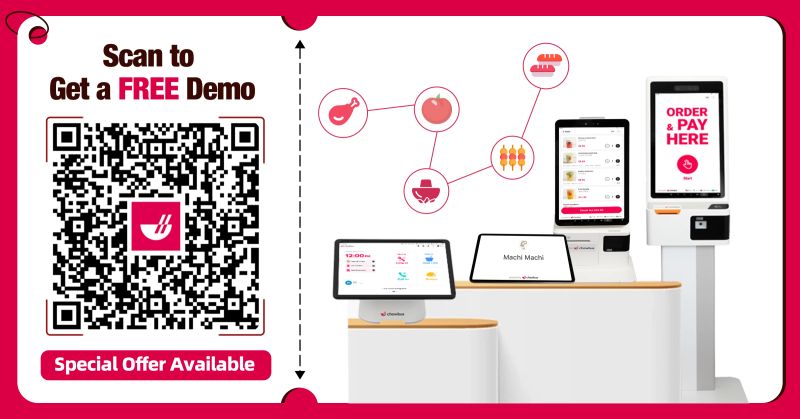
The modern guest doesn't just eat in your dining room. They eat on their couches, at their desks, and on the go. To boost sales, you must meet them where they are.
Your front-of-house staff should be your best salespeople, not just "order takers."
Instead of asking, "Do you want an appetizer?" which is a yes/no question, trainers should teach staff to ask, "Would you like to start with our signature Crispy Calamari or the Truffle Fries?"
Specific suggestions create a mental image for the guest, making them much more likely to say yes. Small increases in the average check size (PPA - Per Person Average) of just $2.00 per guest can result in tens of thousands of dollars in additional annual revenue for a busy restaurant.
Discounting can be a "race to the bottom" if not handled correctly. Instead of broad discounts, use targeted promotions to drive sales during "dayparts" (specific times of day) that are traditionally slow.
Strategy
Implementation
Benefit
Happy Hour 2.0
Focus on "sharable" small plates rather than just cheap drinks.
Increases food sales during the 4 PM - 6 PM lull.
LTOs (Limited Time Offers)
Introduce a seasonal item for only 3 weeks.
Creates a "Fear Of Missing Out" (FOMO) and drives urgent visits.
Bundling
Create "Date Night" or "Family Feast" bundles.
Increases the total transaction value by simplifying the decision process.
The final step in how to boost restaurant sales is constant iteration. Modern POS systems provide real-time analytics that tell you exactly what is working.
By monitoring these KPIs (Key Performance Indicators) weekly, you can pivot your strategy before a small dip becomes a major financial problem.
The fastest way is usually to focus on upselling and table turnover. Training your staff to suggest high-margin add-ons and using technology like handheld POS systems to close out checks faster can result in an immediate bump in daily revenue.
The cost varies. Some legacy systems charge high monthly fees, while modern, integrated platforms often include loyalty features as part of their standard package. Generally, the ROI of a loyalty program far outweighs its monthly subscription cost due to increased guest frequency.
Yes, but it must be "shoppable." Simply posting photos is not enough. You should include "Order Now" links in your bio and use Instagram/Facebook Stories to promote daily specials that drive immediate action.
If you use third-party marketplaces, the "cost" is often 15-30% of every sale. If you set up a first-party system through your website, there is usually a flat monthly fee or a much smaller per-transaction fee, which is significantly more profitable in the long run.
Try hosting community events, such as trivia nights or wine pairings, or offer "exclusive" menu items that are only available on Tuesdays or Wednesdays to give guests a unique reason to visit on a non-weekend night.
Finally: Taking the Next Step
Boosting restaurant sales is a marathon, not a sprint. It requires a combination of smart financial planning, leveraging the right technology, and fostering deep-rooted customer loyalty. By focusing on your menu engineering and empowering your staff with the right tools, you can build a resilient business that thrives regardless of market fluctuations.
Ready to take your restaurant to the next level? Our team is dedicated to helping operators streamline their workflows and unlock new revenue streams through smarter technology. Whether you’re looking to upgrade your POS or launch a custom loyalty program, we’re here to help.
Book a Free Demo with Our Team Today →
Recommended Articles:
How Much Is a POS System for a Restaurant? Here’s What You Need to Know
Cloud Based Restaurant POS Systems: What Restaurant Owners Should Know Before Choosing One
Top Restaurant POS Systems: What the Best Systems Really Do and How to Choose One That Fits Your Restaurant
Top Restaurant POS Systems Are Going Cloud-Based: Why More Restaurants Are Making the Switch
Los Angeles Restaurant Owners Roundtable — January 20
Chowbus New Feature — AI Digital Marketing
What Is the National Restaurant Association? The 2026 Insider’s Guide for Modern Operators
How Does a POS System Work in a Restaurant? A Real-World Look at Modern Restaurant Operations
What Really Matters When Choosing Best POS System for Pizza Restaurant
National Restaurant Association Show 2026: What It Is, Why It Matters, and How Restaurants Can Get Real Value