Top Thai × Chowbus | Kitchen Output Up 30%+ — Building NYC's Thai-Dining Digital Benchmark
Top Thai
Top Thai × Chowbus | Kitchen Output Up 30%+ — Building NYC's Thai-Dining Digital Benchmark
How Top Thai 55 Carmine, an authentic Thai restaurant in NYC's West Village, partnered with Chowbus: a KDS plus server handhelds lifted kitchen efficiency 30%+, drove order errors to near zero, cut checkout 5–8 minutes per table, and turned walk-ins into loyal members.
Opening an authentic Thai restaurant in NYC's West Village, a packed house is the goal — but the operational challenges that come with it are the real test: a disconnect between front-of-house and kitchen, servers running back and forth, and long waits that dull the guest experience.
Facing these common upscale-dining problems, Top Thai 55 Carmine partnered with Chowbus on a lightweight smart setup built around two cores — a KDS (kitchen display system) and server-carried handheld tablets — to break the bottlenecks and lift both efficiency and reputation.
Pain point 1: a broken information flow between floor and kitchen — slow tickets, frequent errors
Traditional restaurants rely on paper tickets carried by hand to the kitchen. When orders pile up at peak, the kitchen gets chaotic — missed and mis-fired tickets are common, the floor keeps chasing, and overall ticket times slow down. With North America's diverse Thai-dining clientele, language and cultural differences add real communication cost around tastes and ingredients, further straining labor.
Chowbus solution: a KDS that builds a "transparent kitchen"
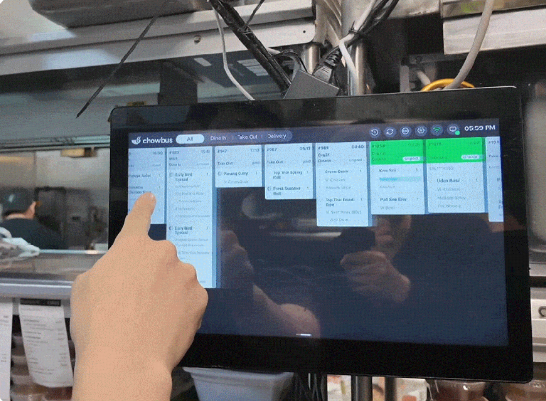
Every order — whether rung on a server's handheld, placed by a guest at a kiosk, or received online — syncs to the kitchen display automatically and in real time.
• Smart queue, fully visible: tickets line up by time and can display by dish category; special orders auto-highlight so rushes and add-ons never get buried.
• Live progress sync: "started" and "done" statuses update in real time, so servers no longer run to the kitchen to ask — they read progress off the device and plan their flow.
Results: after go-live, kitchen ticket-processing efficiency rose more than 30%, errors from miscommunication dropped to virtually zero, and floor-kitchen coordination became remarkably smooth.
Pain point 2: a back-and-forth service flow — high labor cost, diluted experience
In the traditional model, servers shuttle between guests, the register, and the kitchen: take the order, walk back to enter it, then return to confirm. In a city as diverse as New York, language differences make ordering slower and more error-prone — straining staff at peak and quietly lengthening guest waits, pushing service labor cost up.
Chowbus solution: the handheld as a "mobile service station"
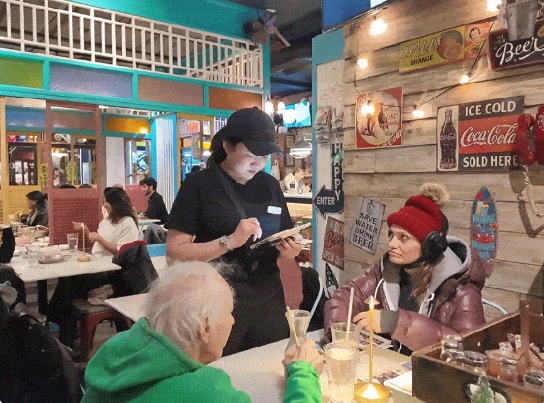
Every server carries a handheld running Chowbus, rebuilding the flow from ordering to checkout.
• Everything done tableside: servers handle menu display, ordering, add-ons, and payment right at the table; high-res dish photos plus multilingual menus remove the ordering friction and misunderstandings caused by language gaps — ideal for tourist-heavy areas, and a clear lift to ordering accuracy and speed.
• Instant checkout, faster turns: guests pay tableside with card, Apple Pay, and more; average checkout time per table dropped 5–8 minutes, and peak-hour table turns rose markedly.
Results: freed from running around, servers spend more time on warm, attentive service. Labor efficiency rose, and with shorter waits, guest satisfaction climbed too.
Pain point 3: a poor peak-hour wait, and foot traffic that won't convert into an asset
Lines are unavoidable at a popular restaurant, but idle waiting feels bad — and walk-in traffic comes and goes without becoming repeat customers.
Chowbus integrated solution: divert the wait, deepen membership
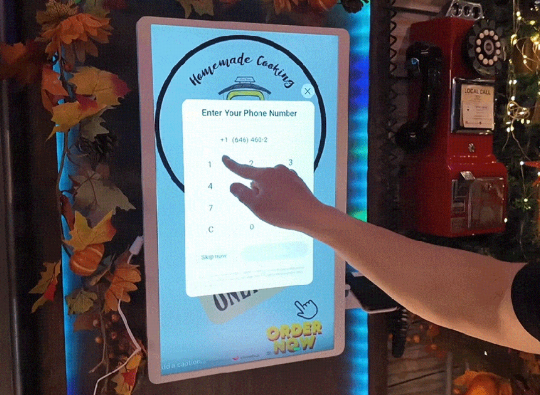
• Kiosk self-ordering to divert the line: a Chowbus kiosk at the entrance lets waiting guests browse, order, and pay ahead — easing front-counter pressure and guest anxiety. The kiosk took on about 20% of order volume, a real supplement to staff.
• QR ordering that builds membership: tabletop QR codes guide guests to order and join the loyalty program naturally; once enrolled they easily use points and coupons, while the brand uses Chowbus' Loyalty (360) system to read preferences and run precise campaigns — turning one-time traffic into loyal, repeat-purchase assets.
What Top Thai 55 Carmine's success shows
Effective digital upgrades come down to using the most essential tools to solve the most painful bottleneck. With an efficient operations hub built on "KDS + handheld," supported by kiosk diversion and deep membership operations, Chowbus helped this authentic Thai restaurant not only hold its quality reputation but run at enviable efficiency in NYC's fierce market — a replicable "smart growth blueprint" for any upscale full-service brand chasing efficient, high-quality service.
Discover Smarter Tech for Ambitious Restaurants
Set up a quick intro — we’ll walk you through how it could work for your business.
Just a heads-up: We’re currently working with U.S.-based restaurants only. Interested in partnerships or other opportunities? Reach out here!
Our Clients
By clicking "Accept all cookies", you agree to storing cookies on your device to enhance site navigation, analyze site usage and assist in our marketing efforts as outlined in our privacy policy.
We use cookies to enhance navigation, analyze usage and support marketing, per our privacy policy — continue browsing to agree, or manage anytime in Cookie Settings.
By clicking 'Accept all cookies', you agree to storing cookies on your device to enhance site navigation, analyze site usage and assist in our marketing efforts as outlined in our privacy policy.