When restaurant owners ask about the best POS for restaurant operations in 2026, they’re rarely just shopping for a checkout system. What they’re really evaluating is the operational foundation of their business. A POS system today influences staffing efficiency, menu engineering, online order flow, customer retention, and financial clarity. In many cases, it quietly determines whether a restaurant scales smoothly—or struggles under operational friction.
After working with operators across different formats—quick service, casual dining, multi-unit concepts—one thing becomes clear: the best POS is not the one with the longest feature list. It is the one that fits how your restaurant actually makes money.
Five years ago, stability and payment processing were the core requirements. In 2026, the conversation is different. Operators are dealing with higher labor costs, thinner delivery margins, and customers who expect digital convenience without sacrificing hospitality.
Because of this shift, the best POS for restaurant businesses must unify operations instead of fragmenting them. If dine-in orders live in one system, online orders in another, and loyalty data in a third dashboard, management decisions become guesswork. The cost of disconnected systems shows up gradually—in slower reporting, reconciliation errors, inconsistent pricing, and missed marketing opportunities.
In other words, “best” now means operational clarity.
Many first-time owners underestimate how deeply a POS system affects financial performance. The impact isn’t dramatic on day one—but it compounds.
A well-designed interface reduces friction. Servers spend less time navigating screens. Kitchen tickets print accurately. Managers train new staff faster because the system is intuitive.
Imagine shaving even 20–30 seconds from each transaction during a busy dinner rush. Over hundreds of orders per week, that translates into additional table turns or reduced overtime. Small efficiencies accumulate into measurable margin improvements.
Modern operators cannot afford to wait until month-end to understand performance. The best POS systems provide dashboards that highlight actionable metrics—menu item profitability, peak hour sales concentration, and channel-specific revenue splits.
Without that visibility, restaurants rely on instinct. And while experience matters, data-backed adjustments reduce costly missteps. If a specific dish underperforms every Tuesday evening, a responsive system helps you spot that pattern early instead of months later.
In 2026, most restaurants operate across multiple channels: dine-in, pickup, delivery, and sometimes catering. When those channels run on separate tools, reconciliation becomes manual and stressful.
An integrated system centralizes order flow. That reduces missed tickets, eliminates duplicate data entry, and simplifies accounting. Operational calmness has financial value—especially during peak periods.
Cloud-based architecture allows owners to access performance reports remotely, update menus instantly, and manage multiple locations without being physically present. For growing brands, this flexibility supports expansion without proportional increases in administrative workload.
More importantly, cloud systems typically receive regular updates, improving security and compliance standards automatically. In an industry where payment security regulations continue to evolve, proactive updates protect both revenue and reputation.
For 2026 operators, cloud capability is no longer innovative—it is foundational.
It’s tempting to search for the lowest monthly subscription. However, experienced owners look beyond surface pricing. They consider processing fees, hardware durability, integration costs, onboarding support, and scalability.
A system that requires multiple third-party connectors to function properly often becomes more expensive over time. Hidden inefficiencies—manual exports, limited reporting customization, delayed support responses—create opportunity costs that don’t appear on invoices but affect daily operations.
The best POS for restaurant profitability minimizes friction. Less friction means fewer errors, faster service, and clearer insights.
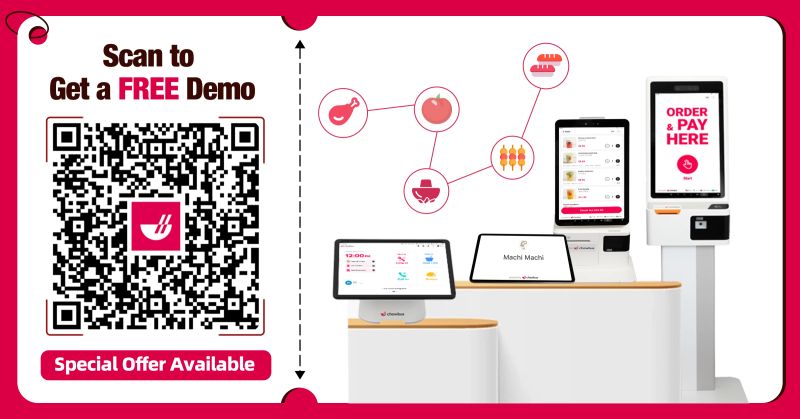
If you’re currently evaluating whether your system supports your long-term goals, it may help to review how a fully integrated restaurant platform connects order flow, reporting, and marketing insights into one operational view. Seeing the workflow in action often clarifies what spreadsheets cannot.
One of the most underappreciated advantages of modern POS systems is customer data continuity. When order history, visit frequency, and preferences are captured within the same system, marketing becomes strategic rather than reactive.
Instead of sending generic discounts, restaurants can reward high-value guests, re-engage dormant customers, and test targeted promotions. Over time, this strengthens lifetime value and stabilizes revenue against seasonal fluctuations.
A POS system that understands your guests supports long-term brand resilience.
Restaurants handle sensitive payment data daily. A reliable POS system should provide encrypted transactions, permission-based staff access, and audit trails for accountability.
Operational downtime during service hours can damage both revenue and reputation. Evaluating support responsiveness and system stability is just as important as reviewing feature lists.
1. How much does a modern restaurant POS typically cost?
Costs vary depending on hardware needs, transaction volume, and service tiers. Owners should calculate total ownership cost over several years rather than focusing solely on monthly fees.
2. Is cloud-based POS more secure than traditional systems?
Cloud-based systems generally offer stronger redundancy and regular security updates, though security ultimately depends on the provider’s infrastructure standards.
3. Can a POS system improve menu profitability?
Yes. Detailed sales and margin reporting enables strategic pricing adjustments and menu engineering decisions.
4. How disruptive is switching systems?
With proper planning and staff training, transitions can be managed smoothly. Many operators schedule installation during slower periods to minimize disruption.
5. What is the most important factor when choosing the best POS for restaurant growth?
Alignment with your operational structure and expansion plans. A system should scale with your concept, not limit it.
In 2026, the best POS for restaurant operations is less about technology and more about clarity. Clarity in reporting. Clarity in workflow. Clarity in customer behavior.
Restaurants that operate with clarity make faster adjustments, control costs more effectively, and grow with confidence.
If you’re preparing to upgrade your system or open a new location, consider scheduling a tailored walkthrough to evaluate how an integrated platform supports your operational strategy. A careful choice today can prevent years of avoidable inefficiency.
%20(1).png)