餐饮资讯
/
餐厅运营
/
Loyalty Software Free: What "Free" Actually Gets You, and When It's Time to Upgrade

Loyalty Software Free: What "Free" Actually Gets You, and When It's Time to Upgrade

Most first-time diners never come back a second time, and the ones who do are disproportionately responsible for a restaurant's actual profit — which is exactly why so many owners go searching for "loyalty software free" the moment they realize repeat business, not new customers, is what actually keeps the lights on. The instinct to start free is a reasonable one. The mistake is not understanding what free plans actually include before betting a customer retention strategy on them.

Restaurant loyalty has become a competitive necessity rather than a nice-to-have, particularly for Asian restaurants competing in a sector projected to reach $240 billion by the end of 2026. With thousands of restaurants now running integrated loyalty tools as part of platforms like Chowbus, which serves 9,000-plus restaurants across all 50 states, the bar for what counts as a functional loyalty program has moved well past a paper punch card.

This guide breaks down what free loyalty software realistically offers, where the limitations typically show up, and how to think about the free-to-paid decision — so you can start building repeat-customer habits without either overpaying too early or under-investing in a tool that can't actually move the needle.

Start with the honest version of what "free" usually means in this category.

What "Free" Loyalty Software Actually Means

"Free loyalty software" almost never means a fully-featured program with no strings attached — it typically falls into one of a few models, and understanding which one you're looking at changes what you should expect.

Freemium with a paid ceiling. Many providers offer a genuinely functional free tier — usually covering basic points-per-visit tracking and simple rewards — but cap it at a certain number of customers, locations, or monthly transactions before requiring an upgrade. This is often a legitimate way to test the concept before committing budget.

Free but ad-supported or data-monetized. Some "free" loyalty tools recoup cost by using customer data for their own marketing purposes, or by inserting their own branding into the customer-facing experience — meaning the restaurant doesn't fully own the loyalty relationship even though there's no direct software bill.

Bundled into a broader paid system. Some loyalty tools are technically "free" only because they're bundled into a POS or online ordering platform a restaurant is already paying for — the loyalty feature itself has no separate line-item cost, but it isn't standalone free software either.

Genuinely limited trial tools. A smaller number of free tools are essentially stripped-down trial versions designed to convert into a paid subscription once a restaurant sees early results.

None of these are inherently bad — a restaurant just needs to know which model it's evaluating before assuming "free" means "full-featured, no catch."

Why Loyalty Matters More for Asian Restaurants Specifically

Loyalty program economics work differently depending on how a restaurant's customer base behaves, and several patterns common to Asian restaurants make loyalty tools particularly valuable.

High visit-frequency categories. Bubble tea shops and casual Asian dining formats often see customers who could realistically visit multiple times a week, not month — which means even a modest points program compounds quickly compared to a restaurant where the average customer visits twice a year.

Community-driven repeat business. Asian restaurants frequently build a loyal base within a specific cultural or geographic community before growing more broadly. A loyalty program that actively recognizes and rewards that core group reinforces a relationship that's already inclined toward repeat visits — it doesn't have to create loyalty from scratch, just capture and reward what's already there.

AYCE and hot pot economics. For all-you-can-eat and hot pot formats specifically, where margins are tightly tied to volume and table turns, a loyalty program that encourages a customer to choose this restaurant over a nearby competitor for their next group outing has an outsized impact on monthly revenue compared to a restaurant with less repeat-driven demand.

Language and communication barriers. A loyalty program that communicates in both English and Chinese (or another relevant language) removes a real barrier that generic, English-only loyalty tools create for a meaningful share of a restaurant's actual customer base.

The Real Limitations of Free Loyalty Software

Free tiers usually work fine at the very beginning, but restaurants typically hit the same handful of ceilings as the program grows:

Customer or transaction caps. Once a restaurant crosses a few hundred active loyalty members or a certain monthly transaction volume, many free tiers either stop working correctly or force an upgrade — often at a moment when the program is finally showing real traction.

Limited personalization. Free plans often support only basic points-per-dollar rewards, without the ability to segment customers (say, rewarding a customer who hasn't visited in 60 days differently than a weekly regular) or run targeted campaigns based on actual visit history.

No integration with POS or online ordering. This is often the biggest practical issue — a loyalty tool that doesn't talk directly to the POS means staff have to manually look up or apply points, which slows down service and creates errors, particularly during peak hours at a busy hot pot or bubble tea counter.

Minimal reporting. Free tools often show basic enrollment numbers but little insight into which rewards actually drive repeat visits, what the real redemption rate is, or how loyalty members compare to non-members in spending behavior.

No ownership of the customer relationship. Some free tools retain control over customer contact data or restrict how a restaurant can communicate directly with its own loyalty members outside the platform.

None of this means free tools are worthless — for a brand-new restaurant just testing whether a loyalty program generates any measurable behavior change, a free tier can be the right starting point. The limitations simply tend to surface exactly when a program starts working.

What to Look for When You Outgrow Free Loyalty Software

The signal that it's time to move beyond a free plan usually isn't a specific customer count — it's a specific frustration: staff manually tracking points, an inability to see which promotions are actually working, or a growing loyalty list the restaurant can't communicate with directly.

At that point, the features worth prioritizing are: direct integration with the POS so points apply automatically at checkout without staff intervention; the ability to segment and message customers based on real visit behavior (a win-back offer for lapsed customers, a birthday reward, a bonus for referring a friend); reporting that connects loyalty activity to actual sales lift, not just enrollment numbers; and bilingual support for both the software itself and the customer-facing experience.

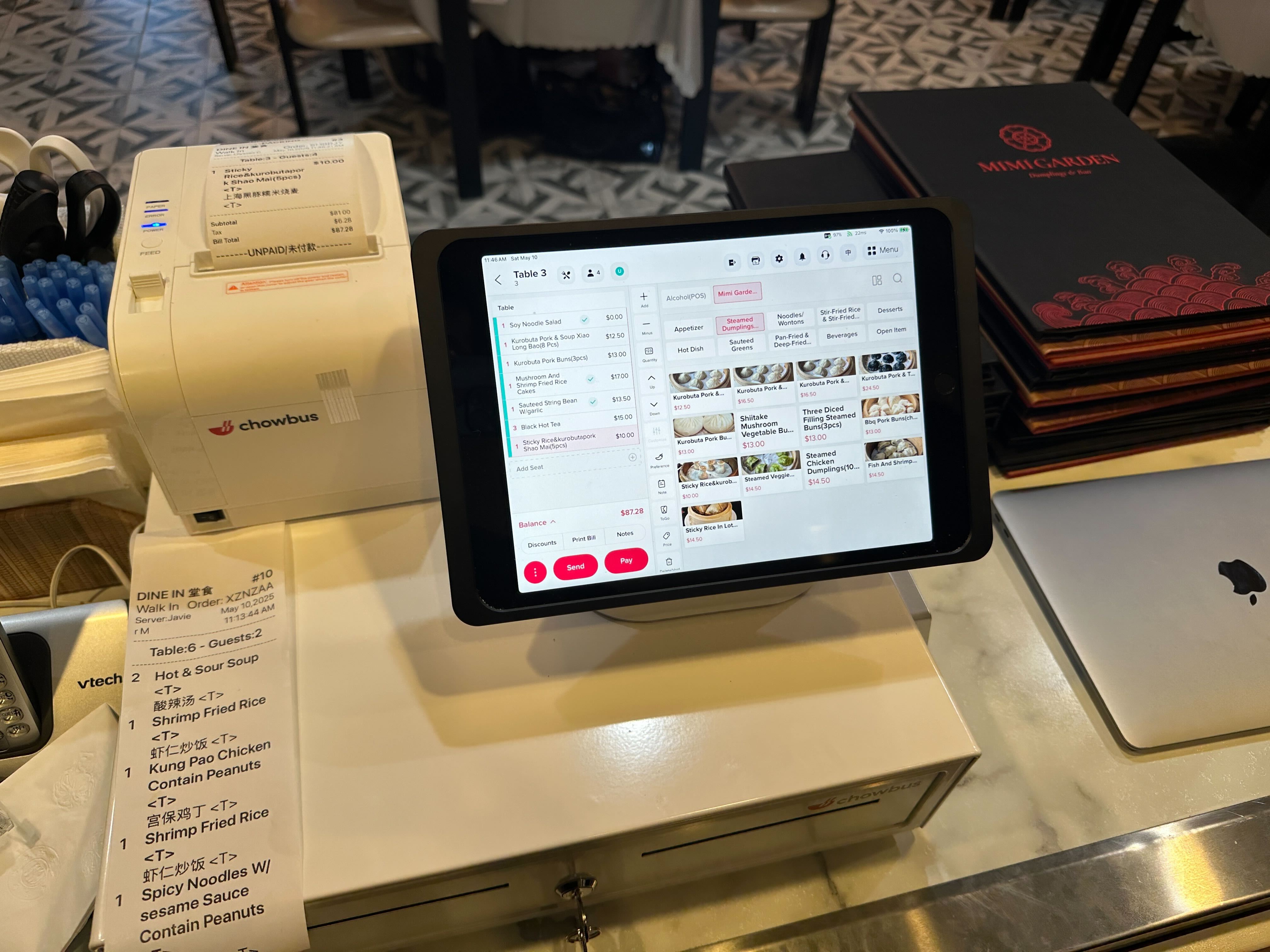
Chowbus's Loyalty & CRM tools are built as part of its broader POS platform specifically with this integration in mind — points, rewards, and customer segmentation run directly off the same transaction data already flowing through the register, rather than requiring a separate system that staff have to check manually. That matters most exactly at the point where a restaurant has outgrown what a free, standalone tool can offer, because the restaurant isn't starting a new relationship with a new platform — it's extending a system already in place.

Free Loyalty Software vs. Generic Competitor Options

Toast and Square both offer loyalty add-ons, including limited free tiers, and they function adequately for a generic restaurant with simple points-based rewards. Neither, however, offers bilingual customer communication or accounts for dining patterns specific to Asian restaurant formats like AYCE, hot pot, or high-frequency bubble tea visits.

Clover's loyalty options tend to be more limited out of the box and often require add-on costs that erode the appeal of starting free in the first place.

MenuSifu has strong roots in Asian restaurant operations broadly, but its loyalty tooling has historically been less modern than newer platforms, and gaps in areas like QR-based engagement can make it harder to get customers enrolled in the first place compared to a more streamlined, mobile-first sign-up flow.

The practical question for any restaurant comparing options isn't simply "is there a free tier" — it's whether that free tier, and the eventual paid upgrade path, is actually built around how the restaurant's specific customers behave.

Frequently Asked Questions

Is loyalty software actually free, or is there always a catch?It depends on the provider. Some free tiers are genuinely functional up to a certain size, while others are bundled into a paid POS system, ad-supported, or intentionally limited to push an upgrade. Reading the specific terms — customer caps, data ownership, and integration limits — matters more than the word "free" itself.

What's the difference between free loyalty software and paid loyalty software?The most common differences are integration depth (whether it connects directly to your POS), personalization (whether you can segment and target customers based on behavior), and reporting (whether you can see what's actually driving repeat visits versus just enrollment counts). Chowbus's integrated Loyalty & CRM tools, for example, offer this level of connection as part of the broader platform.

How do I know if free loyalty software is enough for my restaurant?If your main goal is simply testing whether a basic points program changes customer behavior at all, a free tier is often sufficient to start. If you're already seeing manual tracking slow down service, or you can't tell which promotions are working, that's a sign you've likely outgrown what free tools can offer.

Is free loyalty software worth using for a small, single-location Asian restaurant?Often yes, as a starting point — especially for a new restaurant that wants to test the concept before committing budget. The key is choosing a free tier that integrates with your existing POS rather than one that requires a completely separate, manually-managed system.

How much does it typically cost to upgrade from free to paid loyalty software?Pricing varies widely by provider and is often based on customer volume, number of locations, or feature tier. Rather than comparing sticker price alone, it's worth evaluating whether the paid tier is bundled into a broader POS platform you already use — since standalone loyalty software often costs more in total than an integrated feature within a system like Chowbus.

What's the first step to actually launching a loyalty program, free or paid?Start by confirming whether your existing POS system already includes loyalty functionality — many modern platforms do — since that avoids adding an entirely separate system. From there, the priority is a simple, low-friction sign-up process at checkout, since a loyalty program only works if customers actually enroll.

Bringing It Together

Free loyalty software is a legitimate way to start, but it's rarely the tool that gets a restaurant to the outcome that actually matters: customers who visit more often because the restaurant remembers and rewards them for it. The free tier's real value is in proving the concept — showing whether rewarding repeat visits changes behavior at all — before a restaurant commits to anything more sophisticated.

If you're running a bubble tea shop, hot pot restaurant, or any Asian dining concept with a customer base that visits frequently and responds to community reputation, the ceiling on a free, disconnected loyalty tool tends to arrive faster than it would for a restaurant with more occasional customer visits. That's not a reason to avoid starting free — it's a reason to pick a starting point that can grow with you instead of one you'll have to abandon entirely.

The practical next step is to look honestly at where your current loyalty setup (free or otherwise) is falling short — whether that's manual tracking, no bilingual support, or no visibility into what's actually driving repeat visits — and treat that gap as the specific thing to solve next, rather than starting over from scratch.

更多内容

了解更多
分类频道